
Live 2 weeks ago
  1. 10:33 AM (IST) 14 Jan 2026
    Latest

    Grave legal consequences as Starlink becomes last digital lifeline

    The near total communications blackout imposed by Iranian authorities during the latest wave of nationwide protests marks one of the most legally consequential information control operations of the past decade. The partial restoration of outbound international phone calls on Tuesday, while inbound calls, text messaging and the public internet remain disabled, does not dilute the core reality: Iran has once again weaponised digital infrastructure as an instrument of internal repression.

The near total communications blackout imposed by Iranian authorities during the latest wave of nationwide protests marks one of the most legally consequential information control operations of the past decade. The partial restoration of outbound international phone calls on Tuesday, while inbound calls, text messaging and the public internet remain disabled, does not dilute the core reality: Iran has once again weaponised digital infrastructure as an instrument of internal repression.

Cloudflare data confirming that national internet traffic remains at a fraction of one percent of normal levels, alongside corroboration from NetBlocks, establishes that the shutdown is not a technical failure but a deliberate state act. This places Iran squarely in violation of multiple binding international legal obligations and exposes the state to expanding diplomatic, economic and legal risk.

At the centre of this crisis lies a fundamental legal principle recognised in modern international law: access to information and communication is inseparable from freedom of expression, freedom of assembly and the right to political participation.

Iran is a state party to the International Covenant on Civil and Political Rights. Article 19 protects the right to seek, receive and impart information of all kinds regardless of frontiers. Article 21 guarantees the right of peaceful assembly. Article 22 protects freedom of association. Article 2 obliges the state to ensure these rights without discrimination.

A nationwide internet shutdown during civil unrest is therefore not merely a domestic policy decision. It constitutes prima facie evidence of systematic interference with treaty protected rights.

The United Nations Human Rights Council has repeatedly affirmed that the same rights people enjoy offline must also be protected online. In 2016, it explicitly condemned measures to intentionally prevent or disrupt access to information online. Iran voted against that resolution but remains legally bound by the covenant it ratified.

From a legal perspective, the current shutdown meets the threshold of collective punishment. It indiscriminately targets the entire civilian population, including journalists, doctors, humanitarian workers, foreign nationals, businesses and families seeking to communicate with relatives abroad.

Iranian authorities have historically justified internet shutdowns under domestic national security laws and emergency regulations administered by the Supreme Council of Cyberspace and the Ministry of Information and Communications Technology. These bodies operate under the authority of the Supreme Leader and the Islamic Revolutionary Guard Corps, which exerts decisive control over national telecommunications infrastructure through state affiliated providers such as the Telecommunication Company of Iran.

However, domestic legality does not immunise international responsibility. Under the doctrine of state responsibility codified in the Articles on Responsibility of States for Internationally Wrongful Acts, Iran incurs liability when its actions breach international obligations and cause harm.

The practical consequences of this legal exposure are not theoretical. The European Union, United Kingdom, Canada and United States already maintain sanctions regimes specifically targeting Iranian officials and entities responsible for digital repression. The EU Global Human Rights Sanctions Regime, sometimes referred to as the European Magnitsky framework, explicitly includes cyber repression and internet shutdowns as sanctionable conduct.

Further sanctions are therefore not speculative. They are structurally inevitable if the blackout continues.

The involvement of Starlink introduces an additional layer of legal and geopolitical complexity.

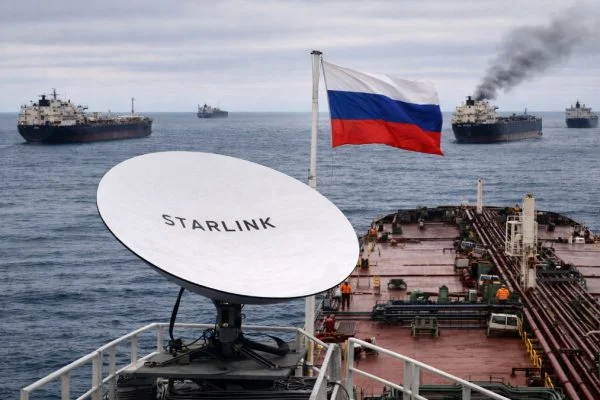
Activists report that SpaceX subsidiary Starlink is now providing free satellite internet access within Iran, allowing limited external communication to resume for those able to access the equipment. This development, while technologically significant, is legally explosive.

Iranian law criminalises unauthorised satellite communications equipment. Possession of Starlink terminals can result in severe prison sentences, confiscation of property and charges of collaboration with hostile foreign powers. Users therefore face personal legal jeopardy merely by attempting to communicate with the outside world.

From Tehran’s perspective, Starlink represents a direct circumvention of sovereign telecommunications controls. Under traditional interpretations of state sovereignty, a government claims exclusive regulatory authority over radio spectrum and communications infrastructure within its territory.

However, sovereignty does not grant unlimited discretion. The doctrine of non interference does not extend to permitting mass suppression of fundamental human rights. This tension between sovereignty and human rights enforcement is precisely where modern international law is most strained.

The United States Treasury previously issued licences allowing satellite internet services to operate in Iran despite sanctions, citing humanitarian communication needs. This was done under the International Emergency Economic Powers Act and Office of Foreign Assets Control licensing authority.

Legally, Starlink’s presence therefore occupies an unusual status: lawful under United States sanctions law, criminalised under Iranian domestic law, and morally supported by international human rights norms.

The Iranian government could attempt to characterise satellite internet as unlawful foreign intervention. Yet under international law, providing civilians with access to communication does not constitute armed intervention or coercion as defined by the Nicaragua precedent at the International Court of Justice. It does not alter territorial boundaries, overthrow governments or impose political outcomes by force.

What it does do is undermine the state’s monopoly on narrative control.

That is precisely why it is treated as a strategic threat.

The blackout also carries profound economic and contractual implications. Iranian businesses are unable to process international transactions, fulfil export obligations, communicate with suppliers or maintain digital security. This triggers force majeure clauses, breach of contract disputes and insurance claims across multiple jurisdictions.

Foreign investors and trading partners may invoke material adverse change provisions, citing the systemic risk created by arbitrary shutdowns. This further isolates Iran economically at a moment when its currency is already fragile and inflation remains structurally entrenched.

From an international relations perspective, the shutdown damages Iran’s position in every active negotiation forum. It weakens its credibility in any potential revival of nuclear talks, reinforces its classification as a high risk jurisdiction for digital investment, and strengthens arguments within Western governments that Tehran remains fundamentally incompatible with rules based international order.

The inability of Iranians to receive calls from abroad, even as limited outbound calls resume, is itself legally revealing. It demonstrates intentional filtering rather than technical disruption. Such asymmetric connectivity is typical of controlled communications architectures designed to prevent information inflows while allowing minimal outward signalling.

This method has been documented previously in Myanmar, Ethiopia, Russia and China during periods of political instability. In every case, international human rights bodies concluded that the shutdowns violated proportionality and necessity requirements under international law.

The Iranian state will argue that exceptional circumstances justify exceptional measures. Yet the Siracusa Principles, which interpret limitations on civil rights under the ICCPR, make clear that restrictions must be lawful, necessary, proportionate, non discriminatory and time limited.

A nationwide blackout affecting over eighty million people fails every element of that test.

Even more concerning is the precedent such actions establish.

If a state can sever digital connectivity whenever political dissent emerges, then the internet ceases to function as a global commons and becomes merely another instrument of domestic coercion.

That is why the legal implications extend far beyond Iran.

The United Nations Special Rapporteur on freedom of expression has repeatedly warned that normalising shutdowns risks transforming emergency measures into standard governance tools. Once embedded, they are rarely reversed.

For Iranian citizens, the consequences are immediate and human. Families are unable to verify the safety of loved ones. Journalists cannot document events. Lawyers cannot communicate with detained clients. Hospitals lose access to cloud based medical systems. Students are cut off from education platforms.

For the international system, the consequences are structural.

Iran’s blackout accelerates the fragmentation of the global internet into state controlled digital enclaves. It strengthens the argument that cyberspace is no longer a neutral domain but a contested geopolitical territory.

Starlink’s involvement signals the emergence of a parallel infrastructure order where private corporations provide transnational connectivity beyond state control. This challenges existing telecommunications law, which was built on territorial licensing regimes and national regulatory monopolies.

International law has not yet fully adapted to this reality.

But the direction is clear.

Future conflicts will not only be fought with weapons and sanctions, but with routers, satellites and access codes.

Iran’s decision to isolate its population digitally is therefore not only a domestic repression tactic. It is a declaration of how the state intends to govern dissent in the twenty first century.

And the global response, whether through sanctions, litigation, satellite technology or diplomatic pressure, will determine whether digital rights become enforceable law or remain fragile aspirations.

For now, millions of Iranians remain in enforced digital silence, dependent on clandestine satellite signals to speak to the world.

Legally, politically and morally, that silence is an indictment.

TOPICS: Donald Trump NetBlocks SpaceX Starlink