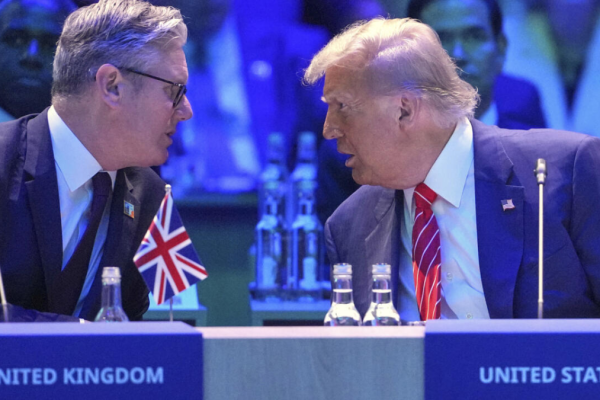
The introduction of the NATO Unity Protection Act by United States Senators Jeanne Shaheen and Lisa Murkowski is not merely a rebuke to President Donald Trump’s rhetoric about acquiring Greenland. It is a constitutional alarm bell, a reaffirmation of international law, and a rare moment of legislative clarity in an era where geopolitical fantasy has increasingly been allowed to masquerade as strategy.
The bill seeks to prohibit the United States Department of Defense and the Department of State from spending public funds to blockade, occupy, annex or otherwise assert control over the territory of any NATO member state. The language is stark because the legal stakes are existential. The forced acquisition of Greenland would not be a controversial policy choice. It would be an act of aggression under international law, a violation of treaty obligations, and a constitutional crisis within the United States itself.
Greenland is not a geopolitical abstraction. It is a self governing territory within the Kingdom of Denmark, a sovereign state and a founding member of the North Atlantic Treaty Organisation. Any hostile action against Greenland would legally constitute an armed attack on Denmark.
Under Article 5 of the North Atlantic Treaty, such an attack would trigger the collective defence obligation of all NATO members, including the United States.
This is the legal paradox at the heart of Trump’s claims. The United States would be declaring war on its own alliance.
The prohibition on territorial acquisition by force
Since 1945, the prohibition on the acquisition of territory by force has been one of the cornerstones of the international legal order. It is codified in Article 2(4) of the United Nations Charter, which requires all member states to refrain from the threat or use of force against the territorial integrity or political independence of any state.
This rule is not symbolic. It is binding customary international law, reaffirmed repeatedly by the International Court of Justice, including in the Nicaragua case, the Wall advisory opinion and the Crimea related resolutions of the United Nations General Assembly.
No doctrine of national security, strategic necessity or resource scarcity overrides this prohibition.
Even a consensual transfer of territory would require the free and genuine consent of the state concerned, in this case Denmark, and the democratic will of the people of Greenland, who have overwhelmingly rejected incorporation into the United States.
Polling indicating that approximately eighty five percent of Greenlandic residents oppose joining the United States is not politically inconvenient noise. It is legally decisive. The right of peoples to self determination is protected under Article 1 of both the International Covenant on Civil and Political Rights and the International Covenant on Economic, Social and Cultural Rights, to which the United States and Denmark are parties.
Forcible annexation would therefore violate peremptory norms of international law, known as jus cogens, from which no derogation is permitted.
The North Atlantic Treaty is not merely a political commitment. It is a ratified treaty under United States constitutional law, approved by the Senate in 1949 and incorporated into domestic law under Article VI of the Constitution, the Supremacy Clause.
Article 1 obliges parties to settle disputes by peaceful means. Article 5 binds members to collective defence. Article 8 prohibits members from entering into international engagements that conflict with the treaty.
An American military move against Greenland would breach all three provisions simultaneously.
The act proposed by Shaheen and Murkowski is therefore not radical. It is conservative in the truest legal sense. It seeks to prevent the executive branch from committing an act that would automatically place the United States in material breach of its most important security treaty.
A material breach would entitle other NATO members to suspend their obligations towards the United States under the Vienna Convention on the Law of Treaties. The alliance would effectively collapse under the weight of its own legal contradiction.
The constitutional limits of presidential power
Even if international law were ignored, United States constitutional law provides no lawful pathway for a president to seize foreign territory.
Congress alone holds the power to declare war under Article I, Section 8 of the Constitution. Congress also controls federal spending. The proposed legislation exploits this latter authority by explicitly denying funds for any attempt to occupy or annex NATO territory.
The War Powers Resolution of 1973 further limits unilateral military action by requiring congressional authorisation for sustained hostilities.
Any attempt by a president to deploy forces to Greenland without such authorisation would trigger immediate litigation, injunctions and potentially impeachment proceedings.
The bill therefore functions as both a legal firewall and a political declaration that Congress will not retroactively sanitise an unlawful act.
Trump has repeatedly justified his interest in Greenland by citing its strategic location and its reserves of rare earth minerals, hydrocarbons and critical materials used in advanced technologies.
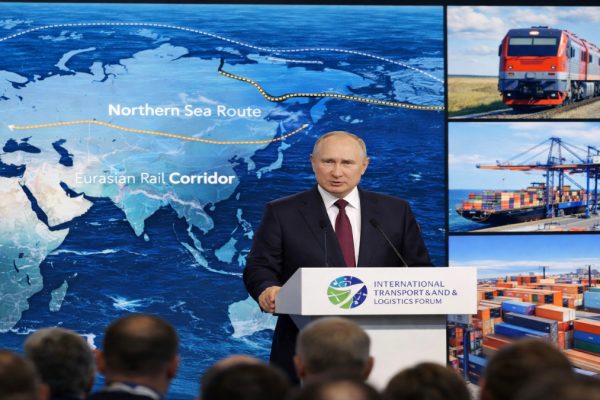
These concerns are not imaginary. The Arctic is warming faster than any other region on Earth. New shipping routes are emerging. Competition for mineral resources is intensifying. China and Russia have expanded their Arctic activities.
None of this creates a legal entitlement to territorial acquisition.
International law provides mechanisms for resource access through investment agreements, joint ventures, licensing regimes and treaty based cooperation. Denmark already allows extensive United States military presence in Greenland under defence agreements dating back to the Cold War, including the operation of the Pituffik Space Base, formerly Thule Air Base.
The United States already enjoys strategic access without sovereignty.
To claim that security requires ownership is not strategic realism. It is legal illiteracy.
Greenland left the European Economic Community in 1985 but remains associated with the European Union through the Overseas Countries and Territories framework. Denmark is a full EU member.
An attack on Greenland would therefore not only trigger NATO obligations but could activate Article 42(7) of the Treaty on European Union, the EU mutual defence clause.
This would create a scenario in which the United States faces legal defence commitments not only from NATO but also from the European Union, including nuclear armed France.
The resulting legal chaos would dwarf any crisis since the Cuban missile standoff.
Why the bill matters even if Trump never acts
Some observers dismiss the legislation as performative politics. That is a misreading of how law functions in times of constitutional stress.
The bill creates a formal legislative record that Congress rejects territorial aggression against allies. It establishes a compliance benchmark for the Pentagon, the State Department and federal auditors. It strengthens the position of civil servants who might otherwise face unlawful orders. It provides clear standing for judicial review if funds are misused.
It also sends an unambiguous signal to allies that the United States Congress recognises the illegality of the president’s rhetoric.
In international relations, reassurance is a legal currency.
Statements by Greenland’s prime minister and Denmark’s leadership rejecting United States control are not emotional gestures. They are assertions of sovereign equality.
The language used by Trump, “one way or the other”, belongs to a nineteenth century doctrine of empire. The legal order constructed after 1945 was explicitly designed to make such language obsolete.
To normalise it again would unravel seventy five years of treaty law, alliance architecture and institutional restraint.
If the United States, the principal architect of the post war legal system, were to openly contemplate annexing allied territory, it would legitimise similar claims by other powers.
China would cite Taiwan. Russia would cite eastern Ukraine. Argentina would cite the Falklands. Morocco would cite Western Sahara.
The rule would become: territory belongs to whoever can take it.
That rule was buried in the ruins of 1945.
The NATO Unity Protection Act is therefore not only about Greenland.
It is about whether the international system remains governed by law or reverts to conquest.
In that sense, the bill is not a technical budgetary restriction. It is a constitutional reaffirmation that the United States is still, at least in principle, a state governed by law rather than by impulse.