

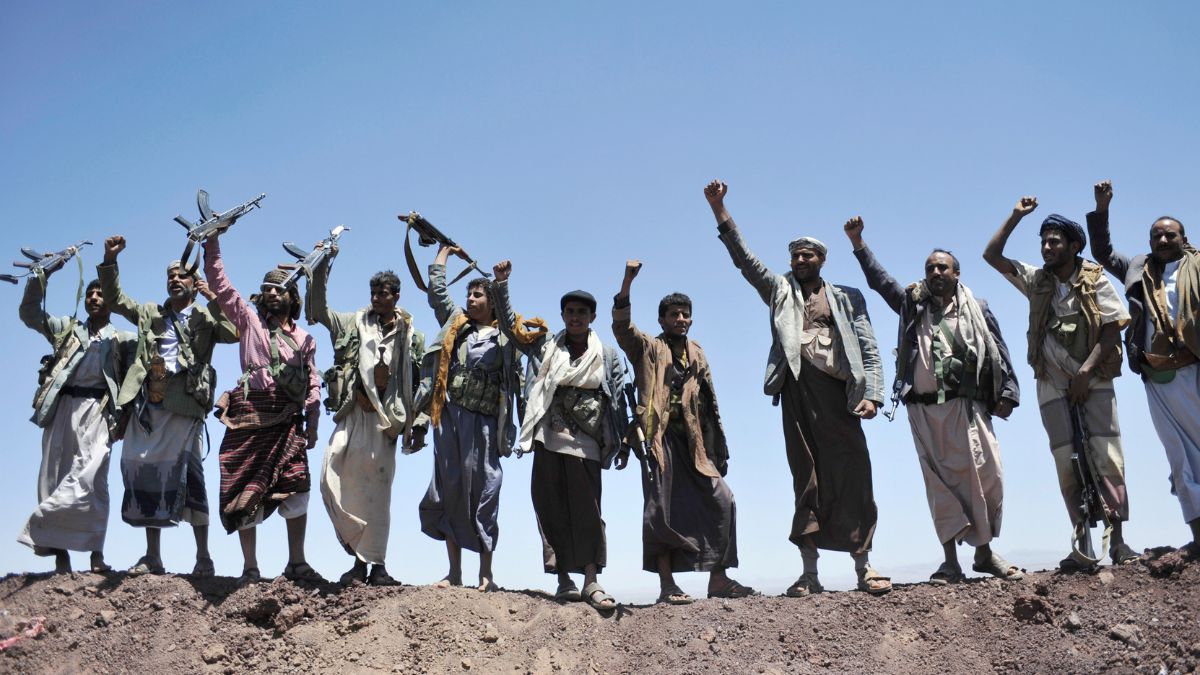
The prospect of Yemen’s Iran aligned Houthi movement entering the ongoing Middle East conflict has introduced a new and deeply consequential risk to global trade flows. With the Strait of Hormuz already effectively constrained, attention is rapidly shifting towards the Bab al-Mandab Strait, a narrow but indispensable artery linking the Red Sea to the Gulf of Aden and onward to the Suez Canal.
Statements from Houthi leadership indicating readiness to intervene militarily in support of Iran have raised the spectre of a coordinated disruption across two of the world’s most critical maritime chokepoints. For global shipping, energy markets and supply chains, this represents not merely an escalation but a potential systemic shock.
The Bab al Mandab Strait, often referred to as the “Gate of Tears”, is among the most strategically sensitive maritime passages in global commerce. At its narrowest point, the strait measures just 29 kilometres, forcing inbound and outbound shipping into tightly controlled channels. Its geographic position makes it the southern gateway to the Red Sea and the Suez Canal, through which a substantial portion of Europe Asia trade transits.
Current estimates indicate that between 10 and 12 percent of global seaborne trade passes through the Red Sea corridor, including significant volumes of crude oil, refined fuels and liquefied natural gas. For energy markets, the strait serves as a critical conduit for Gulf exports bound for Europe, as well as flows from Russia and other suppliers moving towards Asian markets. Any disruption at Bab al Mandab would therefore have immediate and cascading consequences across global supply chains.
The risk posed by the Houthis must be viewed in conjunction with the evolving situation in the Strait of Hormuz. With Iranian actions already constraining traffic through Hormuz, shipping flows have increasingly relied on alternative routes, including the Red Sea corridor.
This reorientation has effectively increased the strategic importance of Bab al Mandab. Should the Houthis initiate attacks on vessels transiting the strait, global trade would face a dual chokepoint crisis, severely limiting the movement of hydrocarbons and goods between the Middle East, Europe and Asia. Historically, disruptions at a single chokepoint have been sufficient to trigger sharp increases in oil prices and freight costs. A simultaneous threat across two chokepoints would represent an unprecedented level of systemic risk.
The Houthis are not an untested actor in maritime conflict. During the Gaza war following the October 2023 attacks, the group launched sustained operations targeting commercial shipping in the Red Sea, citing solidarity with Palestinian groups. These attacks included missile strikes and drone operations against vessels perceived to be linked to Israel or its allies. The result was a sharp decline in traffic through the Red Sea, with many shipping lines diverting vessels around the Cape of Good Hope, adding 10 to 15 days to voyage times and significantly increasing fuel costs. Insurance premiums for vessels transiting the region surged, in some cases rising multiple times over baseline rates. The disruption demonstrated the Houthis’ capacity to impose disproportionate economic costs relative to their scale.
According to statements from Houthi leadership and regional analysts, the decision to enter the conflict will likely be contingent on developments in the Iran centred theatre. The group appears to be adopting a calibrated approach, waiting for a moment when intervention would maximise strategic impact. Potential triggers include: Escalation of attacks on Iranian territory or strategic assets. Further degradation of Iranian military capacity. Intensification of economic pressure on Iran through sanctions or blockades
Diplomatic sources suggest that the Houthis may coordinate closely with Tehran, aligning their actions with broader regional strategy. This raises the possibility of a synchronised escalation designed to exert maximum pressure on global markets and adversaries. The economic implications of a Houthi intervention are profound. With the Strait of Hormuz already under strain, a disruption at Bab al Mandab would significantly constrain global energy supply routes.
Key risks include: Sharp increases in oil prices, driven by supply uncertainty and logistical bottlenecks. Escalating freight rates, particularly for tankers and container vessels rerouted around Africa. Extended delivery timelines, disrupting just in time supply chains across industries. Inflationary pressures, as higher transportation costs feed into consumer prices For Europe, which relies heavily on maritime imports of energy and goods, the impact could be particularly severe. Asian economies would also face disruptions, especially in energy procurement and export logistics.
The shipping industry is likely to respond swiftly to any escalation. Previous disruptions in the Red Sea have already established a pattern of risk mitigation, including route diversion and enhanced security measures. However, rerouting via the Cape of Good Hope is not without cost. The longer route increases fuel consumption, reduces vessel availability and places upward pressure on global freight rates. For time sensitive cargo, the delays can have significant commercial consequences. In parallel, insurers may impose higher war risk premiums or restrict coverage altogether, further complicating operational decisions for shipping companies.
The potential entry of the Houthis into the conflict would mark a significant expansion of the regional war. Iran’s network of allied groups, including actors in Lebanon and Iraq, has already been engaged to varying degrees. The addition of Yemen would extend the conflict across multiple fronts, increasing both its geographic scope and its economic impact. This multi theatre dynamic complicates efforts at de escalation and raises the stakes for international actors seeking to maintain stability in global trade routes.
The Bab al Mandab Strait stands at the intersection of geopolitics and global commerce. The possibility of Houthi intervention transforms it from a critical passage into a potential flashpoint with far reaching implications. For global trade, the message is clear. The risk is no longer theoretical. It is immediate, evolving and deeply interconnected with broader geopolitical developments. As tensions continue to escalate, the resilience of global supply chains will be tested against a backdrop of unprecedented maritime vulnerability. The coming weeks may well determine whether the world’s most vital trade arteries remain open or become instruments of strategic leverage in an increasingly contested global order.