In recent years, technology has moved from the margins of foreign policy to its very centre. Semiconductors, critical minerals, data infrastructure and advanced manufacturing now shape economic growth, national security and diplomatic influence. Against this backdrop, the decision of the United States to invite India to join Pax Silica marks an important development in global technology governance. The move indicates a shift in how Washington views New Delhi not only as a bilateral partner but as a key participant in securing future supply chains at a time of deepening competition with China.

Pax Silica is a policy framework initiated by the United States to strengthen and stabilise global supply chains related to silicon based technologies. Silicon is the core material used in semiconductors, which literally powers everything from mobile phones, automobiles to defence systems and artificial intelligence platforms. The framework seeks cooperation among a group of trusted economies across the entire technology value chain. This includes sourcing of critical raw materials, processing and refining, chip design and fabrication, manufacturing equipment, data infrastructure and logistics. Unlike a formal treaty, Pax Silica functions as a strategic alignment of policies, standards and investments among participating countries.

What is the composition of Pax Silica?

Pax Silica was conceived as a tightly integrated, China-independent semiconductor and AI supply chain, structured as a closed loop covering every critical stage of the chip lifecycle. The Netherlands anchors the alliance technologically through ASML’s monopoly over EUV lithography, indispensable for advanced-node manufacturing. Japan secures upstream chemical inputs such as photoresists and hydrogen fluoride, reinforcing long-standing US and Japan coordination on export controls. South Korea contributes the memory backbone of the AI economy through Samsung and SK Hynix, while Singapore functions as a trusted hub for assembly, testing, and logistics, underscoring the strategic importance of backend manufacturing.

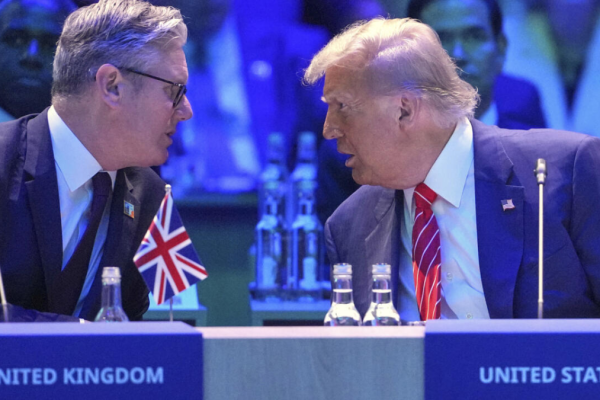
The United Kingdom and Israel provide intellectual and design depth: Arm’s architecture underpins global mobile and server ecosystems, while Israel’s chip design and AI R&D capabilities align closely with security and defense applications. The United Arab Emirates adds a capital-intensive dimension, channeling large-scale investment into AI infrastructure and data centres via sovereign vehicles. Australia completes the architecture by supplying critical minerals such as lithium and rare earths, offering a secure alternative to Chinese resource dominance and linking raw materials directly to allied manufacturing needs.

Potential reason behind inviting India

Inclusion of India in Pax Silica is not inadvertent as it is rooted in a combination of economic scale, policy direction and with a reverent motive of geopolitical positioning. India is one of the largest and the fastest growing technological markets in the world. Demand for electronics, data services and digital infrastructure is expanding exponentially. Any long-term strategy to stabilise the  global supply chain must account for such scale. At the same time, India has been seeking to expand its reach in electronics and semiconductor manufacturing. Policy incentives, infrastructure investments, and subsidies attract global firms with a clear intent to move up in the value chain. From a strategic and long-term perspective, India is in a unique situation where it maintains strategic autonomy while engaging with major global powers. For the United States, this makes India a credible and trusted partner in diversifying supply chains without a rigid structure of alliance.

Infrastructure of Semiconductor in India

India’s integration into Pax Silica is underpinned domestically by the India Semiconductor Mission (ISM), a specialised business division within the Digital India Corporation. Launched in 2021 with a financial outlay of INR 760 billion (approximately USD 10 billion), the ISM aims to build a vibrant semiconductor and display ecosystem. The mission’s primary tool is the Production Linked Incentive (PLI) scheme, which offers fiscal support of up to 50 percent of the project cost on a pari passu basis for setting up semiconductor fabs, display fabs, and compound semiconductor facilities.

This level of state subsidy is unprecedented in Indian industrial history and reflects New Delhi’s recognition that semiconductor manufacturing is not a free market activity but a strategic imperative. The government has significantly increased budget allocations for the electronics sector, with the outlay soaring to INR 8,885 crore in the 2025 2026 fiscal year. As of late October 2025, the ISM had approved ten semiconductor projects across six states, catalysing investments exceeding INR 1.6 trillion.

The Micron Technology Project: ATMP Plant

The flagship project of India’s semiconductor ambitions is the Micron Technology facility in Sanand, Gujarat. Announced in June 2023, this Assembly, Testing, Marking, and Packaging (ATMP) plant represents a total investment of USD 2.75 billion (INR 225.16 billion). It is important to distinguish this facility from a front end fab. Micron Sanand will not manufacture chips from raw silicon wafers; rather, it will process wafers manufactured elsewhere (likely in Micron’s fabs in Singapore, Japan, or the US) into finished memory products like DRAM and NAND flash used in computers and smartphones. While ATMP is lower on the value chain than fabrication, it is a critical first step. It allows India to establish the necessary infrastructure clean water, stable power, logistics and train a workforce in semiconductor protocols without the extreme complexity and cost of a full fab.

Construction Status and Delays in the Micron Project

The execution of the Micron project has been a litmus test for India’s “fab readiness.” The project was approved in June 2023 under the modified ATMP scheme, with construction awarded to Tata Projects. By January 2026, the physical structure of the plant was largely in place, with civil, mechanical, and electrical works nearing completion. However, the timeline has slipped. Initial government optimism suggested that the first “Made in India” chip would roll out by December 2024. This target proved overly ambitious. The primary bottleneck has been the construction and validation of the cleanroom the sterile heart of the facility where chips are processed. Cleanrooms require sophisticated air filtration systems to maintain a particle-free environment, even microscopic dust can ruin a semiconductor product. Reports from late 2025 indicated that while civil work was 60 percent complete, the cleanroom validation was still underway. The revised timeline now places the handover of the facility to Micron in December 2025, with commercial operations expected to commence in late 2025 or early 2026. This delay, while frustrating, is not unusual for greenfield semiconductor projects, which are among the most complex construction undertakings in the world.

Tata Electronics and Indigenous Capabilities of India

While Micron represents foreign direct investment, the ISM is also nurturing domestic champions. Tata Electronics, in partnership with Taiwan’s Powerchip Semiconductor Manufacturing Corporation (PSMC), is constructing India’s first commercial semiconductor fab in Dholera, Gujarat.This USD 10.9 billion project is far more ambitious than the Micron plant, as it involves actual chip fabrication. The Dholera fab will focus on mature nodes (28nm, 40nm, 55nm, 90nm, and 110nm), which are essential for power management chips, display drivers, and microcontrollers used in automotive and industrial applications.14 Production is expected by late 2026. Simultaneously, Tata is building a USD 3.3 billion assembly and testing unit in Morigaon, Assam, demonstrating a regional diversification of the ecosystem.

Why is China the main reason behind Pax Silica?

China’s role in the global tech supply chain is central or fundamental in understanding of the Pax Silica. Over the years, China has built a massive and dominant position in processing critical and rare earth minerals, manufacturing components and assembling finished goods and products. This concentration has provided an economic leverage, but it also raises concern among the other countries regarding heavy reliance on China for such products and the bargaining power it holds over other nations.  The Pax Silica does not formally exclude China or pose itself as an anti-China club nor does it declare an adversarial stance. However, it specifically emphasizes trusted partners and the diversification reflects an effort to manage strategic risk of global over dependence. By creating such alternative pathways, countries aim to reduce exposure of disruptions arising out of political turmoils or trade disputes through diversification.  India’s participation in Pax Silica adds weight to this effort of diversification as it offers and additional strategic geography with scale and stability thereby increasing credibility of these diversification strategies.   

Potential economic reasons behind India joining Pax Silica

For India, its membership in Pax Silica carries potential economic benefits and responsibilities. It can attract long term investments in semiconductor manufacturing, fabrication, electronic manufacturing and other related infrastructure. Such investments depends heavily on policy stability and its integration into global supply and trade networks which Pax Silica seeks to provide with.  Further, there is also a scope for technology transfer and skill development. Closer cooperation with advanced economies can help Indian firms and institutions in acquiring capabilities in design, material science and manufacturing process and production.  However, these gains are very contingent on policy executions. Semiconductor manufacturing is capital-intensive and resource-demanding. Skilled, qualified and reliable labor along with power, water, and efficient logistics, are essential. Regulatory transparency and timely approval will play a critical role in ascertaining and sustaining the investors’ confidence.

The “Silica” in the alliance’s name serves as a reminder that the digital economy is ultimately rooted in the physical earth. Critical minerals such as lithium, cobalt, graphite, and rare earth elements (REEs) are indispensable for the production of semiconductors, electric vehicle batteries, and advanced defense systems. Currently, China holds a chokehold on this sector, controlling nearly 90 percent of global rare earth processing capacity and a significant share of lithium refining. This dominance allows Beijing to weaponise supply chains. In December 2024 and early 2025, China restricted the export of gallium, germanium, and antimony minerals critical for semiconductor production to the United States. This act of economic warfare underscored the urgency of the Pax Silica mission to diversify supply sources.

Potential challenges that India can face

India’s inclusion in the alliance is driven significantly by its geological potential. In February 2023, the Geological Survey of India announced the discovery of 5.9 million metric tonnes of inferred lithium resources in the Salal Haimana district of Reasi, Jammu and Kashmir. This discovery was hailed as a game-changer, potentially positioning India as a major player in the global lithium market. However, the journey from discovery to commercial extraction has been fraught with challenges. The lithium in Reasi is embedded in bauxite clay, a geological formation that requires complex and expensive processing technologies to extract. This contrasts with the lithium brines of South America or the hard rock spodumene of Australia, for which extraction methods are well established. As a result, two attempts by the Indian government to auction the mining rights for the Reasi block failed to attract significant interest from private miners. The lack of proven technology for clay extraction, combined with the environmental fragility of the Himalayan region and the geopolitical sensitivity of Jammu and Kashmir, has stalled progress.

The US-India Critical Minerals Partnership

To overcome these technological and capital hurdles, India is turning to its Pax Silica partners. The US India Critical Minerals Partnership, and broader G7 initiatives to which India has been invited aim to facilitate technology transfer and investment in the mining sector. The goal is to pair India’s raw resources with Australian and American mining expertise to create a “friend shored” value chain. The US Treasury Secretary, Scott Bessent, has actively pushed for India’s inclusion in G7 finance ministers’ meetings on critical minerals, recognizing that without India’s resources, the alliance cannot achieve independence from China. This partnership is expected to focus on joint exploration, the development of processing technologies for clay-based lithium, and the creation of a strategic reserve of critical minerals to buffer against future supply shocks.

What can be concluded from India’s participation in Pax Silica

The inclusion of India in the Pax Silica initiative is a defining moment in the geo-economic history of the twenty-first century. It marks the end of the post-Cold War era of globalisation, where efficiency was the sole determinant of supply chains, and the dawn of a new era where security, trust, and resilience are paramount. For the United States, bringing India into the fold is a strategic necessity. It provides the demographic scale and resource depth required to create a viable alternative to the Chinese industrial ecosystem. For India, it is a generational opportunity to leapfrog into the high technology manufacturing tier, leveraging American capital and technology to fuel its rise as a developed nation by 2047.

TOPICS: G7 India Semiconductor Mission (ISM) Micron Technology Nvidia Pax Silica Powerchip Semiconductor Manufacturing Corporation (PSMC) Silicon Top Stories