

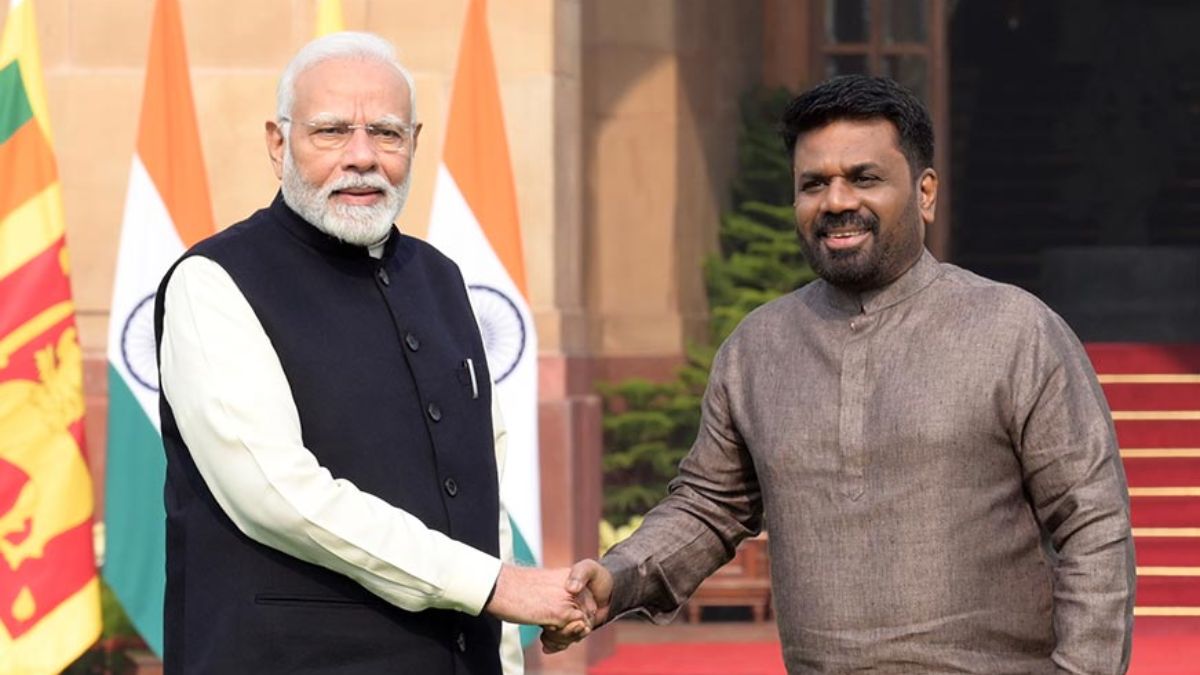
Mounting instability in West Asia is raising fresh concerns over global trade disruptions, prompting India and Sri Lanka to strengthen bilateral cooperation to safeguard commerce and energy flows. In a recent high-level exchange, Prime Minister Narendra Modi and President Anura Kumara Dissanayake emphasized faster implementation of joint energy and trade initiatives to reduce exposure to volatile maritime routes, particularly through the Strait of Hormuz.
The developments come as geopolitical tensions continue to push up shipping costs and insurance premiums across key trade corridors. A significant share of India’s energy imports and trade with Gulf economies depends on routes passing through the Strait of Hormuz, making supply chains vulnerable to disruption. For both India and Sri Lanka, rising freight costs and delays at major transshipment hubs in the Gulf region are adding pressure on trade flows and domestic prices.
India’s trade with West Asia remains substantial, with the region serving as a key source of crude oil, liquefied natural gas (LNG), and fertilizers. Any disruption in these flows has direct implications for industrial production and inflation. Fertilizer imports, particularly for agriculture, are sensitive to supply interruptions, while higher energy costs impact sectors such as steel and manufacturing.
Sri Lanka, still stabilizing after its 2022 economic crisis, faces parallel risks. Its trade with India—valued at over $5 billion annually—relies heavily on stable shipping routes and preferential market access. Under existing trade arrangements, Sri Lankan exports such as garments and tea benefit from tariff concessions, supporting its export competitiveness.
However, ongoing disruptions in West Asia threaten these gains. Delays at major Gulf logistics hubs and rising transportation costs are affecting the movement of goods, including textiles and essential commodities. Increased input costs, particularly energy, also risk undermining Sri Lanka’s garment sector, a key export driver.
To mitigate these risks, India and Sri Lanka are prioritizing energy connectivity as a strategic tool for trade resilience. Key projects under discussion include a cross-border electricity grid interconnection, expansion of renewable energy initiatives such as the Sampur solar project, and enhanced cooperation in LNG supply.
The proposed grid link would allow Sri Lanka to access electricity from India, reducing dependence on imported fossil fuels and shielding its economy from global oil price volatility. Simultaneously, India stands to benefit from exporting surplus renewable energy, strengthening its position in regional energy markets.
The development of the Trincomalee oil tank farm as a regional energy hub is also gaining traction. The project is expected to improve storage and distribution infrastructure, supporting more stable energy supplies for both countries.
Both countries are also exploring mechanisms to facilitate trade settlements in local currencies, including the Indian rupee and Sri Lankan rupee. This move aims to reduce dependence on the US dollar, lower transaction costs, and enhance financial resilience amid global currency fluctuations.
In parallel, discussions around expanding economic cooperation frameworks are ongoing, with a focus on addressing trade imbalances while promoting investment and technology exchange.
As global trade faces increasing fragmentation and geopolitical risks, the India–Sri Lanka partnership highlights the growing importance of regional and bilateral solutions. By integrating energy cooperation with trade strategy, both countries aim to build more resilient supply chains and reduce vulnerability to external shocks.
The ongoing initiatives reflect a broader shift toward securing trade through infrastructure, diversification, and policy coordination—positioning India and Sri Lanka to better navigate an increasingly uncertain global economic environment.