
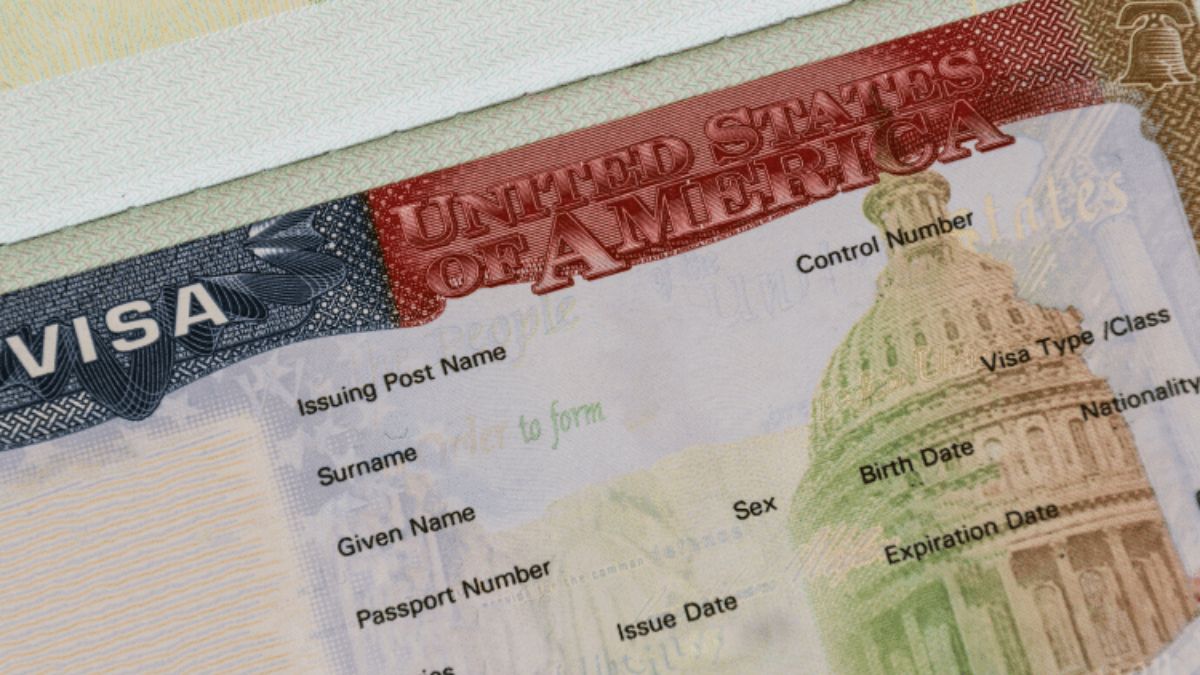
When the United States State Department confirmed that more than 100,000 visas had been revoked in under a year, it framed the figure as an administrative achievement, a technical triumph of data driven governance under President Donald Trump’s second administration. In legal reality, it marks one of the most consequential shifts in modern migration control since the aftermath of 11 September 2001.
Behind the statistics lies a transformation of how the world’s most powerful state interprets sovereignty, jurisdiction over non citizens, and the limits of procedural fairness once a person has already crossed the border. The creation of the Continuous Vetting Center, a post entry surveillance and enforcement architecture that monitors visa holders inside the United States in real time, is not merely a bureaucratic reform. It is a structural recalibration of immigration law from a system historically centred on entry screening to one of permanent legal probation.
The legal foundation for visa revocation is neither new nor obscure. Section 221(i) of the United States Immigration and Nationality Act grants the Secretary of State authority to revoke a visa at any time, at his or her discretion. For decades, this provision functioned as a narrow security valve, used sparingly in cases of fraud, terrorism concerns, or gross criminal conduct. It was rarely deployed at scale, largely because of administrative limits and political restraint.
That restraint has now vanished.
The Trump administration’s statement that revocations have risen by more than 150 percent since 2024 reflects not only increased enforcement but a redefinition of what constitutes a threat to public safety. Assault, theft and driving under the influence, cited by officials as grounds for cancellation, are criminal offences that in many jurisdictions result in fines or short custodial sentences, not automatic banishment. In the United States immigration system, however, the line between criminal law and administrative exile is thin and increasingly blurred.
This is where constitutional tension begins.
Foreign nationals inside the United States, even those on temporary visas, are protected by the Fifth Amendment guarantee of due process. The Supreme Court has long held that once a person is physically present in the country, the government cannot deprive them of liberty without fundamentally fair procedures. Yet visa revocation is an executive act that often occurs without prior notice, without a hearing, and without an effective right of appeal.
In practice, revocation frequently triggers immediate detention by Immigration and Customs Enforcement and removal proceedings before immigration judges whose jurisdiction is limited and whose independence is structurally constrained by the Department of Justice.
The Continuous Vetting Center intensifies this imbalance. By integrating criminal databases, intelligence reporting, and administrative immigration records, it allows the State Department to cancel legal status remotely, sometimes within hours of an arrest or charge, long before any conviction is secured.
From a rule of law perspective, this creates a system of anticipatory punishment. Individuals may lose their right to remain in the country based on allegations that would not yet meet evidentiary standards in any criminal court. For lawyers trained in constitutional process, this represents a profound erosion of the distinction between suspicion and guilt.
The international consequences are no less severe.
Visa issuance is governed not only by domestic law but by reciprocal expectations embedded in international relations. The Vienna Convention on Consular Relations obliges states to treat foreign nationals with basic procedural dignity and to provide access to consular assistance in cases of detention or removal. Large scale revocations, particularly when conducted without transparency or notification to sending states, strain these diplomatic norms.
Countries whose students, engineers and professionals are disproportionately affected will inevitably reassess their own visa regimes. Retaliation may be subtle but systematic, in the form of tighter screening of American travellers, expanded security deposits, or restrictions on professional mobility.
For allies, this introduces a new dimension of legal uncertainty. European Union citizens, Japanese researchers, Indian technology workers and African medical trainees all now operate under the knowledge that lawful presence in the United States no longer guarantees stability. Status is conditional, continuously audited, and vulnerable to algorithmic escalation.
From a trade perspective, the impact is measurable.
The United States relies heavily on temporary foreign labour in sectors ranging from software engineering to university research and healthcare. Sudden visa cancellations disrupt contracts, violate commercial expectations, and expose American employers to breach of employment litigation. While immigration law preempts many labour protections, multinational corporations increasingly structure investment decisions around regulatory predictability. A jurisdiction that treats foreign personnel as permanently revocable assets becomes, in legal terms, a higher risk operating environment.
The justification advanced by the State Department is national security.
This rationale draws rhetorical strength from post 2001 counterterrorism doctrine, yet the offences cited in official statements are overwhelmingly ordinary criminal conduct. There is no public evidence that the majority of the revoked visas involved terrorism, espionage or organised crime.
Under international human rights law, this distinction matters.
The International Covenant on Civil and Political Rights, to which the United States remains a party, prohibits arbitrary interference with family life and guarantees equality before the law. Deportation following serious crime may be lawful. Deportation triggered by administrative revocation based on minor offences or unresolved charges enters legally contested territory.
The Human Rights Committee has repeatedly held that removal must be proportionate, necessary, and accompanied by meaningful review. A system that automates revocation for wide categories of behaviour risks violating this standard.
Yet perhaps the most consequential shift is conceptual.
The Continuous Vetting Center institutionalises the idea that migration status is not a legal condition but a revocable licence, akin to a security clearance. It transforms visas from permission to enter into instruments of behavioural control. The foreign national becomes a subject of permanent evaluation, not a temporary resident with rights.
Historically, liberal democracies distinguished themselves from authoritarian systems by limiting the state’s surveillance power over lawful residents. This boundary is now eroding.
Even from a purely strategic standpoint, the policy carries risks.
Mass revocations fuel narratives of American unpredictability at a time when Washington is competing with China, the European Union and Gulf states for global talent. While Beijing tightens exit controls and Brussels liberalises skilled migration, Washington is signalling that legal residence is fragile.
For developing countries, the message is equally stark. Remittances, student mobility and professional training pipelines depend on legal certainty. Sudden cancellations destabilise families, disrupt education and trigger diplomatic disputes that extend far beyond immigration departments.
The State Department insists that the programme enhances safety. The legal question is whether it does so at a cost that undermines the very constitutional and international norms that distinguish lawful security from executive overreach.
There is also a quiet institutional consequence. By shifting enforcement authority from immigration courts to administrative vetting centres, the executive branch consolidates power that historically belonged to quasi judicial bodies. This concentration would alarm any constitutional scholar.
In the long arc of American immigration law, moments of crisis have repeatedly expanded executive discretion, from the Chinese Exclusion Act to the internment of Japanese Americans, from McCarthy era deportations to the post 9/11 security state. Each was justified as exceptional. Each later became a cautionary precedent.
The revocation of over 100,000 visas in less than a year may one day be viewed in the same light.
Not merely as an immigration policy, but as the moment when the legal meaning of lawful presence in the United States quietly changed.
From entry right to conditional privilege.
From procedural protection to administrative vulnerability.
And from temporary visitor to permanently monitored subject of the state.
Whether courts, Congress or international pressure will restrain this architecture remains uncertain. What is clear is that the legal geography of migration has shifted. Borders no longer end at airports. They now extend invisibly into classrooms, workplaces and homes, enforced not by passport stamps but by databases, revocation notices and a doctrine that treats sovereignty as incompatible with stability.
For the global order, that is not a technical adjustment.
It is a structural warning.