

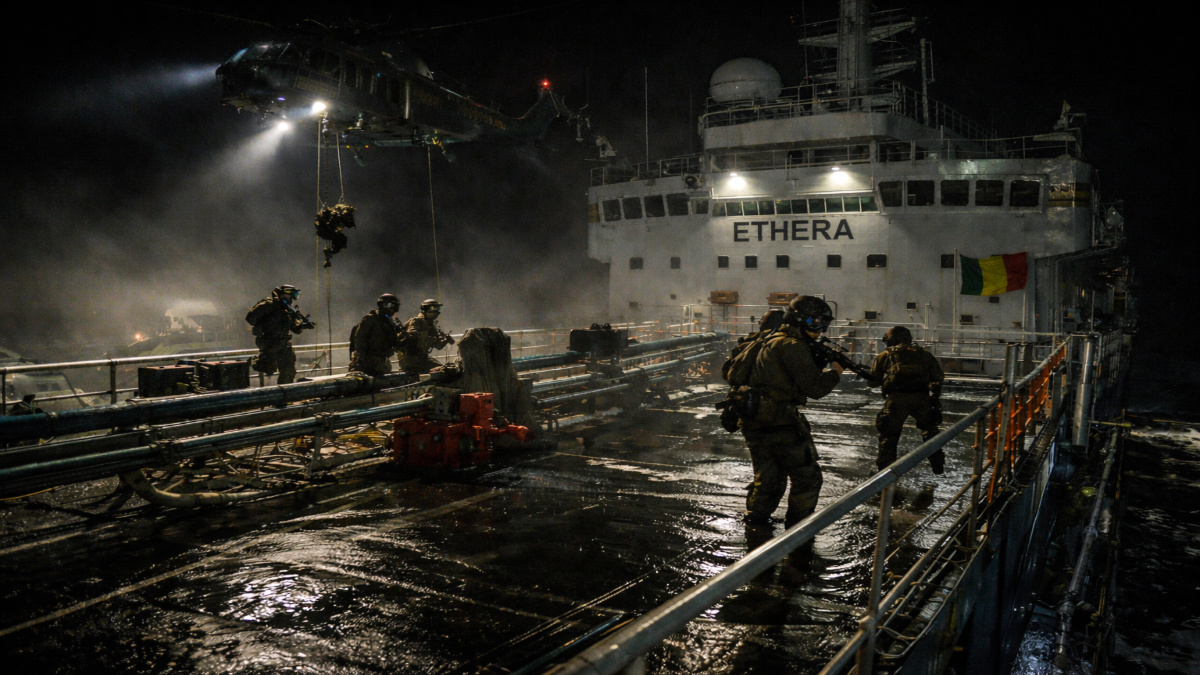
Belgium has captured an oil tanker in a dramatic overnight raid in North Sea, which is one of the most aggressive moves taken by Europe so far against vessels suspected to be assisting Russia in circumventing sanctions. The ship was called the Ethera and was seized on a Saturday evening in the exclusive economic zone of Belgium and then escorted to the port of Zeebrugge where it was confirmed that the ship was soon to be formally seized.
Theo Francken, the Defence Minister of Belgium, said that special forces had boarded the ship during a secret operation with the help of French military helicopters. Night-vision shots by Belgian police showed troops falling down the tanker decks. The action highlights an increasing willingness of European states to physically intercept ships who are suspected to be breaking sanctions enforced to respond to the war in Ukraine by Russia.
The prosecutors said that Ethera was flying the flag of Guinea and was supposed to be heading back to Russia when they intercepted it. The captain of the ship is a Russian citizen who is in the process of being questioned as a criminal investigation. The Federal Prosecutor’s Office in Belgium also claimed that the documents found on board were suspect of being forged.
It is thought that the tanker was a part of a so-called shadow fleet of Russia, a group of old, frequently uninsured or underinsured ships that carry Russian crude oil, but whose origin is hidden. The vessels often operate under the flag of countries like Panama, Gambia, Barbados, or Comoros, and thus conceal the ownership and circumvent limitations. The oil is usually transported to other places like China and India, processed there and then sold without being recognized as being Russian, thus bypassing the sanctions of the West.
The takeover is an indication of a tougher European position as many analysts see it. The western naval forces have been monitoring suspected shadow fleet ships in both Baltic and North Sea areas since the start of the year. The United States, the United Kingdom, France, and Germany have stepped up surveillance activities and indicated that they are more willing to board ships when required.
Ukrainian president Volodymyr Zelenskyy praised the move by Belgium terming it as a decisive strike against what he termed as the floating purse of Moscow. He also thanked France that supported them in the operation. French president Emmanuel Macron described the interception as a significant attack on the shadow fleet of Russia, and that French naval helicopters had aided Belgian troops.
Belgian Prime Minister Bart De Waver praised the military in their successful operation and reiterated Belgium in its desire to enforce the international maritime law and protect its own waters.
In addition to sanctions evasion, shadow fleet ships have been associated with bigger security issues. Others have been involved in possible sabotage of underground infrastructure, such as electrical and data cables and gas pipelines. The EU has threatened that some of the ships might be involved in launching drones, interference with radar, or espionage.
There is an additional concern of environmental risks. Since many of these vessels are in poor condition, some barely able to reach the services of the necessary maintenance because of sanctions, the government is concerned that the increasing fleet is an ever-increasing threat to maritime security and the marine environment.
The firm stand of Belgium towards the Ethera is an indication that the European governments are no longer satisfied with passive observation but are ready to take active steps to implement sanctions and maritime law.