
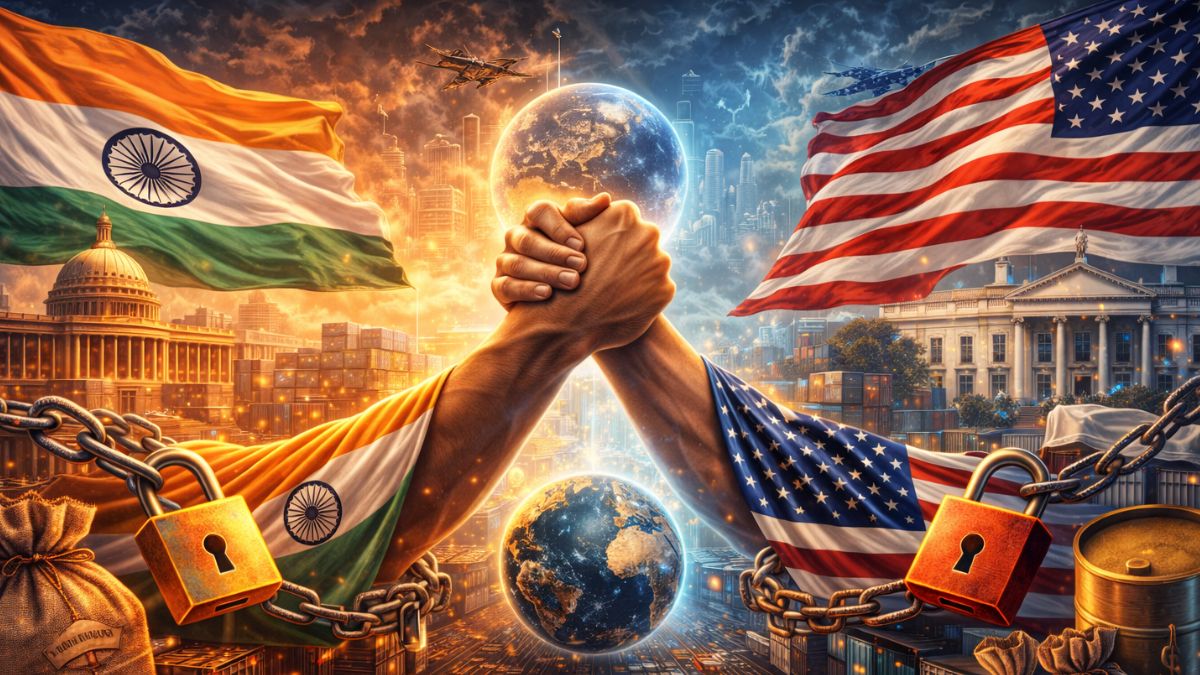
The prolonged deadlock in the India United States trade negotiations is widely portrayed as a technical dispute over tariffs market access and regulatory barriers. That reading is convenient but misleading. What is unfolding in early 2026 is not a stalled trade deal but a stress test of whether two strategic partners can engage as economic equals in a global order where trade has become an instrument of power rather than exchange.
The repeated optimism followed by disappointment in the negotiations reflects a deeper contradiction. Both sides publicly describe the relationship as indispensable yet privately negotiate as if leverage must be exercised rather than accommodated. This contradiction explains why working level discussions appear complete while political clearance remains elusive.
The escalation of tariffs under Section 232 of the US Trade Expansion Act is the clearest expression of this dynamic. Originally conceived as a narrow national security safeguard the provision has been repurposed to discipline economic behaviour that Washington views as strategically misaligned. India’s continued procurement of Russian crude has been treated not as a sovereign energy choice but as a geopolitical defiance. The imposition of a fifty percent tariff transformed trade remedies into a message. The message was not about steel or textiles. It was about alignment.
From an Indian legal perspective this move raised a fundamental concern. If tariffs justified on national security grounds can be deployed against a strategic partner for exercising autonomous trade policy then economic engagement becomes conditional rather than cooperative. Accepting that logic would erode India’s ability to conduct independent foreign and economic policy. This is why New Delhi’s response has been firm yet measured. It has rejected the premise without escalating the conflict.
Washington’s frustration with India’s trade regime predates the current impasse. What has changed is the tempo. Previous administrations tolerated gradual reform recognising the political and legal constraints of a large democracy. The current approach demands acceleration. That demand collides with India’s institutional reality. Trade liberalisation in India is inseparable from domestic political legitimacy judicial review and social stability. Structural reform is not an executive act alone. It is a negotiated domestic process.
The agricultural dispute captures this clash of systems. The United States views market access for genetically modified crops as a commercial necessity driven by global surplus and reduced Chinese demand. India views the same issue through the lens of food sovereignty rural employment and export positioning. India’s resistance is not ideological. It is strategic. The global premium on non genetically modified produce gives India leverage that would be diluted by opening its domestic market. From a trade law standpoint India’s position remains defensible under sanitary and phytosanitary disciplines provided regulatory consistency is maintained.
Digital trade represents an even more consequential fault line. The debate over the WTO e commerce moratorium is not about customs duties in the narrow sense. It is about whether developing digital economies should permanently surrender regulatory options before their domestic sectors mature. For the United States permanent moratorium locks in advantage. For India it freezes asymmetry. India’s insistence on retaining policy space reflects a broader global rethinking of digital sovereignty rather than reflexive protectionism.
Investment flows over the past year illustrate how trade disputes now transmit geopolitical risk directly into capital markets. The sharp reversal from robust inflows to sustained outflows following tariff escalation reflects investor perception that political leverage has entered the economic relationship. This reinforces India’s determination to avoid dependence on any single capital source. Diversification becomes both an economic and strategic imperative.
What makes the impasse particularly striking is that it exists alongside unprecedented strategic convergence. The United States National Security Strategy explicitly positions India as central to Indo Pacific stability and supply chain resilience. Defence cooperation technology sharing and strategic dialogue continue to deepen. Yet trade negotiations lag because economic equality has not caught up with strategic rhetoric.
The remaining barrier is political rather than technical. Working level negotiators have narrowed differences. Indian authorities have addressed concerns on import quality checks and regulatory transparency. Creative pathways exist on agriculture and digital trade. What is missing is a political decision in Washington to treat India not as a market to be pried open but as a partner whose autonomy must be respected.
In this sense the trade deal is unfinished because the relationship itself is still evolving. India is no longer negotiating from the margins of the global economy. It is negotiating from a position of growing weight and strategic indispensability. The United States must decide whether its trade policy can adapt to that reality.
The choice before both capitals in 2026 is clear. They can continue to use trade as a lever of pressure and risk eroding trust or they can recognise that sustainable partnership requires accommodation rather than coercion. When that recognition occurs the deal will not merely be signed. It will be durable.