

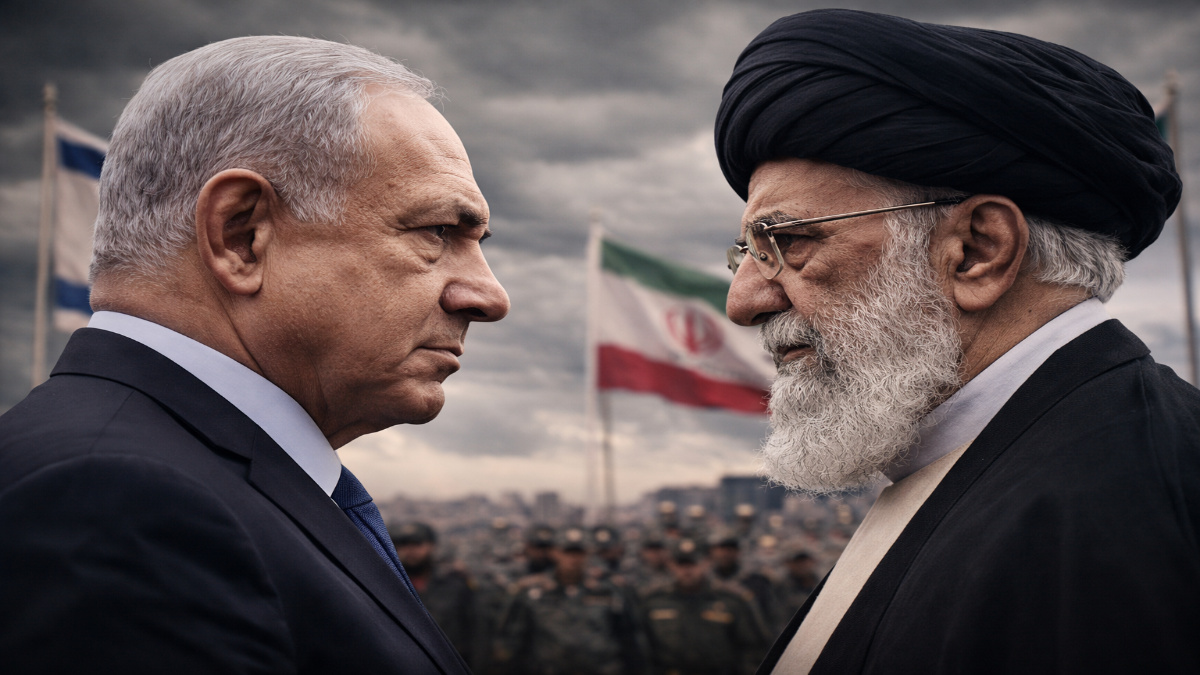
The history of Iran–Israel relations has been one of the most significant changes in the history of the Middle East since the quiet strategic cooperation has turned into the open-hostility military conflict by early 2026. The hostility witnessed in the current times was not a sudden event; it is the logical climax of several decades of ideological division, proxy wars, covert actions, and the growing failures of deterrence that weakened the chances of coexistence.
In 1948, upon the declaration of the State of Israel, Iran under Shah Mohammad Reza Pahlavi was the second Muslim dominant nation to recognize it, after Turkey. In spite of the fact that formal diplomatic cordiality was at a minimum, practical cooperation was growing slowly but steadily. Israeli strategic planners have considered Iran as a component of a peri doctrine where they have attempted to ally with non Arab states in the region as a counter to Arab nationalistic governments. The focus was on energy cooperation: Iranian oil was flowing to Israel, even via the arrangements that were linked to the Eilat Ashkelon pipeline. Covert intelligence coordination and military cooperation was alleged to intensify in 1960s and 1970s and resulted in initiatives including the “Project Flower” an interagency missile-development venture. Commercial relationships were developed, and even civil aviation connections, including flights of El Al, were a gesture of practical relations between Tehran and Tel Aviv. During this period, Iran was seen as a stabilising non-Arab friend in an unstable region in Israel.
That alignment failed due to the 1979 Islamic Revolution. The revolution and the fall of the Shah and Ayatollah Ruhollah Khomeini essentially changed the ideological and foreign-policy course of Iran. The new Islamic Republic broke off ties with Israel, handed over the former Israeli embassy in Tehran to the Palestine Liberation Organization and entrenched the anti-Israeli stance in the doctrine of the state. Israel was no longer a far off diplomatic ally, but an ideological opponent that was presented as part of revolutionary discourse. What was seen as a pragmatism based on strategy was substituted with ideological confrontation.
This confrontation became gradually more and more indirect in the 1980s. In the invasion of Lebanon by Israel in 1982, the Islamic Revolutionary Guard Corps (IRGC) provided assistance to the cultivation of Hezbollah that developed into a strong armed and political force in Lebanon. Iran has been accused by Israel and the United States of arming, training and financing Hezbollah as a deterrent force towards Israel in the northern border. With time, Iranian networks of support were spread to Palestinian organizations like Hamas and Palestinian Islamic Jihad, militia in Iraq and Houthi in Yemen. According to Tehran, this network is an Axis of Resistance, and some of these actors are terrorist organisations according to Israel and its western allies. The Lebanon War of 2006 was a turning point in this proxy game as Hezbollah fired thousands of rockets into Israel. Israeli officials claimed that there was the involvement of the IRGC advisors in operational coordination.
The rivalry escalated because of nuclear tensions. In 2002, information about the Iranian nuclear sites that had not been reported before at Natanz and Arak, raised international concern. Iran demanded that its nuclear programme was a civilian and peaceful one. It was however characterised by Israel as an existential threat. This was followed by a long phase of underhanded conflict. The widely-known 2010 Stuxnet cyberattack that is thought to have been perpetrated by Israeli and American intelligence harmed Iranian centrifuges. In 2010-2012, a number of Iranian nuclear scientists were murdered in operations Tehran which Israel through its intelligence agencies claimed. Blasts of missile and research stations also contributed to the feeling of suspicion and mistrust. Israel insisted that it had the right to take action against the development of Iran into a nuclear-weapons state and Iran charged Israel with unlawful sabotage.
The civil war in Syria caused the two states to be closer in their operations. Iran sent troops and materials to back the Assad regime, and Israel was carrying out more and more airstrikes within Syria, which it claimed were the transfer of Iranian weapons and entrenchment along its borders. Hundreds of such strikes have been recognised by Israeli officials since 2017. Iran has claimed that Israel has violated the sovereignty of Syria, and Israel claims the strikes are pre-emptive defensive actions taken to stop strategic encircements.
As early as the 2020s, shadow conflict was replaced by more direct exchanges. Iran retaliated in April 2024 by unleashing a massive wave of drone and missile attacks on Israel following an Israeli attack on an Iranian diplomatic compound in Damascus that is claimed to have killed senior IRGC officials. The overwhelming majority of projectiles were intercepted by Israeli air-defence systems with the assistance of regional and western partners. Subsequently, in the same year, additional missile attacks were made on targeted assassinations of militant leaders which were blamed on Israel. These episodes marked a break: state-to-state struggle was no longer a possibility.
In the meantime, tension began to build up in Iran. In late 2025, economic hardships, currency depreciation, and inflation were some of the factors that led to massive protests. Major casualties were reported by the international human-rights organisations when the crackdowns were taking place. The Iranian officials claimed that foreign governments meddled in Iranian affairs, and the leaders of the West expressed rhetoric support to the demonstrators. The internal aspect brought about a volatile external situation.
The most significant intensification was on 28 February 2026 with Israel and the United States coordinated attacks on Iranian military bases, air defences and nuclear-related facilities. The targets of the operations, which were defined as defensive and pre-emptive in official statements, were located in Tehran, Isfahan and other strategic places. There were rumors of the probable death of the Supreme Leader Ayatollah Ali Khamenei, but the Iranian leaders never verified the rumors at the time. Iran reacted by launching missiles into the territory of Israel and the U.S. posts in the Gulf region. Many of the incoming threats were intercepted by defensive systems but regional damage was reported.
By 1 March 2026, the conflict will be at a dangerous point. What started as silent strategic convergence in the middle of the twentieth century has changed into ideological discontinuity after 1979, and then has developed into decades of proxy warfare and backdoor sabotage, and is currently passing into the realm of open military conflict. Both stages were indications of the larger regional changes: the collapse of the Cold War, the development of non-state armed forces, issues of nuclear proliferation, and the changing alliances in the Middle East.
The history of Iran-Israel relations evidences that ideological confrontation, deterrence policy and the growing retaliation may deepen the enmity between the two countries across generations. It is still unclear as to whether the occurrences of 2026 will be the climax of the confrontation or the start of a more extensive realignment on the regional scale. What is evident is that a relationship that was characterized by discrete collaboration is now one of the most decisive and unstable rivalries that characterize the Middle East today.