Hyundai Motor latest earnings are not merely a story of profit decline or quarterly underperformance. They are a case study in how trade policy, domestic politics, and geopolitical leverage increasingly shape the fortunes of global industrial champions. The sharp fall in Hyundai profitability in the final quarter of 2025 exposes a deeper structural reality. In the current international order, tariffs are no longer temporary trade tools. They are instruments of sustained political influence.

The South Korean automaker disclosed that United States tariffs cost it approximately 4.1 trillion won in 2025, with a similar burden expected in 2026. This is not an accounting footnote. It is a direct manifestation of how policy uncertainty in Washington now reverberates through corporate strategy rooms in Seoul and boardrooms across Asia and Europe.

The return of Tariff diplomacy and its corporate casualties

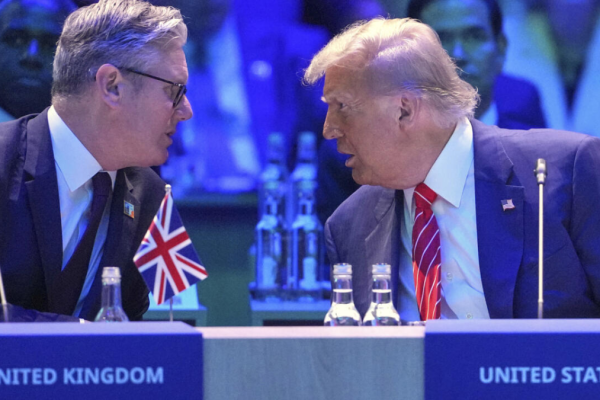
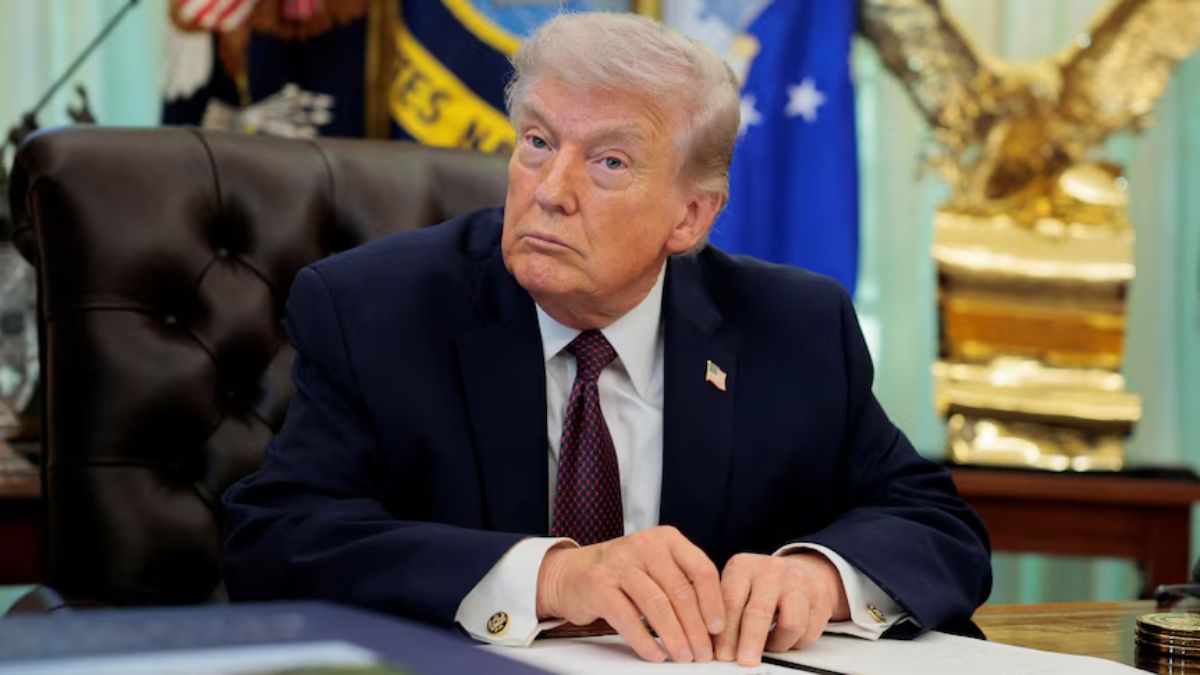
The renewed threat by President Trump to reinstate twenty five percent duties on most South Korean exports has injected fresh instability into an already fragile global trade environment. Unlike earlier tariff disputes driven by narrow sectoral concerns, this episode sits at the intersection of domestic legislative approval, bilateral investment commitments, and executive pressure tactics.

Hyundai finds itself exposed not because of poor execution, but because it is structurally embedded in the United States market. Its production footprint, supply chains, and revenue base are deeply intertwined with American consumers. That integration once represented strategic strength. Today, it has become a channel for political risk transmission.

The inability of Seoul legislature to approve the late October trade pact has effectively converted Hyundai balance sheet into a negotiating lever. This represents a significant evolution in how trade agreements are enforced. The economic consequences are no longer delayed or abstract. They are immediate and corporate specific.

Earnings decline as a signal of strategic vulnerability

Hyundai net profit slump of fifty two percent in the fourth quarter of 2025 is striking not only in magnitude but in what it reveals about limited corporate insulation from geopolitical shocks. Despite a modest rise in revenue, operating profit fell sharply, reflecting the blunt force of tariff costs that cannot be easily offset through pricing or volume.

The company acknowledged that lower duties introduced in November provided minimal relief due to accumulated inventory. This underscores a critical limitation of tariff adjustments. Once supply chains and inventory cycles are set in motion, policy reversals often arrive too late to prevent damage.

From an international trade perspective, this highlights the lag mismatch between political decision making and industrial reality. Corporations operate on production horizons measured in years. Political cycles operate in weeks.

South Korea strategic dilemma between compliance and sovereignty

The Hyundai episode also reflects the broader dilemma facing South Korea as a mid sized export driven economy. On one hand, Seoul has pledged a three hundred and fifty billion dollar investment commitment to the United States, signalling alignment with American industrial priorities. On the other, domestic legislative processes impose constitutional limits on executive compliance.

This tension illustrates a growing challenge for democratic trade partners of the United States. Trade relationships are increasingly shaped by executive pressure rather than multilateral frameworks. For corporations like Hyundai, this introduces uncertainty that cannot be diversified away.

The dispatch of South Korea industry minister to Washington highlights the extent to which corporate earnings are now intertwined with diplomatic crisis management.

Competition from china and the shrinking margin for error

Hyundai own description of 2025 as a year of slowing demand and intensifying competition is notable for what it omits. Chinese automakers expanding aggressively into global markets are benefiting from state support structures that partially insulate them from external tariff shocks.

This asymmetry places companies like Hyundai at a disadvantage. They operate within liberal market frameworks while competing against firms embedded in state coordinated systems. Tariffs amplify this imbalance by penalising exposure rather than inefficiency.

The result is a narrowing strategic margin where profitability becomes increasingly contingent on political alignment rather than market performance.

Robotics and artificial intelligence as strategic hedging

Hyundai accelerating investment into robotics and artificial intelligence should be read as more than technological ambition. It is a strategic hedge against the commoditisation of automotive manufacturing and the politicisation of trade.

The company push into physical artificial intelligence through Boston Dynamics signals a long term repositioning away from tariff vulnerable product categories. Robotics, software defined vehicles, and advanced driver assistance systems are less exposed to border taxation and more aligned with intellectual property driven value creation.

The projected valuation uplift associated with Boston Dynamics by 2035 suggests that investors are already discounting future geopolitical resilience into Hyundai share price. The market reaction to earnings reinforces this view. Despite weak results, shares rose sharply, indicating confidence in long term strategic adaptation rather than near term performance.

Legal and governance implications for multinational corporations

From a legal standpoint, Hyundai situation raises important questions about director duties and risk disclosure. As tariffs become predictable instruments rather than exceptional shocks, boards may face increasing scrutiny over how geopolitical risks are incorporated into corporate planning.

The availability of forward guidance acknowledging continued tariff impact suggests that geopolitical exposure is now a permanent risk factor. Failure to mitigate or transparently communicate such risks could attract regulatory and shareholder attention in multiple jurisdictions.

Hyundai as a mirror of the new trade order

Hyundai earnings slump is not an isolated corporate setback. It is a reflection of a global trade system where power politics increasingly override market logic. Tariffs are no longer negotiating tools aimed at resolution. They are mechanisms of sustained pressure with corporate balance sheets as collateral.

For multinational manufacturers, the lesson is stark. Competitive advantage now depends as much on geopolitical adaptability as on product quality or scale. Those unable to reposition toward technology driven and politically resilient value chains will remain exposed.

Hyundai response suggests it understands this reality. The question is whether the broader global auto industry can adapt quickly enough in a world where trade policy has become a strategic weapon rather than a regulatory framework.

TOPICS: Hyundai TRUMP