
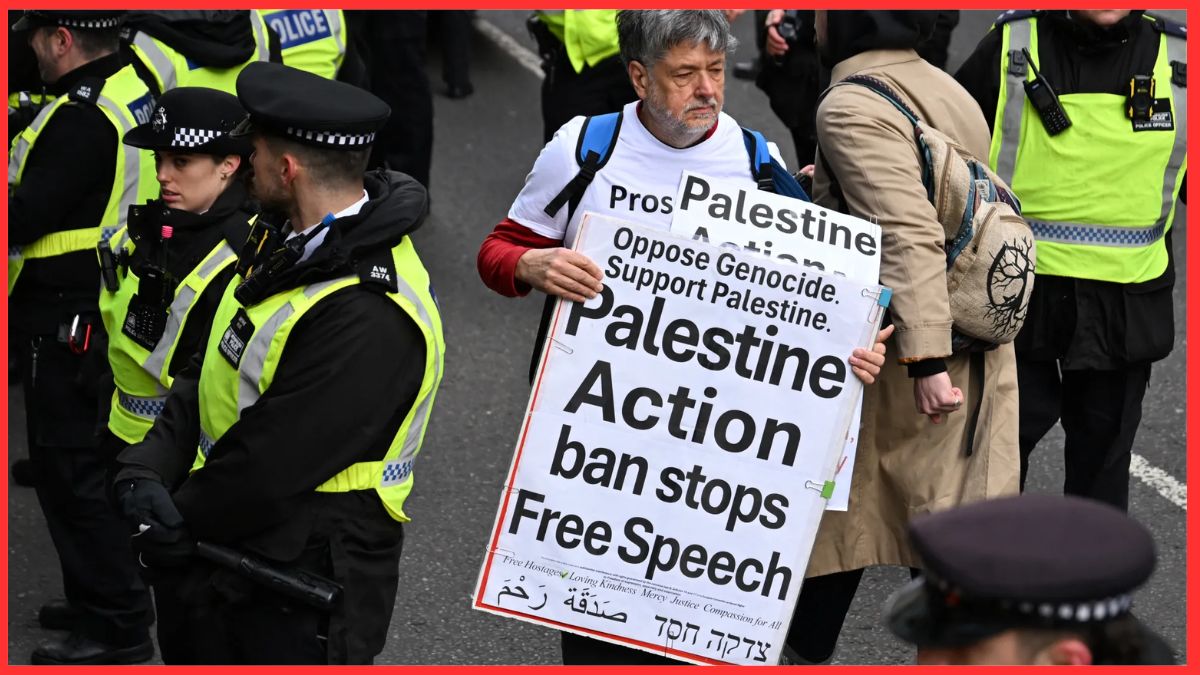
British authorities detained dozens of demonstrators in west London over the weekend after a protest outside HMP Wormwood Scrubs drew attention to the ongoing hunger strike of a young detainee linked to the now-proscribed direct action network Palestine Action. The incident, which unfolded on Saturday, has placed renewed public focus on prison protest law, policing powers, and the treatment of remand prisoners, resonating strongly with audiences across Europe and the Middle East following the group’s recent ban in the United Kingdom.
Mass Arrests at Wormwood Scrubs Prison Highlight UK Response to Palestine Action Protests
The Metropolitan Police confirmed that 86 individuals were arrested during a demonstration held on the grounds surrounding Wormwood Scrubs prison in west London, where protesters gathered in support of Muhammad Umer Khalid, a 22-year-old remand prisoner currently on hunger strike. Police stated that those detained were suspected of aggravated trespass after allegedly refusing to leave the prison perimeter and obstructing the movement of prison staff. According to official police accounts, officers intervened after assessing that the protest had escalated beyond lawful assembly, though authorities maintained that prison security itself was not breached during the incident. The arrests followed weeks of heightened attention on the detention of activists associated with Palestine Action, a group recently banned under UK law, amplifying scrutiny of how protest-related offenses are handled within the criminal justice system.
Hunger Strike, Health Concerns, and Official Responses Surround the Detention of Muhammad Umer Khalid
Khalid is the final remaining hunger striker among seven Palestine Action-linked detainees who initiated coordinated food refusals over detention conditions and the group’s proscription. Three of the hunger strikers ended their protest on 14 January after the UK government decided not to proceed with awarding a multibillion-pound contract to the British subsidiary of Israeli defense firm Elbit Systems. Khalid, however, resumed his hunger strike on 10 January following a brief pause. He is being held on remand in connection with charges related to an alleged break-in at RAF Brize Norton airbase in June of the previous year.
Through an intermediary speaking to Middle East Eye, Khalid conveyed that he believed the government had shown indifference to the physical deterioration of hunger strikers and that their suffering had not influenced official decision-making. He has also asserted that prison authorities significantly restricted his mail, phone access, and visits, reporting minimal contact over several weeks. His health situation has drawn particular concern, as he lives with muscular dystrophy, a rare genetic condition characterized by progressive muscle weakness, which previously forced him to halt a hunger strike after rapid deterioration.
The Ministry of Justice responded on Sunday by condemning the escalation of protests at Wormwood Scrubs, while affirming support for peaceful demonstrations. Officials emphasized that any actions posing risks to prison staff would face consequences and stated that detainees are being managed under established policy, including regular medical monitoring and hospital transfers when deemed necessary by healthcare professionals.