When European Union ministers gave final approval to a complete ban on Russian gas imports by late 2027, the decision marked far more than an energy policy shift. It signalled a structural recalibration of Europe’s strategic identity. For decades, Russian gas was not merely a commodity flowing through pipelines into Europe’s industrial heartland. It was an instrument of interdependence, leverage and geopolitical restraint. With this vote, the EU has chosen rupture over accommodation.
The law makes binding the political commitment the bloc announced in the aftermath of Russia’s full scale invasion of Ukraine in 2022. What had initially been framed as an emergency response has now matured into a long term strategic doctrine. Energy security is no longer treated as an economic variable alone. It has become a central pillar of European foreign policy, defence posture and legal architecture.
From dependence to decoupling: The end of an era
Before the Ukraine war, Russia supplied over 40 percent of the EU’s gas needs. That dependence shaped European diplomacy for a generation. Even during moments of acute political tension, energy trade remained largely insulated. The ban closes that chapter decisively.
Under the approved framework, liquefied natural gas imports from Russia will cease by the end of 2026, while pipeline gas will be fully phased out by 30 September 2027, with a narrow extension to November permitted only where storage security is demonstrably at risk. This sequencing reflects both political resolve and pragmatic caution. It acknowledges that decoupling from a dominant supplier is not a switch that can be flipped overnight, particularly for landlocked and infrastructure constrained states.
Yet the direction of travel is unambiguous. Russia’s remaining share of EU gas imports has already fallen to around 13 percent in 2025. The law ensures that even this residual dependence will be extinguished.
Energy as a weapon and Europe’s legal response
At its core, the ban is a legal response to what European policymakers now openly describe as the weaponisation of energy. Moscow’s use of supply cuts, price volatility and contractual ambiguity since 2022 has convinced Brussels that energy dependence on authoritarian suppliers is a systemic vulnerability.
By embedding the ban in EU law, the bloc has deliberately raised the political and legal cost of reversal. Any future attempt to restore Russian gas imports would require legislative action at the EU level, not merely a shift in national policy or diplomatic tone. This is a crucial point often missed in surface level commentary. The EU is not simply diversifying supply. It is hard wiring strategic distrust into its legal order.
Hungary’s announcement that it will challenge the law before the European Court of Justice underlines the constitutional significance of the move. The case is likely to revolve around energy sovereignty, proportionality and the limits of EU competence. However, given that the measure was adopted through reinforced majority voting, the legal hurdle for annulment will be high. Politically, the challenge may matter more than the outcome. It exposes the growing fault line between Brussels’ strategic consensus and a minority of member states still invested in bilateral energy ties with Moscow.
Central Europe’s dilemma and the fracturing of unity
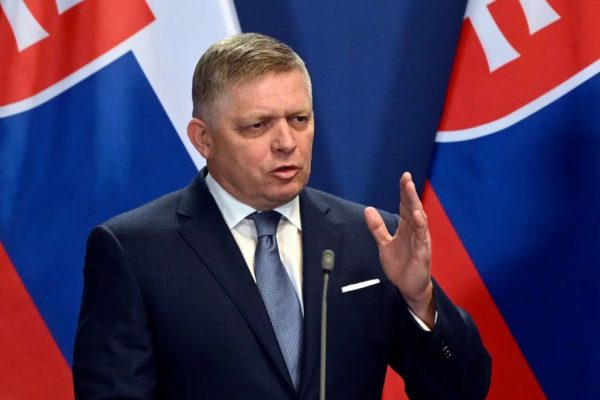
Slovakia and Hungary voted against the ban not out of ideological defiance alone, but because geography and infrastructure have left them disproportionately exposed. Pipeline routes, refinery configurations and long term supply contracts bind these states more tightly to Russian energy than their western counterparts.
This raises a deeper question about the future cohesion of EU foreign policy. Strategic autonomy, as currently defined by Brussels, imposes uneven adjustment costs. While the law includes flexibility clauses linked to storage security, it does not alter the fundamental reality that some member states will bear greater short term economic pain.
The EU is betting that financial solidarity, alternative supply routes and accelerated infrastructure investment will prevent these tensions from metastasising. Whether that bet holds will shape not only energy policy, but the credibility of EU collective action in other strategic domains, including defence and sanctions enforcement.
Global energy markets and the reordering of influence
The ban will reverberate far beyond Europe. For Russia, the loss of the EU market is not merely commercial. It represents the collapse of a cornerstone of its geopolitical influence over the continent. While Moscow has sought to redirect gas exports towards Asia, infrastructure constraints and pricing dynamics mean that Europe cannot be replaced on equivalent terms.
For global markets, the EU’s exit from Russian gas entrenches a more competitive and fragmented supply environment. Liquefied natural gas exporters such as the United States, Qatar and Australia stand to benefit, while African producers gain new strategic relevance. This reordering enhances Europe’s diplomatic engagement with energy producing regions, but also exposes it to new forms of dependency and price volatility.
Crucially, the EU’s decision also reinforces the transatlantic alignment that has emerged since 2022. Energy trade has become a strategic bridge between Europe and the United States, anchoring security commitments in economic reality.
Climate Commitments and Strategic Contradictions
The gas ban sits uneasily alongside Europe’s climate ambitions. In the short to medium term, replacing Russian pipeline gas has required increased reliance on liquefied natural gas, which carries a higher carbon footprint. Critics argue that this risks locking in fossil fuel infrastructure inconsistent with the EU’s net zero targets.
Brussels counters that the ban accelerates the transition by forcing investment into renewables, hydrogen and energy efficiency. In this framing, Russian gas is not only a geopolitical liability but also a structural obstacle to decarbonisation. The truth lies somewhere in between. The next decade will test whether Europe can reconcile strategic decoupling with climate leadership without sacrificing either.
A strategic point of no return
The EU’s Russian gas ban is best understood as a point of no return. It institutionalises a worldview in which economic interdependence with hostile powers is no longer seen as a stabilising force, but as a strategic risk to be systematically dismantled.
Legally binding, politically contentious and geopolitically consequential, the decision will shape Europe’s external relations for decades. It redraws the map of energy influence, hardens the EU’s stance towards Russia and redefines the role of law in strategic statecraft.
In choosing to sever its last major energy tie with Moscow, Europe has accepted higher costs in exchange for greater autonomy. Whether history judges that trade off as visionary or premature will depend on how effectively the EU manages the economic, legal and diplomatic aftershocks of a decision that has already reshaped the international energy order.