

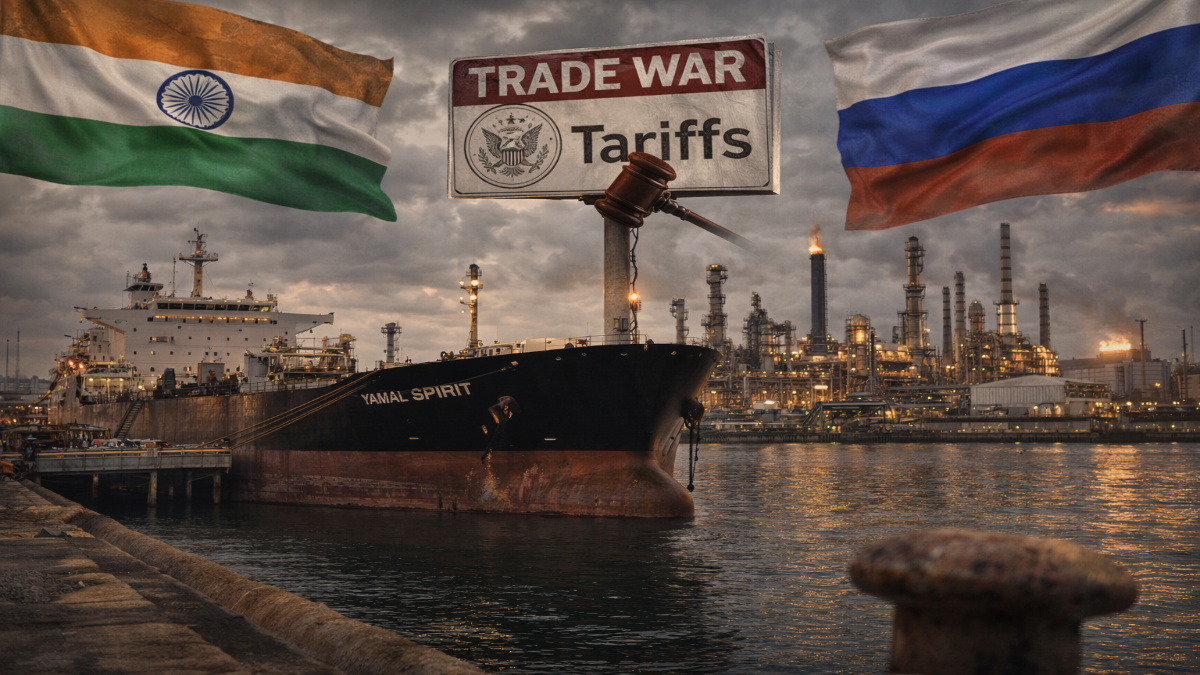
For the last two years, India’s energy strategy has been pretty simple: buy as much discounted Russian crude as the tankers could carry. It was an economic no-brainer that saved New Delhi billions while the rest of the world scrambled for expensive alternatives. But that era appears to be closing. Under the heavy threat of punitive U.S. tariffs, Indian refiners are now hitting the brakes on Moscow and aggressively pivoting back to suppliers in West Asia and the Americas.
The driving force here isn’t market economics; it is pure geopolitical arm-twisting. Washington has slapped tariffs of up to 50% on Indian goods, including a specific 25% “punitive levy” directly linked to India’s energy ties with the Kremlin. With trade talks dragging on and the Trump administration demanding results, the math has changed. It is no longer worth saving a few dollars on a barrel of Russian Urals if it costs you a trade war with your biggest export partner.
The New Shopping List
The shift is already happening on the ground. State-owned giant Bharat Petroleum has effectively swapped out Russian contracts for one-year deals to buy Iraqi and Omani crude through traders like Trafigura. We are seeing a similar scramble for “Murban” crude from the UAE.
Perhaps the most telling move came from Indian Oil Corporation (IOC), which just bought its first-ever cargo of crude from Ecuador. Sourcing oil from South America is logistically painful and expensive compared to shipping it from Russia, but it sends a loud political signal to Washington that India is serious about diversification.
Quietly Closing the Tap
While the government hasn’t issued a formal ban, the major players are reading the room. Refineries like HPCL and MRPL have reportedly stopped buying Russian oil altogether. The numbers back this up, December saw imports from Russia plunge to their lowest level in two years.
This is a calculated gamble by New Delhi. By voluntarily cutting off the Russian tap, they are hoping to talk the U.S. down to a standard 25% tariff rate and finally close a long-delayed trade deal. The cheap oil bonanza was good while it lasted, but India has decided that long-term access to the American market is worth paying a premium at the pump.