
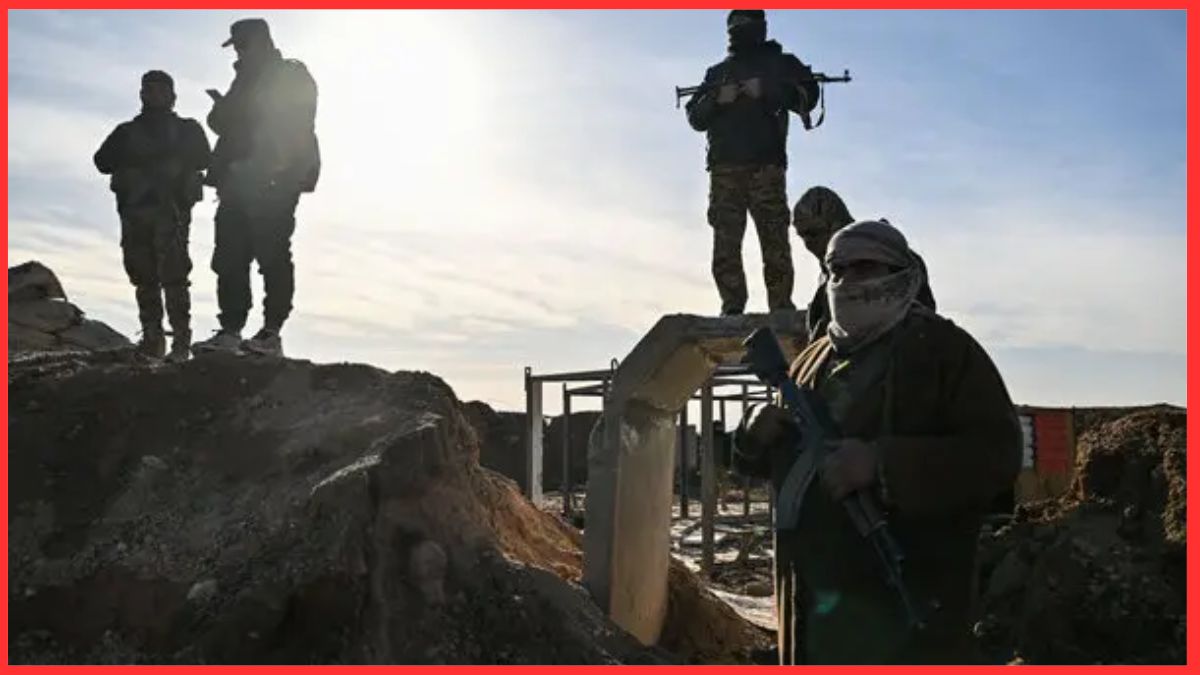
The United States military has initiated a significant logistical and legal operation to relocate Islamic State detainees from northeastern Syria to Iraq, a move unfolding amid rapid territorial changes and evolving security partnerships in the region. The development comes as Syrian government forces expand their control over areas previously administered by Kurdish authorities, reshaping the framework under which thousands of IS-linked prisoners have been held since the group’s territorial defeat.
US Central Command Oversees Initial Transfer of Islamic State Prisoners From Hasakah to Iraq
US Central Command confirmed on Wednesday that approximately 150 Islamic State detainees were transferred from a detention facility in Syria’s Hasakah province to secure locations inside Iraq, explaining that the process is intended to prevent destabilizing prison breaks and safeguard regional security. The command indicated that as many as 7,000 detainees could ultimately be moved to Iraqi-controlled facilities, a shift occurring as the Syrian army takes charge of former Kurdish-administered areas, including the al-Hol camp and the al-Shaddadi prison. Al-Hol alone houses roughly 24,000 people, most of them women and children connected to IS members, including Syrians, Iraqis, and foreign nationals. The transfers coincide with intensified pressure on the Kurdish-led Syrian Democratic Forces to integrate with the central government in Damascus following repeated breakdowns in talks and ceasefires, prompting Syrian forces to advance into additional territory.
Human Rights Concerns and Shifting Alliances Shape the Future of IS Detentions
Human rights organizations have raised alarms over the detainee transfers, warning that prisoners moved to Iraq may face serious risks. Legal advocacy group Reprieve described the development as deeply concerning, citing extensive documentation of summary trials and executions in Iraq and cautioning that detainees could be coerced into confessions through torture. The organization highlighted that dozens of British nationals, most of them children, remain in the camps and prisons, arguing that any transfer carried out with foreign government knowledge could amount to complicity in grave violations. Human Rights Watch has previously criticized Iraq’s counterterrorism trials for relying on confessions obtained under duress, while Amnesty International urged Syrian and Kurdish authorities to preserve evidence of IS crimes and ensure that any prosecutions meet international fair trial standards without recourse to the death penalty. The policy backdrop is also shifting: US envoy Tom Barrack stated earlier this week that Washington’s security partnership with the SDF had largely run its course, with the Syrian government now positioned as the primary counter-IS partner. An Iraqi intelligence official, speaking to the Associated Press, confirmed that detainees of multiple nationalities, including Tunisians and Central Asians, are among those being transferred. According to a recent US State Department report, about 9,000 individuals accused of joining IS remain in detention under SDF control, underscoring the scale and complexity of the challenge as Syria, Iraq, and international actors recalibrate responsibilities for post-IS justice and security.