- 7:39 PM (IST) 21 Jan 2026Latest
Davos live legal updates: Trump says "You'd be speaking German and Japanese without us"
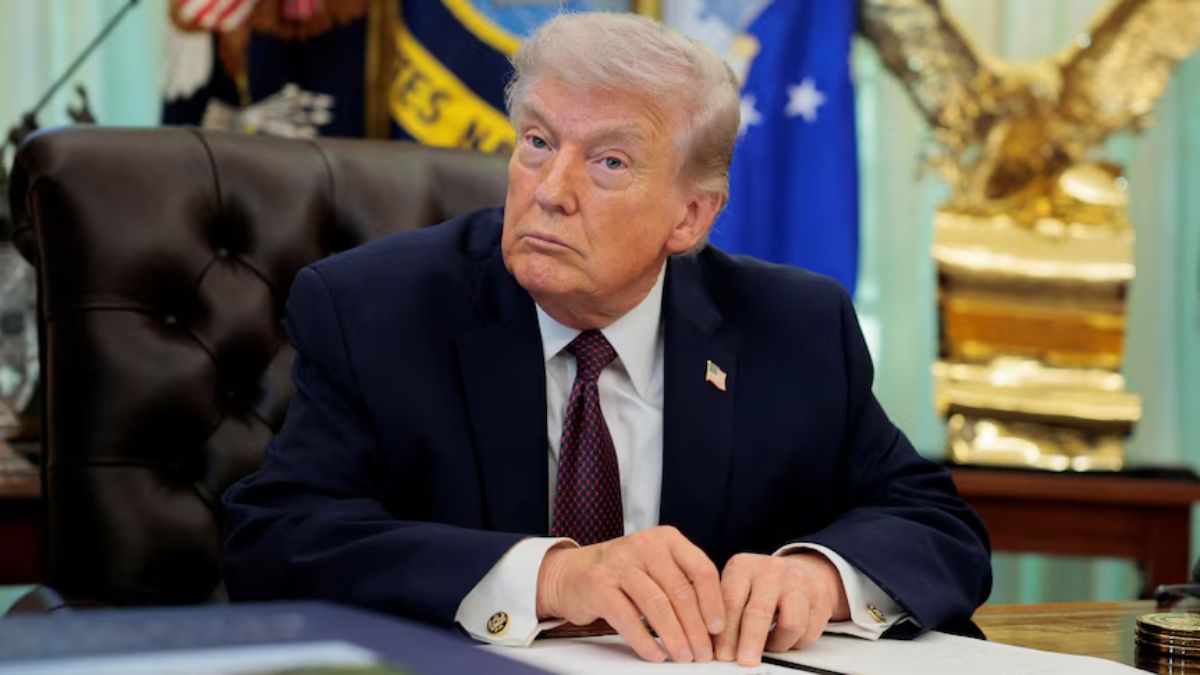
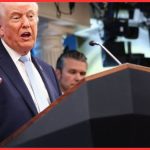
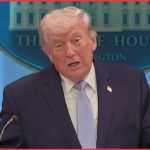
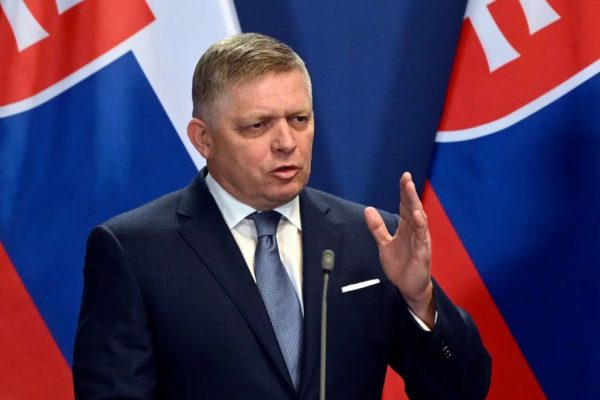
Donald Trump’s address to the World Economic Forum in Davos has crossed from economic nationalism into one of the most legally and geopolitically consequential areas of modern international relations: territorial sovereignty and military control in the Arctic.
Turning to what he himself described as “the issue everyone cares about”, the United States President addressed the Greenland controversy with a mixture of conciliatory language, historical revisionism and explicit strategic assertion. He told delegates that he has “tremendous respect for the people of Greenland and the people of Denmark”, but immediately followed this with a claim that no state other than the United States is capable of securing Greenland.
Donald Trump’s address to the World Economic Forum in Davos has crossed from economic nationalism into one of the most legally and geopolitically consequential areas of modern international relations: territorial sovereignty and military control in the Arctic.
Turning to what he himself described as “the issue everyone cares about”, the United States President addressed the Greenland controversy with a mixture of conciliatory language, historical revisionism and explicit strategic assertion. He told delegates that he has “tremendous respect for the people of Greenland and the people of Denmark”, but immediately followed this with a claim that no state other than the United States is capable of securing Greenland.
Trump grounded this argument in the second world war, stating that Denmark “fell to Germany after six hours of fighting” and that the United States was compelled to deploy forces to Greenland at great cost, establishing military bases on what he described as a “big beautiful piece of ice”. He went on to tell the audience that America won the second world war and that “without us, you would be speaking German and Japanese perhaps”.
He then questioned the legality and wisdom of post war territorial arrangements, remarking that the United States “gave Greenland back to Denmark” and asking rhetorically, “How stupid were we to do that? How ungrateful are they now”.
While professing cultural solidarity with Europe and referencing his own Scottish and German heritage, Trump warned that European states must “get out of the culture they have created over the last ten years”, asserting that they are “destroying themselves” and that the United States wants “strong allies, not seriously weakened ones”.
These remarks are not rhetorical excess alone. They constitute a direct challenge to foundational principles of international law, Nato treaty obligations, the United Nations Charter, post war territorial settlement doctrine, and the legal status of Greenland as a self governing territory within the Kingdom of Denmark.
Greenland’s legal status is unambiguous
Greenland is not terra nullius. It is not a strategic commodity. It is not a former colony available for reacquisition.
Under international law, Greenland is an autonomous territory within the sovereign state of Denmark. Its legal status is recognised universally. It exercises internal self government under the Greenland Self Government Act of 2009, while Denmark retains responsibility for defence and foreign affairs.
This arrangement is recognised under the principle of territorial integrity enshrined in Article 2(4) of the United Nations Charter, which prohibits the threat or use of force against the territorial integrity or political independence of any state.
No historical deployment of foreign troops during wartime creates a continuing legal entitlement to territory. The temporary stationing of United States forces in Greenland during the second world war occurred with the consent of Danish authorities in exile and was governed by defence agreements that explicitly preserved Danish sovereignty.
Trump’s suggestion that the United States “gave Greenland back” reflects a misunderstanding of both law and history. Denmark never lost legal sovereignty over Greenland, even during German occupation. The concept of restitution does not apply because no lawful transfer of title ever occurred.
Trump’s assertion that “every Nato member has an obligation to defend their own territory” is correct as a statement of Article 3 of the North Atlantic Treaty, which requires members to maintain their own defence capacity.
However, his conclusion that this justifies United States control of Greenland is legally untenable.
Nato is a collective defence alliance, not a territorial security guarantor that reallocates sovereignty. Article 5 provides for collective response to armed attack, not for the reassignment of strategic territory to more powerful members.
If the principle advanced by Trump were valid, any militarily strong Nato state could lawfully annex territory from a weaker ally on the grounds of defence efficiency. This would collapse the legal architecture of the alliance overnight.
Denmark fulfils its obligations under Nato. Greenland hosts United States military facilities under bilateral defence agreements that are lawful, consensual and subject to Danish sovereignty. That is the limit of legal authority.
Trump’s invocation of Denmark’s defeat in 1940 and the deployment of United States forces in Greenland is emotionally powerful but legally irrelevant to modern sovereignty.
The law of occupation, codified in the Hague Regulations and the Fourth Geneva Convention, explicitly prohibits the acquisition of territory by military presence. Temporary defence arrangements do not ripen into ownership.
Post war territorial settlement was governed by treaties, not battlefield logistics. Denmark’s sovereignty over Greenland was never extinguished, never transferred, and never subject to legitimate dispute.
The United States military presence during the war created security infrastructure, not property rights.
To argue otherwise is to revive doctrines of conquest that were formally outlawed after 1945 and criminalised through the prohibition on aggressive war.
“You would be speaking German and Japanese”: the law does not recognise civilisational debt
Trump’s statement that without the United States Europe would be “speaking German and Japanese” reflects a political narrative, not a legal doctrine.
International law does not recognise historical military assistance as creating perpetual obligations of territorial concession or strategic submission.
If such a principle existed, dozens of borders would be reopened across Europe, Asia and Africa, and the post war settlement order would collapse.
Gratitude does not override sovereignty.
Military alliance does not erase self determination.
Victory does not create title.
These principles form the backbone of modern international stability.
Greenland’s population has a legally protected right to self determination under Article 1 of the International Covenant on Civil and Political Rights.
Any attempt by the United States to assert control without the freely expressed will of the Greenlandic people would violate peremptory norms of international law.
Even Denmark itself could not lawfully transfer Greenland against the wishes of its population. A foreign state certainly cannot.
Trump’s language contains no reference to consent, plebiscite or international supervision. It frames the territory as a strategic object rather than a self governing society.
That framing is incompatible with twenty first century international law.
Trump’s broader Davos speech, including threats of tariffs, trade retaliation and economic pressure against European states, compounds the legal gravity of the Greenland rhetoric.
The combination of economic coercion and territorial ambition engages the doctrine of unlawful intervention. Under the International Court of Justice judgment in Nicaragua v United States, coercive measures designed to force a sovereign state to alter its political or territorial arrangements may breach international law.
Using trade penalties or security threats to extract territorial concessions would violate the prohibition on intervention and potentially the prohibition on the threat of force.
The alliance fracture in legal terms
Trump attempted to frame his Greenland position as consistent with solidarity, repeatedly invoking European heritage and civilisational bonds.
Yet he simultaneously demanded that Europe abandon its energy, immigration and economic policies, describing European political culture as self destructive.
This approach redefines alliance not as a partnership of sovereign equals, but as a hierarchical system conditioned on ideological conformity.
That concept contradicts the legal structure of Nato, the European Union treaties, and the Charter of the United Nations, all of which are built on sovereign equality.
A system in which military power determines entitlement to territory is not an alliance. It is an empire.
Greenland is not only symbolic. It sits at the centre of Arctic shipping routes, rare earth mineral deposits and future energy corridors.
Its legal status intersects with the United Nations Convention on the Law of the Sea, continental shelf claims, exclusive economic zones and emerging polar governance frameworks.
Any attempt to alter sovereignty would destabilise Arctic legal regimes, provoke rival claims from Russia and China, and undermine decades of multilateral negotiation.
Trump’s assertion that only the United States can secure Greenland is therefore not merely offensive to Denmark. It is destabilising to the entire law of the sea system.