Live 1 week ago
  1. 7:32 PM (IST) 21 Jan 2026
    Latest

    Davos live legal updates: Trump attacks UK green energy

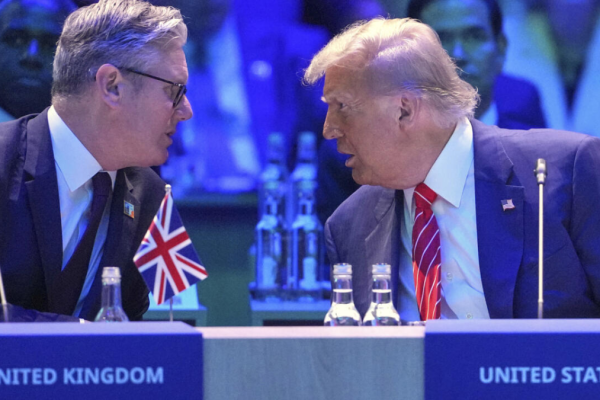
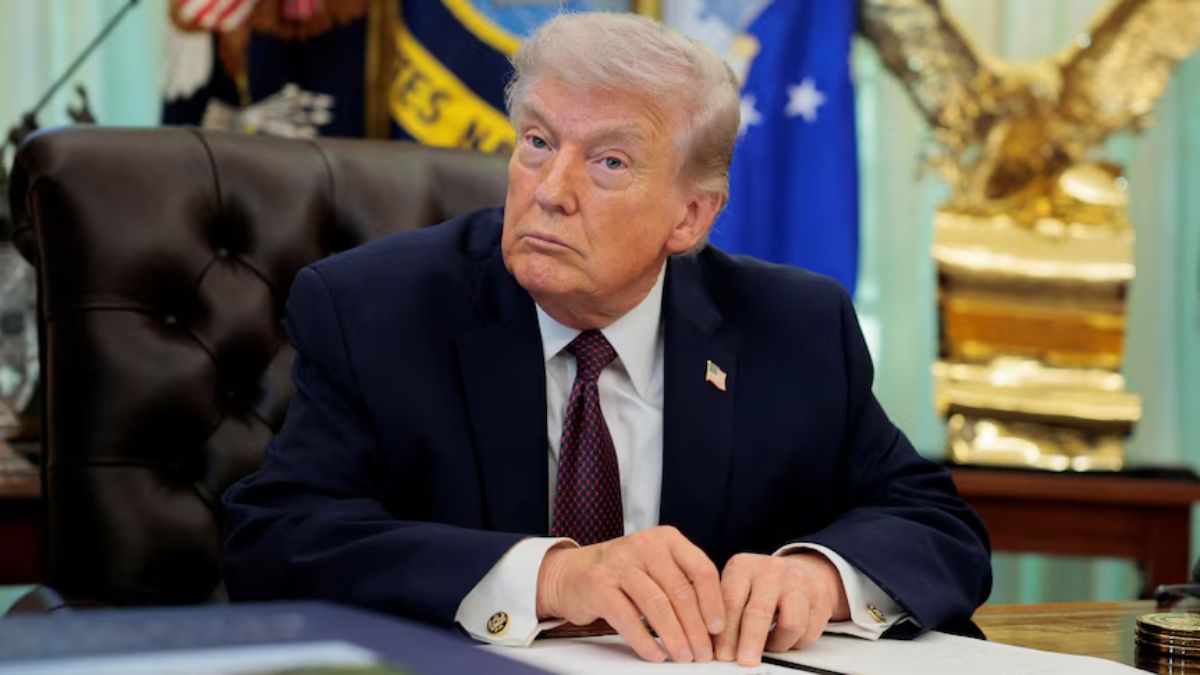
    Donald Trump’s address to the World Economic Forum in Davos has evolved into a direct assault on the legal, economic and climate policy architecture of the United Kingdom, Europe and the wider international system.

    Moments after declaring that he “wants the UK to do great”, the United States President launched into a sweeping denunciation of Britain’s green energy strategy, mocking renewable energy as a “fraud”, ridiculing climate policy as a financial delusion, and criticising the decision to wind down oil and gas drilling in the North Sea. He attributed the retreat of energy companies to Britain’s windfall tax regime, and claimed that China builds wind farms only as theatrical demonstrations to deceive “stupid people”.

Donald Trump’s address to the World Economic Forum in Davos has evolved into a direct assault on the legal, economic and climate policy architecture of the United Kingdom, Europe and the wider international system.

Moments after declaring that he “wants the UK to do great”, the United States President launched into a sweeping denunciation of Britain’s green energy strategy, mocking renewable energy as a “fraud”, ridiculing climate policy as a financial delusion, and criticising the decision to wind down oil and gas drilling in the North Sea. He attributed the retreat of energy companies to Britain’s windfall tax regime, and claimed that China builds wind farms only as theatrical demonstrations to deceive “stupid people”.

These remarks, delivered at the most influential economic forum in the world, are not merely provocative rhetoric. They strike at the heart of binding legal frameworks governing climate obligations, energy regulation, fiscal sovereignty, trade law, and international investment protection. They also raise serious questions about market manipulation, diplomatic responsibility and the erosion of legal certainty in the global energy transition.

Trump’s characterisation of British climate policy as a voluntary mistake fundamentally misrepresents the legal reality.

The United Kingdom is bound by the Climate Change Act 2008, amended in 2019 to impose a legally binding duty to achieve net zero greenhouse gas emissions by 2050. This obligation is not symbolic. It is enforceable in domestic courts and monitored by the independent Climate Change Committee. Successive governments are legally required to publish carbon budgets, sectoral transition plans and regulatory instruments to meet those targets.

The winding down of new North Sea licensing is not a discretionary political gesture. It is a regulatory consequence of statutory emissions limits, international treaty obligations under the Paris Agreement, and domestic environmental law reinforced by judicial precedent. UK courts have repeatedly ruled that climate targets must be reflected in planning decisions, energy licensing and infrastructure approvals.

Trump’s assertion that Britain is “supposed to make money with energy, not lose it” ignores the fact that UK energy policy is now governed by a complex legal framework balancing fiscal revenue, climate liability, public health, energy security and treaty compliance.

The decline in new North Sea drilling is driven by several legally binding factors:

The UK’s international obligations under the Paris Agreement.

Domestic carbon budgets enacted by Parliament.

Environmental impact assessment requirements under UK and retained EU law.

Judicial rulings requiring climate compatibility assessments for fossil fuel projects.

The emerging risk of stranded assets litigation, where governments face liability for authorising projects incompatible with climate targets.

To continue large scale licensing without regard to these constraints would expose the UK to domestic judicial review, investor litigation and potential breach of treaty obligations.

Trump’s framing of the policy as economic self harm erases the legal reality that continued expansion of fossil fuel extraction would itself generate enormous financial risk through climate damages litigation, regulatory penalties and investor claims.

Windfall taxes and sovereign fiscal authority

Trump criticised Britain’s windfall taxes, claiming they deter drilling.

Here again, international law is clear. Taxation is a core attribute of state sovereignty. Under customary international law and numerous bilateral investment treaties, states retain the right to impose taxes, provided they are non discriminatory and not confiscatory.

The UK’s Energy Profits Levy was enacted by Parliament and applies across the sector. It is subject to judicial oversight and structured to comply with international investment law principles.

Energy companies may dislike the tax, but it does not constitute unlawful expropriation. Nor does it violate trade agreements. To suggest that a sovereign state should abandon its tax system to satisfy foreign corporate expectations is incompatible with the foundational doctrine of fiscal sovereignty.

By declaring publicly at Davos that green energy is a fraud, Trump risks more than diplomatic offence.

The global renewable energy sector is a regulated financial ecosystem valued in trillions of dollars, governed by securities law, market disclosure rules and anti manipulation statutes across the United States, the UK and the European Union.

Statements by a sitting president that could materially influence energy markets raise serious questions under:

United States securities regulation enforced by the Securities and Exchange Commission.

Market abuse regulations in the UK and EU.

International standards on state market interference.

Although political speech enjoys protection, deliberate dissemination of demonstrably false claims about entire asset classes may invite regulatory scrutiny if it can be shown to distort markets or mislead investors.

Green energy is not a speculative fad. It is embedded in binding regulatory frameworks, national subsidy schemes, infrastructure planning law and international climate finance mechanisms.

China, wind farms and the factual record

Trump’s claim that one has “never seen a wind farm in China” and that China builds them only as propaganda is factually inaccurate.

China is the largest producer of wind energy in the world by installed capacity. It operates vast onshore and offshore wind farms and dominates global supply chains for turbines, rare earth processing and solar manufacturing.

More importantly, China’s renewable deployment is codified in its national energy law, five year plans and industrial policy statutes. It is driven by energy security, pollution control and export competitiveness.

Trump’s assertion is therefore not only misleading but demonstrably false in light of publicly available data from the International Energy Agency and the United Nations.

Such misrepresentation matters legally because international climate cooperation, carbon markets and technology transfer mechanisms depend upon good faith participation by major emitters.

The UK US relationship and the legal limits of trade retaliation

Trump’s comments also carry consequences for UK US trade relations.

Any attempt to penalise Britain for its energy policy through tariffs or regulatory pressure would be constrained by:

World Trade Organization rules.

The General Agreement on Tariffs and Trade.

National treatment and most favoured nation principles.

Existing bilateral trade arrangements.

Discriminatory measures against UK energy policy would likely be challenged in international dispute settlement mechanisms.

Moreover, climate measures are increasingly protected under environmental exceptions in trade law. The UK could lawfully defend its green transition as a legitimate public policy objective under WTO Article XX.

Trump’s rhetoric also collides with the legal evolution of investor state dispute settlement.

For decades, fossil fuel companies relied on treaties such as the Energy Charter Treaty to challenge regulatory change. That framework is now collapsing as states withdraw due to its incompatibility with climate law.

New treaties increasingly recognise the right of states to regulate for environmental protection.

Britain’s energy transition is therefore not only lawful. It reflects the emerging direction of international investment law.

The deeper geopolitical fracture

Trump’s attack on British and European energy policy is not merely economic.

It signals a philosophical rejection of climate governance, multilateral regulation and long term risk management in favour of short term extractive economics.

For Europe and the UK, energy policy is now inseparable from national security law, infrastructure resilience, cyber regulation, maritime law and supply chain governance.

Renewables reduce exposure to geopolitical coercion, shipping disruptions and hydrocarbon blackmail. These considerations are embedded in defence planning and national security legislation.

Trump’s dismissal of this framework places the United States increasingly at odds with the legal logic driving European strategic autonomy.

At Davos, markets listen. Governments listen. Regulators listen.

When a US president labels entire regulatory systems fraudulent, mocks treaty based climate obligations, and misrepresents sovereign tax policy, he is not merely entertaining a crowd. He is destabilising the legal predictability upon which global investment depends.

The UK’s green transition is not a marketing strategy.

It is the product of:

Parliamentary statute.

International treaty commitments.

Judicial enforcement.

Investor regulation.

National security planning.

Public law accountability.

None of these can be repealed by applause.

TOPICS: Donald Trump World Economic Forum