Live 1 week ago
  1. 7:28 PM (IST) 21 Jan 2026
    Latest

    Davos live legal updates: Trump mentions that US just picked up 50m barrels of Venezuelan oil

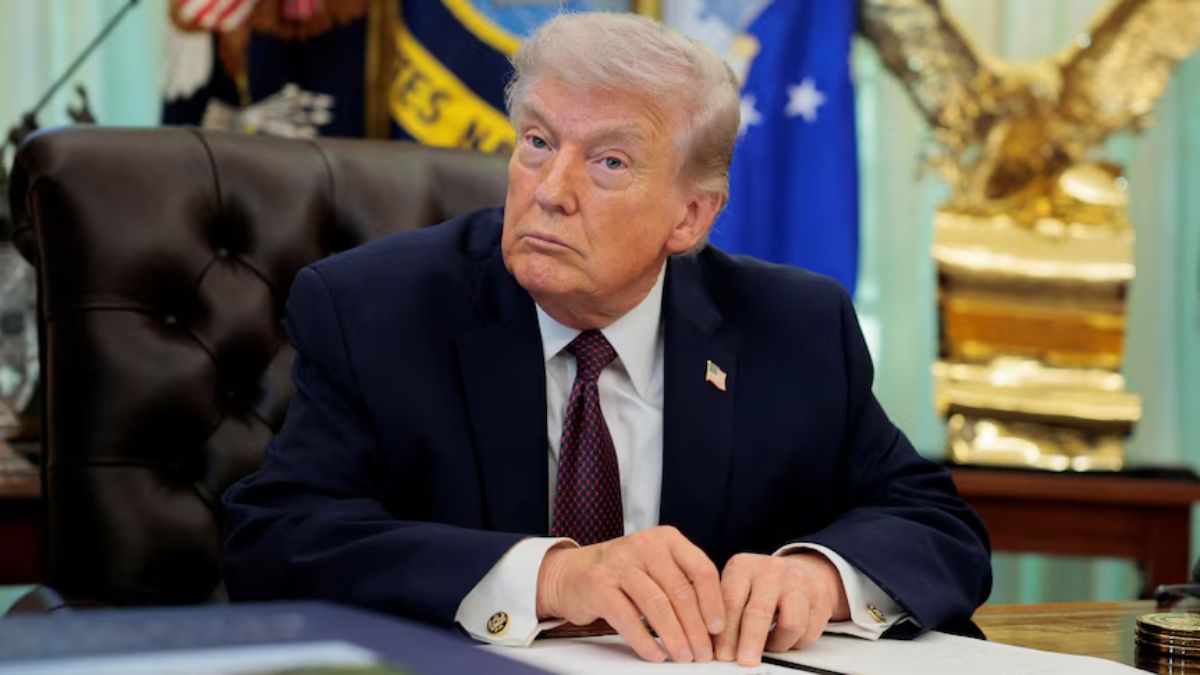
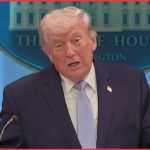
    At the World Economic Forum in Davos, U.S. President Donald Trump delivered a speech that combined fiery political rhetoric with policy declarations that have profound legal and international implications. Trump’s criticism of what he characterised as “unchecked, mass migration” into Europe, his dismissal of European green energy ambitions, his assertion that parts of Europe are “not recognisable”, and his vow to lower U.S. taxes while imposing tariffs on foreign nations to “pay for the damage they have caused” do not merely reflect differences in policy prescriptions. They illustrate a fundamental clash between political pronouncement and the international and domestic legal frameworks that govern migration, trade, climate commitments and sovereign resource management. Trump’s description of the United States economy as experiencing a “miracle” under new “100 percent expensing” rules and his characterisation of his first presidential term as the “most successful ever” from a financial perspective further demonstrate a blend of political theatre and economic narrative that must be examined against legal and constitutional realities.

At the World Economic Forum in Davos, U.S. President Donald Trump delivered a speech that combined fiery political rhetoric with policy declarations that have profound legal and international implications. Trump’s criticism of what he characterised as “unchecked, mass migration” into Europe, his dismissal of European green energy ambitions, his assertion that parts of Europe are “not recognisable”, and his vow to lower U.S. taxes while imposing tariffs on foreign nations to “pay for the damage they have caused” do not merely reflect differences in policy prescriptions. They illustrate a fundamental clash between political pronouncement and the international and domestic legal frameworks that govern migration, trade, climate commitments and sovereign resource management. Trump’s description of the United States economy as experiencing a “miracle” under new “100 percent expensing” rules and his characterisation of his first presidential term as the “most successful ever” from a financial perspective further demonstrate a blend of political theatre and economic narrative that must be examined against legal and constitutional realities.

Central to Trump’s address was his attack on European migration policy. His claim that there is “unchecked, mass migration” and that some European locales are “not recognisable” reflects a deeply politicised narrative. In legal terms, the European Union and its member states operate under binding obligations in international refugee law and human rights law. The EU asylum framework, including the Dublin Regulation and the Qualification and Procedure Directives, regulates how asylum seekers are registered, processed and protected. Europe’s adherence to the 1951 Refugee Convention and the 1967 Protocol obliges member states to provide protection and prohibit refoulement. In addition, the European Convention on Human Rights, including Article 3 prohibiting torture and inhuman or degrading treatment, imposes legally enforceable duties on states to protect vulnerable migrants and refugees. These are not optional policies but binding legal norms that are routinely scrutinised by the European Court of Human Rights and domestic constitutional courts. Trump’s sweeping critique elides these legal obligations and reframes them as cultural decline, ignoring the fact that European border and asylum policies are governed by detailed law, not political whim.

Trump’s denunciation of European green energy priorities similarly collides with entrenched legal commitments. The European Union’s climate framework, enshrined in the European Climate Law, mandates climate neutrality by 2050 and interim emissions reduction targets that have the force of law. These obligations are derived from the EU’s treaty framework and are implemented through secondary legislation covering energy, transport, agriculture and industry regulation. European states are also parties to the Paris Agreement under the United Nations Framework Convention on Climate Change, which creates binding obligations of good faith and transparency in reporting progress toward nationally determined contributions. Trump’s dismissive remarks fail to recognise that Europe’s green transition is not discretionary but a matter of statutory and treaty obligation, subject to judicial review and enforcement within the EU legal order. Moreover, they highlight the increasingly divergent approaches to climate governance between major economies.

The centerpiece of Trump’s economic propositions in Davos was his declaration that the United States will lower taxes while imposing tariffs on foreign nations “to pay for the damage they have caused”. This assertion conflates political messaging with trade law in ways that misrepresent both the mechanics of tariffs and the legal architecture of international trade. Under United States law, tariffs levied at the border are collected from importers of record, almost invariably U.S. companies or their designated agents. These costs are frequently passed on to consumers in the form of higher prices. Foreign governments do not pay U.S. tariffs directly. This basic legal and economic truth underpins trade law and is recognised by economists and legal scholars alike.

Legally, tariffs must also comply with the United States’ obligations under the World Trade Organization (WTO) and domestic statute. The WTO’s General Agreement on Tariffs and Trade obliges members to adhere to bound tariff rates and to refrain from discriminatory treatment of trading partners without reference to specific exceptions, including safeguard measures or national security provisions under Article XXI. In the absence of an agreed exception, unilateral tariff increases risk WTO disputes and authorised retaliation by affected states. Indeed, courts in the United States have already scrutinised aspects of executive tariff authority. In V.O.S. Selections, Inc. v. Trump, the United States Court of International Trade held that broad tariff impositions under the International Emergency Economic Powers Act exceeded presidential authority and violated statutory constraints, reinforcing the principle that trade policy cannot be exercised unilaterally without specific congressional delegation and oversight.

Trump’s framing that nearly every country signing trade deals with the United States saw their stock markets boom similarly simplifies complex legal and economic dynamics. Trade agreements involve negotiated tariff schedules, rules of origin, dispute settlement mechanisms and regulatory harmonisation provisions. They are not simply doors that open to market growth; they are frameworks that bind signatories to enforceable commitments. The United States long pursued multilateral and bilateral trade agreements through legally binding instruments that required congressional ratification or executive agreement followed by statutory implementation. To suggest that market performance can be attributed simplistically to trade deals obscures the legal processes that define these agreements.

The president’s references to Venezuela and the seizure of 50 million barrels of crude oil following the capture of Nicolás Maduro introduce another layer of legal controversy. While the exact details of the Maduro operation remain subject to verification and international debate, the involvement of Venezuelan oil and its sale to a company whose senior oil trader donated to Trump’s re-election campaign — as reported in live updates — raises questions about the intersection of foreign policy, executive authority, and conflict of interest. Sovereign assets such as oil reserves are typically governed by international law principles protecting state property and requiring respect for sovereignty. The transfer or sale of such assets amid contested claims to legitimate governance in Venezuela implicates international normative frameworks, including the United Nations Charter’s prohibition on acquisition of territory or control of resources by force, as well as customary international law on sovereign equality. Furthermore, the use of such revenues or resources in ways that benefit political donors would invite scrutiny under United States conflict of interest law and executive ethics standards, which aim to prevent personal gain through the exercise of public functions.

Trump’s assertion that Venezuela will “do fantastically well” and generate more revenue than in the last two decades must be understood within the broader legal context of Venezuelan law, creditor rights, sanctions regimes and investor state protections. Even if an interim government or foreign authority asserts control, any economic exploitation of Venezuelan resources would engage a network of bilateral investment treaties, host state obligations, and transnational litigation in investment tribunals, where claims of expropriation, violation of legitimate expectations, and denial of fair and equitable treatment can arise.

The clash between Trump’s rhetoric and legal frameworks at Davos also underscores a more profound tension in contemporary global governance: the balance between executive discretion and the rule of law. Trump repeatedly framed his policy positions as imperatives of national interest, asserting unilateral freedom to set tax policy, trade barriers and immigration posture. Yet in democratic systems, these domains are subject to constitutional and statutory constraints. Tax legislation is enacted by legislatures; trade policy involves both congressional oversight and adherence to international treaty obligations; immigration policy is governed by statute and subject to judicial review. Bypassing these legal processes through presidential proclamation does not change the legal role or limits of executive power.

At the international level, Trump’s remarks also reflect a growing challenge to the liberal international order. By attacking European policy choices, hinting at punitive tariffs, and flaunting executive economic nationalism in a globally broadcast forum, the president is engaging in a form of economic coercion that has drawn criticism from institutions such as the International Monetary Fund. The IMF warned that tariff threats risk triggering a “spiral of escalation” in the world economy and eroding global stability, a prospect with legal ramifications for treaty compliance, dispute settlement and multilateral economic governance.

Moreover, Europe’s reaction — including discussions of retaliatory tariffs, potential suspension of trade deals, and greater strategic autonomy — demonstrates that legal countermeasures are now being seriously considered as responses to perceived breaches of international economic law. The European Union’s Anti-Coercion Instrument, for example, is designed to allow legally proportionate retaliation against trade coercion, reinforcing that international law provides tools to manage these disputes even when political relations are strained.

Trump’s desire to portray his first term as the most successful ever from a financial perspective, combined with his assertion of new “100 percent expensing” rules to support investment, ties into domestic tax law and regulatory policy. “100 percent expensing” — generally referring to immediate full deduction of certain capital expenditures — was introduced in the United States Tax Cuts and Jobs Act and has been extended in various forms. While it can incentivise investment, it does not, as Trump implied, operate outside a broader statutory and fiscal context that includes budget deficits, long-term debt obligations and statutory appropriation processes governed by Congress.

The legal and geopolitical implications of Trump’s Davos speech extend far beyond soundbites. They highlight the competing claims between executive rhetoric and established legal orders, between unilateral policy assertions and multilateral treaty commitments, and between political theatre and the rule of law. In an era where executives increasingly bypass traditional legal norms in global fora, it becomes ever more critical to reaffirm that economic governance, international cooperation and cross-border relations are sustained not by personality and projection, but by law — domestic, international, and multilateral — that provides predictability, accountability and stability in a complex and interconnected world.

TOPICS: Donald Trump World Economic Forum