Live 1 week ago
  1. 6:52 PM (IST) 21 Jan 2026
    Latest

    Davos live legal updates: Inside the Congress hall!

    The heavy doors of the Congress Centre in Davos closing with what witnesses described as a sickening thud may appear, at first glance, to be a mundane logistical mishap. A hall designed to accommodate 5,000 people reaches capacity. A small crowd is excluded. Delegates scatter to overflow rooms to watch a broadcast. Yet in the hyper charged legal and geopolitical atmosphere of the World Economic Forum in 2026, with President Donald Trump moments away from addressing the gathering, even the physical act of denying entry becomes legally, politically and symbolically consequential.

The heavy doors of the Congress Centre in Davos closing with what witnesses described as a sickening thud may appear, at first glance, to be a mundane logistical mishap. A hall designed to accommodate 5,000 people reaches capacity. A small crowd is excluded. Delegates scatter to overflow rooms to watch a broadcast. Yet in the hyper charged legal and geopolitical atmosphere of the World Economic Forum in 2026, with President Donald Trump moments away from addressing the gathering, even the physical act of denying entry becomes legally, politically and symbolically consequential.

This is not simply crowd management. It is a real time illustration of how power, law, private governance and public authority now intersect in spaces that were never designed to bear such constitutional and international weight.

The Congress Centre is not a public parliament. It is not a United Nations assembly hall governed by treaty. It is a privately operated venue within Swiss territory, leased for an event organised by the World Economic Forum, itself a private foundation under Swiss civil law. Yet it now hosts heads of state, central bank governors, defence ministers, corporate leaders and intelligence chiefs. Decisions gestated in these rooms routinely translate into binding legislation, sanctions regimes, trade policies and military deployments.

When access to such a space is physically denied, the question is no longer merely one of convenience. It becomes a matter of legal rights, security obligations, liability, discrimination law, public order policing, diplomatic protocol and the legitimacy of private forums as de facto arenas of global governance.

From the perspective of Swiss domestic law, venue operators owe a duty of care to those lawfully present on the premises. Swiss tort law, rooted in the Swiss Code of Obligations, imposes liability where foreseeable harm arises from negligence in crowd control, emergency access or building safety. Fire safety regulations and cantonal building codes strictly limit maximum occupancy, not as a bureaucratic nicety but as a legal obligation designed to prevent mass casualty events. The decision to close the doors at 5,000 occupants is therefore legally correct. Failure to do so would expose organisers and property owners to criminal and civil liability should an emergency occur.

Yet legality does not exhaust the analysis.

Those excluded were not ordinary tourists. They were accredited delegates, journalists, policy advisers and corporate executives who had paid significant fees, undergone security vetting and in many cases travelled across continents to be present. Contractually, their relationship is with the World Economic Forum, governed by Swiss contract law and the terms of participation. If access to the principal event is denied, questions arise as to breach of contract, misrepresentation and potential claims for partial reimbursement or damages, particularly where access to key sessions was explicitly promised.

However, the deeper significance lies not in private law remedies but in the structural implications for global governance.

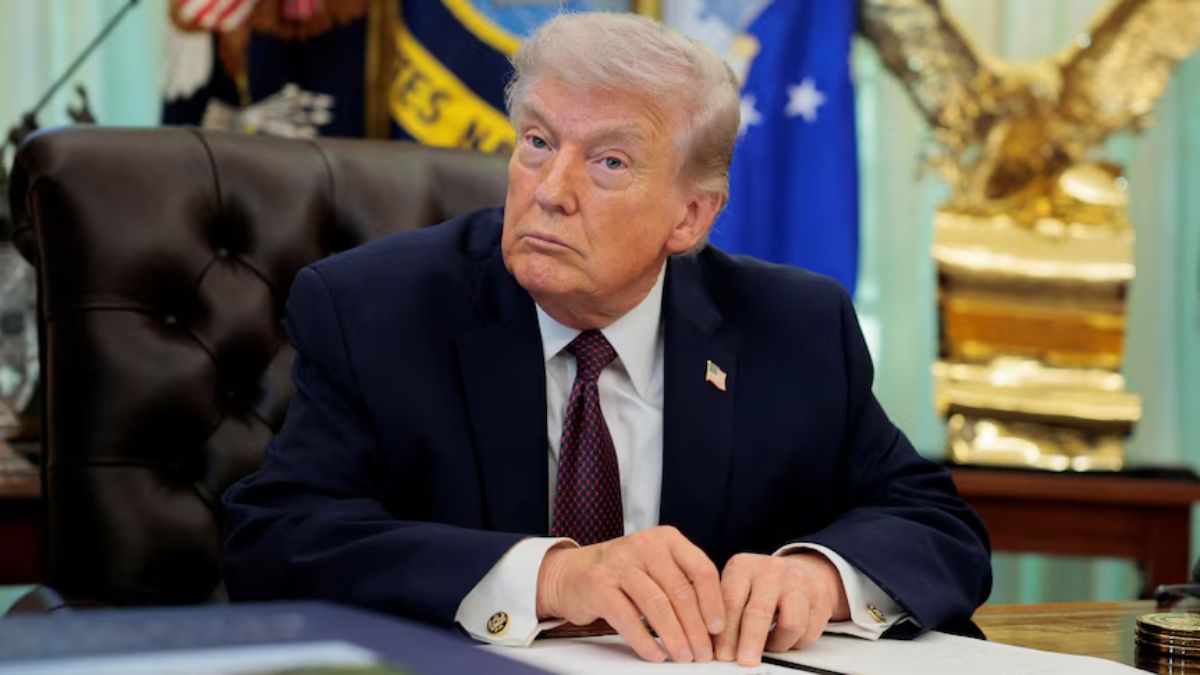
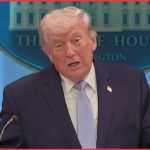
Donald Trump’s speech is not entertainment. It is an exercise of executive power with direct legal consequences. Markets move. Tariff policy shifts. Sanctions are hinted at. Territorial claims, such as those concerning Greenland, are floated. Military operations, such as those referenced in Venezuela and Gaza, are politically framed. The legal order responds after the fact, through courts, legislatures and treaties. The speech itself operates in a legal vacuum, yet it triggers cascades of juridical reality.

When access to such an event is restricted by capacity, it creates an information asymmetry that is legally and politically significant. A small, privileged group inside the hall receives not only the speech but its atmosphere, its tone, the reactions of power brokers and the informal conversations that follow. Those outside receive a mediated broadcast, filtered, delayed and devoid of the informal diplomacy that so often determines outcomes.

This distinction matters because modern international law increasingly recognises access to information as a component of democratic legitimacy. Article 10 of the European Convention on Human Rights protects freedom of expression, including the right to receive information. While it does not impose an absolute duty on private entities to admit all persons to private events, the convergence of private forums and public power creates a grey zone where formal legality diverges from democratic principle.

The World Economic Forum is not legally obliged to operate as a public body. It is not subject to freedom of information statutes. Its security protocols, guest lists and room allocations are opaque. Yet its influence rivals that of institutions that are subject to constitutional constraints. This asymmetry is the legal scandal of contemporary global governance.

The slammed doors in Davos therefore symbolise a broader phenomenon: the physical exclusion that mirrors legal exclusion. Decisions affecting millions are shaped in rooms that most citizens, and even many accredited stakeholders, cannot enter. There is no right of audience. No procedural fairness. No judicial review of agenda setting.

Security law further complicates the picture. Trump’s presence triggers extraordinary protective measures under bilateral security arrangements between Switzerland and the United States. The United States Secret Service operates alongside Swiss federal police. Perimeters are hardened. Access points narrowed. Crowd density becomes not merely a safety issue but a security risk assessment variable.

In this context, capacity limits are not only about fire codes. They are about threat modelling. The legal framework governing such operations is largely executive driven, shielded by national security exemptions and immune from ordinary transparency requirements. Decisions about who enters and who is excluded are made by security services operating under classified protocols, not by neutral administrators applying publicly contestable criteria.

For those locked out, there is no legal avenue to challenge exclusion in real time. No court would entertain an urgent application for access to a private hall secured for a visiting head of state. Sovereign immunity, security discretion and private property rights converge to form an impenetrable legal barrier.

International relations theory often speaks of power in abstract terms. In Davos, power is architectural. It is concrete, steel and glass. It is embodied in doors that close.

The scene also resonates with the substance of what Trump is expected to address. Greenland, Gaza, trade retaliation, artificial intelligence governance, the future of NATO, the India European Union trade agreement. These are matters governed by dense networks of treaties, conventions, statutes and regulatory frameworks. Yet their initial articulation occurs in a room that many stakeholders cannot enter and that no electorate controls.

This is not an accident. It is a feature of the post Cold War order, in which private platforms increasingly host public authority.

For Europe, which grounds its political identity in the rule of law, this should be deeply unsettling. The European Union proclaims transparency, proportionality and accountability as foundational principles. Yet its leaders gather in spaces where none of these principles are legally enforceable.

For India, positioning itself as a leader in artificial intelligence and industrial policy, the irony is acute. Technological sovereignty is debated in rooms governed by private rules, while democratic legislatures struggle to keep pace with regulatory demands.

For smaller states, including Denmark, whose sovereignty over Greenland is under rhetorical assault, the symbolism is stark. Territorial integrity, guaranteed under the United Nations Charter, is discussed in elite chambers guarded by private security.

The slammed doors of the Congress Centre thus become a metaphor with legal content. They represent the closure of governance from below. They mark the point where public law yields to private ordering, where constitutional accountability dissolves into access badges and security clearances.

No statute was violated when the hall reached capacity. No regulation was breached. The organisers acted correctly under safety law. And yet, something more profound was revealed.

A system in which global power is exercised in rooms that not even accredited participants can enter is a system drifting away from the foundational promise of the rule of law. Law presupposes publicity. Courts publish judgments. Parliaments debate in the open. Treaties are ratified by elected bodies.

Davos offers none of this.

As Trump steps onto the stage inside a hall sealed by steel doors, surrounded by the world’s most powerful actors, the legal order watches from outside, reduced to a spectator, waiting to translate words into obligations, threats into tariffs, promises into executive orders, and rhetoric into conflict.

The crowd diverted to overflow rooms will see the broadcast. They will hear the speech. They will analyse every sentence.

But they will not be in the room where power nods, where alliances quietly fracture or reform, where corporate commitments are whispered, where legal futures are shaped before legislatures ever convene.

In 2026, the most important legal boundary at the World Economic Forum may not be a treaty line or a constitutional clause. It may be the physical threshold of a door that closes when the room is full.

TOPICS: Donald Trump Dovas NATO World Economic Forum