
- 6:27 PM (IST) 21 Jan 2026Latest
Davos live legal updates: Jamie Dimon speaks on AI and the NATO
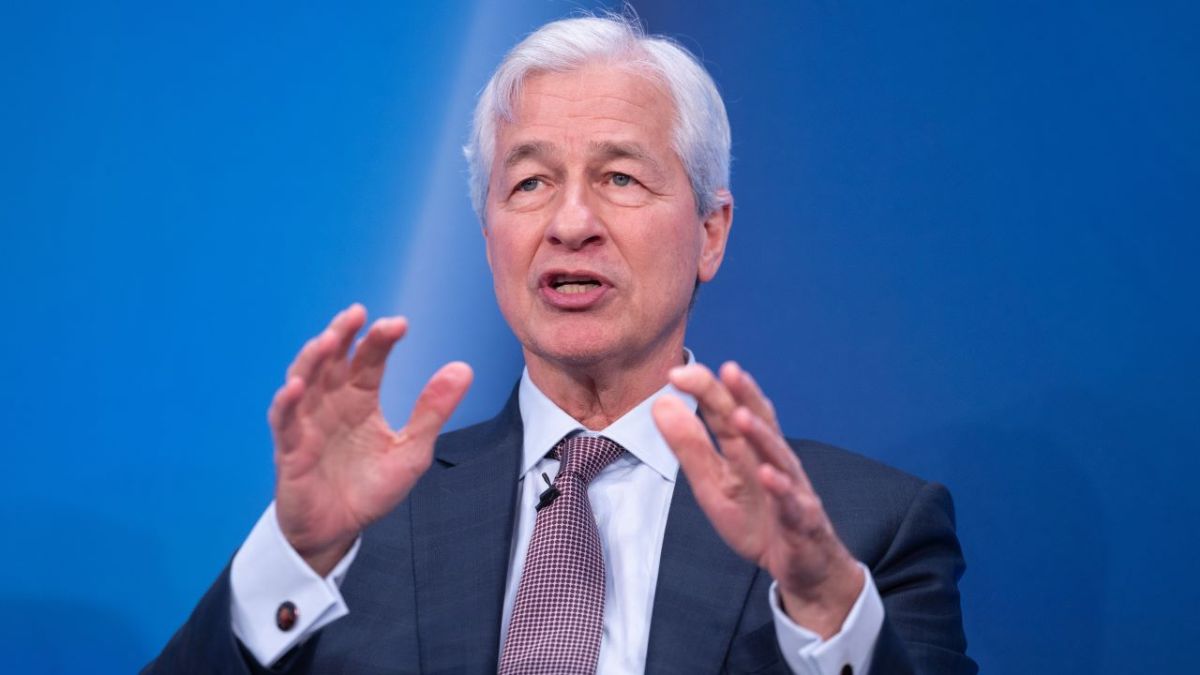
At the World Economic Forum in Davos, Jamie Dimon, chairman and chief executive of JPMorgan Chase, offered what appeared on the surface to be a characteristically modest reflection on his career. He spoke of mistakes, of “relentless grit”, of attention to detail, of reversing course quickly when wrong, of hiring well, of regretting delayed decisions, excessive bureaucracy and costly “people mistakes”, while professing relative indifference to episodes in which the bank merely lost money. He then turned to artificial intelligence, predicting parabolic adoption, warning that change may arrive too quickly for society, urging governments to intervene locally to prevent mass replacement of workers by machines and insisting that banks would not “kill all employees tomorrow with AI”. Finally, he called for a stronger NATO, endorsed European economic reform through implementation of the Draghi competitiveness report and, when asked about Donald Trump’s effect on global safety, declined to answer directly, describing the issue as “not binary” while conceding he would be “more polite”.
At the World Economic Forum in Davos, Jamie Dimon, chairman and chief executive of JPMorgan Chase, offered what appeared on the surface to be a characteristically modest reflection on his career. He spoke of mistakes, of “relentless grit”, of attention to detail, of reversing course quickly when wrong, of hiring well, of regretting delayed decisions, excessive bureaucracy and costly “people mistakes”, while professing relative indifference to episodes in which the bank merely lost money. He then turned to artificial intelligence, predicting parabolic adoption, warning that change may arrive too quickly for society, urging governments to intervene locally to prevent mass replacement of workers by machines and insisting that banks would not “kill all employees tomorrow with AI”. Finally, he called for a stronger NATO, endorsed European economic reform through implementation of the Draghi competitiveness report and, when asked about Donald Trump’s effect on global safety, declined to answer directly, describing the issue as “not binary” while conceding he would be “more polite”.
These remarks merit far more than casual reporting. They reveal how one of the most powerful private actors in the global financial system conceives of labour, technology, sovereignty, security and the boundary between corporate authority and public law. When examined through the lenses of employment law, financial regulation, competition law, constitutional principles and international relations, Dimon’s statements amount to an unvarnished articulation of a model in which corporate discretion expands while public institutions are relegated to reactive damage control.
The first theme, the normalisation of error in the pursuit of corporate success, raises profound questions of fiduciary duty and regulatory culture. As chief executive of a systemically important financial institution designated under United States law and international standards as “too big to fail”, Dimon does not operate in a moral vacuum. JPMorgan Chase is subject to the Dodd Frank Act, the Bank Holding Company Act, Federal Reserve prudential standards, the Basel III framework and enhanced supervision under the Financial Stability Board. The duty of care owed by senior management and directors is not discharged by candid admissions of error, however humanising. Under both Delaware corporate law, which governs JPMorgan’s incorporation, and under the UK Companies Act 2006 for comparable institutions, directors are legally obliged to exercise reasonable care, skill and diligence and to promote the success of the company for the benefit of its members while having regard to employees, creditors and the wider community.
Dimon’s assertion that he does not worry too much when the bank loses money is not merely rhetorical bravado. Losses at a bank of JPMorgan’s scale are not private inconveniences. They carry systemic implications. The global financial crisis demonstrated that misjudgements within large banks translate into sovereign debt, public austerity and the erosion of social trust. In Europe, such failures triggered state aid subject to European Union competition law scrutiny under Articles 107 and 108 of the Treaty on the Functioning of the European Union. In the United States, they led to the Troubled Asset Relief Program and unprecedented Federal Reserve interventions. When a chief executive treats financial loss as a lesser category of mistake than personnel decisions, it underscores a persistent asymmetry in corporate accountability, where human costs are framed as regrettable while financial risk is socialised.
Dimon’s comments on artificial intelligence deepen this asymmetry. His prediction of parabolic adoption is consistent with current investment trends, including JPMorgan’s own heavy expenditure on machine learning systems for trading, compliance and credit risk modelling. Yet his reassurance that employees will not be “killed tomorrow” by AI is legally evasive. Employment law does not recognise sudden mass dismissal as the only form of harm. Gradual displacement, deskilling and algorithmic management can be equally destructive, while remaining formally lawful.
In the United Kingdom, redundancy law under the Employment Rights Act 1996 requires consultation and justification, but it does not prevent substitution of human labour with technology. The Trade Union and Labour Relations Consolidation Act 1992 mandates collective consultation where 20 or more redundancies are proposed, yet offers no substantive veto to workers or local authorities. At European Union level, the Collective Redundancies Directive similarly focuses on procedure, not outcome. In the United States, the Worker Adjustment and Retraining Notification Act merely requires notice. None of these regimes prohibits what Dimon implicitly contemplates: structural replacement of labour by algorithms.
His suggestion that local governments should intervene to prevent firms, such as trucking companies, from laying off workers en masse in favour of AI raises a constitutional paradox. In most liberal democracies, governments lack authority to compel private firms to retain workers absent extraordinary circumstances. In the United States, such intervention would collide with the Commerce Clause, federal preemption doctrines and entrenched jurisprudence on corporate autonomy. In the European Union, state intervention of that nature would immediately encounter state aid rules and competition law constraints, requiring notification to the European Commission and justification under narrow exemptions for social policy.
Dimon’s proposal therefore amounts to an admission that existing legal frameworks are structurally incapable of managing the social consequences of automation. The responsibility is shifted onto public authorities to subsidise retraining after private actors have already captured efficiency gains. This is not social partnership. It is a privatisation of profit and a collectivisation of disruption.
Furthermore, artificial intelligence introduces regulatory risks that Dimon’s remarks conspicuously omit. Financial institutions deploying AI for credit scoring, trading or customer surveillance engage directly with data protection law, including the General Data Protection Regulation in Europe and sector specific privacy statutes in the United States. Automated decision making triggers rights to explanation, human review and non discrimination. Algorithmic bias exposes banks to litigation under equality legislation such as the UK Equality Act 2010 and United States civil rights statutes. Dimon’s portrayal of AI as a neutral productivity tool masks the reality that it will amplify legal exposure, systemic risk and social inequality unless constrained by binding regulatory standards rather than voluntary corporate ethics.
His intervention on NATO and European economic reform carries equal weight. When the chief executive of the world’s largest bank urges a stronger NATO, he is not merely expressing a geopolitical preference. He is defending a security architecture that underwrites the stability of global capital markets. NATO’s legal foundation in the North Atlantic Treaty binds member states to collective defence. Its credibility reduces sovereign risk, stabilises currencies and lowers borrowing costs. For multinational banks, this translates into predictable investment environments.
Dimon’s endorsement of the Draghi report on European competitiveness, which advocates structural reform, capital market integration and regulatory harmonisation, aligns closely with the interests of large financial institutions seeking deeper European capital markets and reduced fragmentation. While presented as mutually beneficial for Europe and America, such reforms raise acute legal questions about democratic accountability and regulatory capture. The European Union’s legislative process, governed by the Treaties of the European Union, is designed to balance market integration with social protection. Aggressive competitiveness agendas often erode labour standards, weaken collective bargaining rights and constrain member states’ fiscal autonomy through enhanced surveillance under the Stability and Growth Pact and its successors.
In this context, Dimon’s call for reform is not neutral technocracy. It is advocacy by a private actor whose institution profits from deregulation, capital mobility and defence spending. That advocacy occurs in a forum with no democratic mandate, no legislative authority and no judicial oversight. The World Economic Forum is not bound by the transparency obligations that constrain public bodies under freedom of information laws. Yet it increasingly functions as a parallel arena where global policy is shaped by corporate consensus rather than parliamentary debate.
The most politically charged moment of Dimon’s appearance came when he was asked whether Donald Trump is making the world safer. His refusal to answer directly, insisting that the issue is “not binary” while conceding he would be “more polite”, is legally and diplomatically revealing. Trump’s record includes explicit threats to withdraw from NATO, imposition of tariffs under the United States Trade Expansion Act Section 232 in defiance of World Trade Organization norms, and open disregard for alliance consultation mechanisms. These actions have direct legal consequences, from treaty compliance disputes to retaliatory trade measures authorised under international law.
For a figure of Dimon’s stature to equivocate is not caution. It is strategic silence. JPMorgan Chase operates under licences, regulatory approvals and government contracts that depend on executive goodwill in multiple jurisdictions. The modern regulatory state has blurred the boundary between private finance and public authority. Banks are supervised, stress tested and rescued by governments. Governments, in turn, rely on banks to distribute debt, manage sanctions regimes and transmit monetary policy. This interdependence produces a structural reluctance among financial elites to criticise political power even when legal norms are at stake.
Taken together, Dimon’s remarks at Davos illustrate a deeper transformation in the relationship between law, markets and sovereignty. Corporate leaders now speak openly about reshaping labour markets through technology, about relying on governments to mitigate social fallout, about strengthening military alliances for economic stability and about navigating political turbulence without normative commitment. This is not merely realism. It is the consolidation of a form of private governance that operates above national electorates yet within the shelter of state power.
From a legal and international relations perspective, the danger is not that banks will suddenly replace all employees with machines or that NATO will collapse overnight. It is that incremental shifts, justified as pragmatism, will hollow out the regulatory and constitutional frameworks that protect workers, constrain corporate power and anchor international cooperation in law rather than convenience.
Dimon’s casual acknowledgement of mistakes, his technocratic optimism about artificial intelligence, his instrumental view of government intervention and his cautious diplomacy regarding authoritarian tendencies together form a coherent worldview. It is a worldview in which efficiency outranks legality, in which social costs are externalised, in which security alliances are valued primarily for market stability and in which political judgement is subordinated to corporate continuity.
For policymakers, regulators and citizens, the lesson is stark. The future of work, the integrity of financial systems and the survival of collective security arrangements cannot be left to informal conversations between corporate leaders on Alpine stages. They require binding legislation, enforceable international obligations and democratic scrutiny.
Davos remains a theatre of influence, not of law. Jamie Dimon’s appearance there was not a harmless exchange of management wisdom. It was a reminder that in the twenty first century, some of the most consequential political arguments are made not in parliaments or courts, but by executives whose institutions rival states in power yet remain governed by legal frameworks never designed to contain them.