
- 2:41 PM (IST) 21 Jan 2026Latest
Davos live legal updates: Egypt reaffirms Palestinian cause at Davos
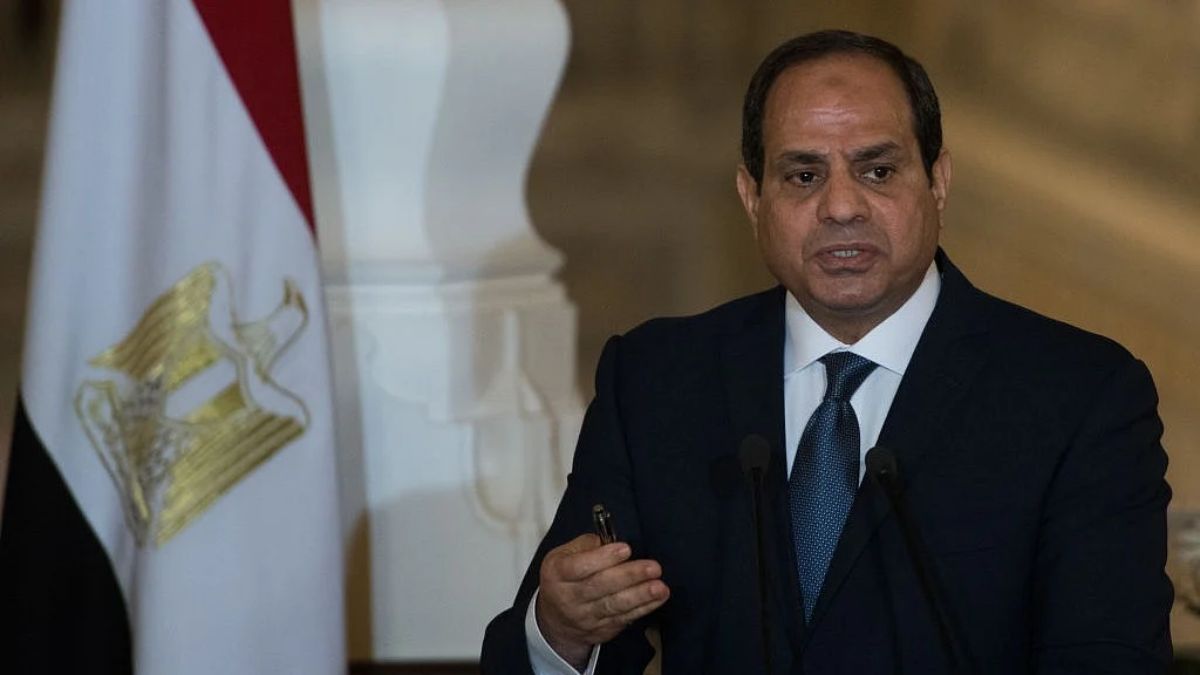
At the World Economic Forum in Davos, Egyptian President Abdel-Fattah el-Sissi delivered a pointed reaffirmation of Egypt’s longstanding commitment to the Palestinian cause, declaring that it remains “at the forefront of priorities” in the Middle East. Speaking to a high-profile panel of international leaders, Sisi emphasised that resolving the Palestinian issue is “the core of regional stability, and a cornerstone to achieve a just and comprehensive peace.”
At the World Economic Forum in Davos, Egyptian President Abdel-Fattah el-Sissi delivered a pointed reaffirmation of Egypt’s longstanding commitment to the Palestinian cause, declaring that it remains “at the forefront of priorities” in the Middle East. Speaking to a high-profile panel of international leaders, Sisi emphasised that resolving the Palestinian issue is “the core of regional stability, and a cornerstone to achieve a just and comprehensive peace.”
These remarks come against a backdrop of intensifying international debate over the United States’ recent proposals for a so-called “Board of Peace” to oversee Gaza’s post-conflict administration, an initiative that has already prompted widespread legal and diplomatic scrutiny. President Sisi’s statements at Davos underscore Egypt’s insistence that any governance or reconstruction mechanism in Gaza must be firmly rooted in recognised international law, multilateral legitimacy, and the inclusion of Palestinian voices, a position that contrasts sharply with the US-led board, which has been criticised for its unilateral approach, monetised membership, and exclusion of local populations.
The Egyptian Perspective: Stability Through Legal and Political Legitimacy
Sisi’s articulation of the Palestinian cause as central to regional stability is consistent with Egypt’s historical role as a mediator in Middle Eastern conflicts. Egypt, under international law, has frequently acted as a guarantor of ceasefires, particularly in Gaza, relying on its geographic proximity, diplomatic credibility, and recognition as a neutral intermediary. By framing the Palestinian issue as essential to broader regional equilibrium, Sisi implicitly highlights the risks associated with initiatives that bypass established legal frameworks, including the United Nations, the Quartet on the Middle East, and relevant Security Council mandates.
In his remarks, Sisi welcomed President Donald Trump’s efforts to broker the October 2025 ceasefire between Israel and Hamas, recognising that stabilisation in Gaza is a necessary prerequisite for any long-term peace solution. While supportive of temporary measures that reduce hostilities, Sisi’s carefully chosen language reflects a legal and diplomatic insistence that operational peace must not be confused with legitimate governance. This distinction carries critical implications: humanitarian ceasefires can be arranged under bilateral or multilateral agreements, but governance structures must comply with international law, including the Fourth Geneva Convention and the Hague Regulations, which regulate the administration of territories under occupation or conflict.
Legal Implications of External Governance in Gaza
Sisi’s intervention also underscores the tension between Egyptian advocacy for lawful mediation and the Trump administration’s US-led “Board of Peace,” which proposes to exercise authority over Gaza without either UN mandate or explicit consent from Israel, the recognised occupying power during periods of the conflict. Legal experts have repeatedly noted that the board’s current structure, including its requirement for participating states to contribute $1 billion to secure seats, may contravene international norms governing sovereignty, occupation, and self-determination. By excluding Palestinian representatives from decision-making and monetising governance authority, the initiative risks breaching multiple provisions of international law, including:
-
The Fourth Geneva Convention, particularly protections related to the administration of civilian populations under belligerent occupation;
-
The principle of self-determination, enshrined in Article 1 of the International Covenant on Civil and Political Rights, which guarantees the rights of peoples to determine their own political status;
-
International anti-corruption norms, including the OECD Anti-Bribery Convention, by conditioning political influence on financial contribution;
-
State responsibility frameworks, leaving unclear whether the US, participating countries, or local authorities would bear legal accountability for potential violations.
By reiterating Egypt’s commitment to the Palestinian cause, Sisi is implicitly signalling that any governance framework must respect these legal safeguards, incorporate Palestinian consent, and avoid transactional or unilateral models that could destabilise the fragile ceasefire.
Geopolitical Dynamics and the Role of Egypt
Egypt’s stance carries significant geopolitical weight. As a leading member of the Arab League and a strategic partner in US Middle Eastern diplomacy, Egypt’s position is often pivotal in shaping collective Arab responses to Israeli-Palestinian issues. By framing the Palestinian cause as a regional priority, Sisi asserts that external interventions—particularly those led by single powers without multilateral oversight—must be approached cautiously.
This stance is particularly salient in light of ongoing concerns about Turkey’s proposed involvement in the US-led board. Turkish Foreign Minister Hakan Fidan has been named to the board’s executive committee, a move that Israel has reportedly opposed. Egypt’s traditional role as mediator and guarantor may therefore serve as a stabilising counterweight, ensuring that any international engagement in Gaza aligns with established norms of neutrality and legality.
Sisi’s comments precede an expected bilateral meeting with President Trump at Davos, highlighting the delicate balancing act in US-Egypt relations. While Egypt acknowledges the strategic value of US engagement in securing ceasefires and providing humanitarian assistance, Sisi’s insistence on lawful, inclusive governance underscores a clear boundary: stabilisation efforts must not be equated with extralegal authority over civilian populations.
For the broader international community, Egypt’s principled stance provides both guidance and caution. European states and multilateral institutions observing the US-led board initiative must consider the potential legal, diplomatic, and ethical consequences of participation. Sweden’s recent refusal to join the initiative reflects a parallel concern, emphasising the importance of adhering to rule-based governance and civilian representation in conflict-affected territories.
President Abdel-Fattah el-Sissi’s intervention at Davos is more than a routine affirmation of Egypt’s longstanding support for the Palestinian cause. It represents a critical assertion of international legal norms, a reminder of the responsibilities incumbent on external actors in post-conflict governance, and a subtle rebuke to initiatives that monetise or privatise peace processes. By reaffirming that Palestinian self-determination and regional stability must remain central to any intervention, Egypt reinforces the principle that peace is not a commodity but a legal, moral, and political obligation.
As Sisi and Trump are expected to meet at Davos, the world watches closely. The outcome of this dialogue will have profound implications not only for Gaza but for the architecture of post-conflict governance in the Middle East and beyond. Legal scholars, diplomats, and policymakers are now confronting a defining question: can externally imposed frameworks, particularly those dominated by a single state and monetised access, ever align with the established principles of international law and multilateral legitimacy? Egypt’s stance makes clear that any answer must prioritise legality, inclusivity, and respect for the sovereign rights of the Palestinian people.