Live 1 week ago
  1. 2:06 PM (IST) 21 Jan 2026
    Latest

    Davos live legal updates: Rambling power meets nuclear authority

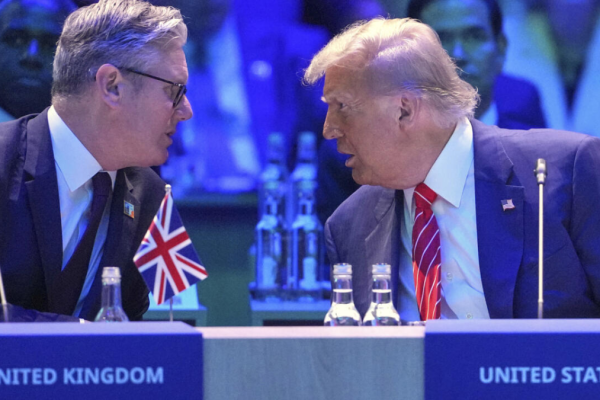
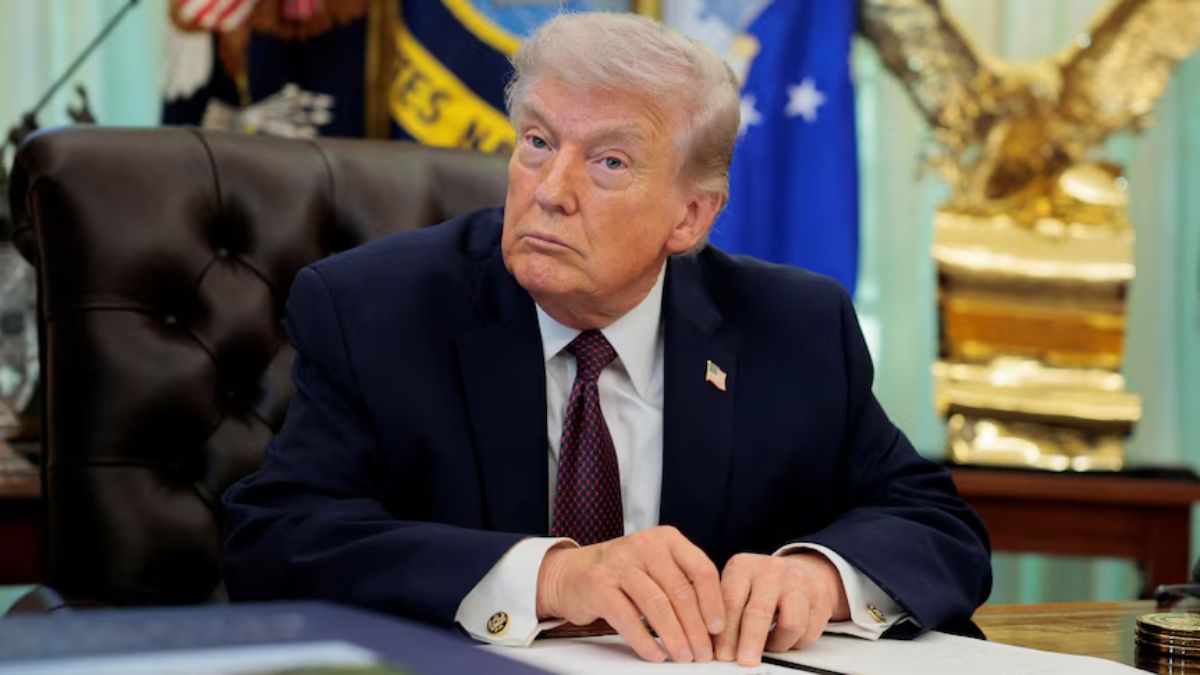
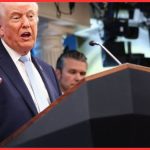
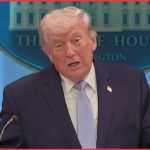
    The ninety minute White House appearance by President Donald Trump to mark his first year back in office was not merely an eccentric political spectacle. It was a constitutional stress test, a national security event and a moment of acute legal relevance for every allied government that depends upon the stability of United States executive power.

The ninety minute White House appearance by President Donald Trump to mark his first year back in office was not merely an eccentric political spectacle. It was a constitutional stress test, a national security event and a moment of acute legal relevance for every allied government that depends upon the stability of United States executive power.

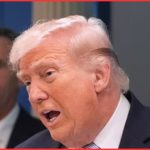
What unfolded in the briefing room was not simply rambling rhetoric. It was the exercise of the most powerful executive office in the world by an individual simultaneously boasting of territorial acquisition, threatening NATO cohesion, defending mass institutionalisation, reiterating false claims of electoral victory and openly nursing grievance against sovereign states for decisions over which they hold no legal control.

For international lawyers, constitutional scholars, defence planners and financial regulators, this performance was not entertainment. It was evidence.

Executive power without coherence

The President of the United States is not merely a political speaker. He is the legal custodian of Article II powers under the United States Constitution, commander in chief of the armed forces, primary architect of foreign relations under the doctrine affirmed in United States v Curtiss Wright Export Corp, and final authority over nuclear command and control under existing operational protocols.

When such an office holder publicly oscillates between nostalgic anecdotes, personal grievance, ethnic stereotyping, territorial threats, institutional expansion of detention facilities and casual references to force, the implications are structural, not stylistic.

Trump’s remarks about reviving large scale mental institutions through executive order immediately intersect with multiple legal regimes: federal civil rights law, the Americans with Disabilities Act, the Due Process Clause of the Fifth Amendment, Supreme Court jurisprudence in O’Connor v Donaldson and Addington v Texas, and international obligations under the Convention on the Rights of Persons with Disabilities, which the United States has signed though not ratified.

The casual manner in which he described compulsory confinement, “hate to build those suckers but you’ve got to get the people off the streets”, is legally incompatible with established standards requiring judicial oversight, medical necessity and proportionality. It signals a potential return to pre 1970s institutional practices dismantled precisely because they violated constitutional liberty.

Greenland and the revival of imperial acquisition

The repeated statement that the United States will acquire Greenland, coupled with the refusal to rule out force, places the President in direct contradiction with binding international law.

Article 2(4) of the United Nations Charter prohibits the threat or use of force against the territorial integrity or political independence of any state and it is pertinent to note that Greenland is an autonomous territory within the Denmark, standing as a sovereign state and NATO ally. Any coercive attempt to obtain it through economic pressure or military force would constitute an internationally wrongful act triggering state responsibility under the Articles on State Responsibility adopted by the International Law Commission.

Even economic coercion aimed at territorial transfer risks violating principles codified in the Friendly Relations Declaration of 1970, which explicitly prohibits the use of economic or political pressure to obtain territorial concessions.

Trump’s cryptic “you will find out” response when asked how far he would go removes ambiguity. It establishes intent.

From a NATO perspective, such conduct undermines Article 1 of the North Atlantic Treaty, which commits members to resolve disputes by peaceful means and refrain from threats inconsistent with the purposes of the United Nations.

If the United States, as NATO’s central guarantor, becomes its principal destabiliser, the treaty architecture becomes legally hollow.

Trump’s fixation on Norway over the Nobel Peace Prize reveals a profound misunderstanding of both international law and Norway’s constitutional arrangements.

The Nobel Peace Prize is awarded by the Norwegian Nobel Committee, a private body appointed by parliament but legally independent of government instruction. Norway exercises no executive authority over its decisions. To attribute state responsibility for the award outcome is legally incorrect.

More seriously, his statement to Prime Minister Jonas Gahr Støre that he no longer feels bound to think purely of peace because of the prize denial carries legal symbolism. It publicly repudiates the normative foundation of peaceful dispute resolution that underpins the post 1945 international order.

Such rhetoric weakens the doctrine of good faith performance of international obligations, a principle recognised by the International Court of Justice as fundamental to treaty law.

Trump’s administration has already threatened tariffs against NATO allies unless they acquiesce to territorial transfer. This merges trade law violations with security coercion.

Under World Trade Organisation law, particularly the General Agreement on Tariffs and Trade, unilateral punitive tariffs imposed for non trade objectives breach the most favoured nation principle and binding tariff schedules. Attempts to justify such measures under the national security exception in Article XXI would be legally vulnerable if the purpose is territorial acquisition rather than genuine defence necessity.

Recent WTO jurisprudence, including Russia Measures Concerning Traffic in Transit, confirms that security exceptions are not legally unreviewable.

The President is therefore signalling willingness to dismantle both the security alliance system and the multilateral trading system simultaneously.

NATO, Russia and strategic consequence

Trump’s remarks occurred against a background of Russian strategic objectives openly articulated since the early 2000s: fragmentation of NATO, erosion of Article 5 credibility and replacement of rules based security with power based spheres of influence.

By threatening allies with tariffs, dismissing Denmark’s sovereignty and undermining collective defence commitments, the President advances Moscow’s strategic goals more effectively than any cyber campaign or propaganda operation.

Under international relations theory this is not merely transactional nationalism. It is structural destabilisation.

The legal consequence is the weakening of customary norms prohibiting territorial conquest, already strained by Russia’s invasion of Ukraine. If the United States adopts similar logic, the prohibition on acquisition of territory by force becomes functionally extinct.

Trump’s performance inevitably revives constitutional debate over Section 4 of the Twenty Fifth Amendment, which permits removal of presidential authority where the President is unable to discharge the powers and duties of office.

This is not a psychiatric provision. It is a functional incapacity standard requiring determination by the Vice President and a majority of principal officers of the executive departments.

Legally, incoherence alone does not trigger removal. However, demonstrated inability to process briefings, issue rational commands, or distinguish between legal authority and personal grievance could satisfy the functional threshold.

The problem is not legal mechanics but political courage. The Amendment is executable only by those whose positions depend upon presidential favour.

Thus the constitutional safeguard exists in theory while collapsing in practice.

International markets respond not to ideology but to legal risk.

The combination of threatened territorial seizure, tariff coercion, institutional expansion of detention powers and disregard for alliance commitments introduces sovereign risk into what was once the anchor of global stability.

Treaties are only as reliable as the executive that honours them. If the President openly treats international law as optional, counterpart states will respond by pricing in legal default risk.

This is already visible in capital flows, defence planning and diplomatic contingency arrangements.

Political satire traditionally exaggerates. In this case it trails reality.

A President who compares himself to a misunderstood baseball prodigy, threatens annexation, dismisses human rights constraints, boasts of reviving mass confinement, rewrites electoral history and publicly nurses grievance against neutral countries is not merely unconventional.

He is redefining the operational meaning of executive authority in the nuclear age.

The legal order constructed after 1945 assumed rational state behaviour constrained by treaty law, domestic constitutional checks and alliance discipline. That assumption is now empirically false.

This was not a rambling anniversary speech.

It was an unsworn deposition on how the most powerful office in the world now conceives law, sovereignty, force and personal grievance.

For Europe, the danger is not only tariffs or Greenland. It is the re emergence of a world in which treaties are suggestions, borders are negotiable and stability depends on the emotional equilibrium of one individual.

For the United States, the danger is constitutional. An executive that conflates personal ego with national interest erodes the legal foundations of republican government.

For the world, the danger is systemic. When the architect of the rules based order abandons the rules, the order collapses.

And unlike rhetoric, collapse cannot be walked back with a joke about baseball.

TOPICS: Donald Trump NATO United Nations World Economic Forum