- 1:58 PM (IST) 21 Jan 2026Latest
Davos live legal updates: [EXPLAINED] Dinosaur diplomacy at Davos!
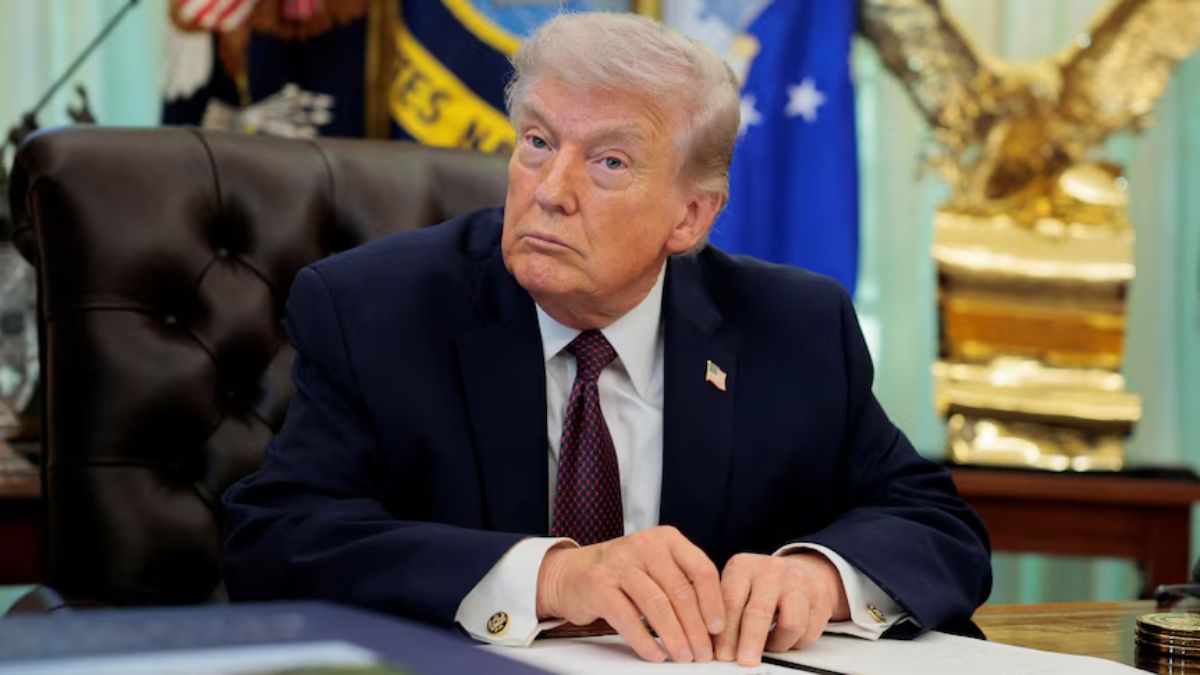
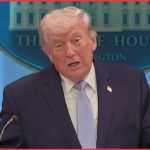
The scene at the World Economic Forum in Davos this week resembles less a gathering of polite technocrats than a stress laboratory for international law itself. Long before Donald Trump’s aircraft touched down in Switzerland, his shadow dominated every corridor of the congress centre, every closed door meeting between ministers, and every market sensitive whisper among investors. California governor Gavin Newsom’s remark that Trump is a “T rex” with whom one either mates or is devoured was not merely theatrical. It captured, with brutal clarity, the legal and geopolitical anxiety now gripping the transatlantic system.
At the heart of this confrontation lies a claim that would have been unthinkable in serious diplomatic discourse only a decade ago: that the United States may impose punitive tariffs on European allies unless they consent to the purchase or effective annexation of Greenland, an autonomous territory within the Kingdom of Denmark.
This is not political theatre. It is a direct challenge to the foundational principles of modern international law.
Territorial acquisition and the death of post war legal consensus
Since 1945, the prohibition on the acquisition of territory by threat or use of force has stood as a cornerstone of the international legal order. It is embedded in Article 2(4) of the United Nations Charter, reinforced by the Helsinki Final Act, affirmed repeatedly by the International Court of Justice and treated as jus cogens, a peremptory norm from which no derogation is permitted.
While Trump’s language frames the Greenland issue in commercial terms, purchase, leverage, tariffs, national security, the legal substance is coercion. Threatening economic harm in order to extract territorial sovereignty constitutes unlawful intervention in the internal affairs of another state under customary international law, as articulated by the ICJ in the Nicaragua case and subsequent jurisprudence.
Emmanuel Macron’s warning in Davos that the world is drifting towards “new imperialism or new colonialism” is therefore not rhetorical excess. It is an accurate legal diagnosis.
Even a consensual transfer of territory today is tightly regulated. It requires the free expression of the will of the people concerned under the principle of self determination, recognised in Article 1 of both the International Covenant on Civil and Political Rights and the International Covenant on Economic, Social and Cultural Rights. Greenland’s population, predominantly Inuit, holds a legally protected right to determine its political status. Denmark cannot lawfully trade that right away, even if it wished to.
Any agreement reached under economic duress would be vulnerable to invalidation under Article 52 of the Vienna Convention on the Law of Treaties, which renders treaties void if procured by the threat or use of force. Modern legal scholarship increasingly accepts that severe economic coercion may also vitiate consent where it destroys genuine freedom of choice.
Tariffs as weapons and the collapse of WTO discipline
Trump’s threat to impose sweeping tariffs on European states if they resist his Greenland ambitions strikes directly at the multilateral trading system.
Under the World Trade Organization framework, particularly the General Agreement on Tariffs and Trade, members are prohibited from imposing discriminatory tariffs outside agreed schedules except under narrowly defined exceptions. National security is one such exception, under Article XXI, but its abuse has already destabilised the system. The Russia Ukraine transit dispute showed how easily this clause can be weaponised, and how reluctant WTO panels are to impose firm limits once security is invoked.
If the United States were to impose tariffs explicitly to coerce a territorial concession, the legal position would be stark. Such measures would constitute both a breach of WTO obligations and an unlawful act of economic coercion under general international law.
Macron’s reference to the European Union anti coercion instrument is therefore legally significant. This regulation, adopted in 2023, empowers the EU to impose retaliatory trade restrictions, investment barriers and procurement exclusions against states engaging in economic coercion. It is designed precisely for scenarios where trade is used as a geopolitical bludgeon.
The so called trade bazooka is not symbolic. It allows for countermeasures that would otherwise violate WTO commitments, justified under the law of state responsibility as proportionate responses to internationally wrongful acts.
Should the EU activate this instrument against the United States, the result would be the most severe legal rupture in transatlantic trade relations since the creation of the WTO in 1995.
Scott Bessent and the language of economic dominance
Trump’s Treasury Secretary Scott Bessent attempted to dampen European alarm by urging delegates to avoid “hysteria” and allow events to unfold. Yet his own statements reveal a deeper legal shift.
When Bessent asserts that allies should relax and that American strength makes the world safer, he implicitly endorses a hierarchy incompatible with the sovereign equality of states enshrined in Article 2(1) of the UN Charter. Sovereignty, under modern law, is not conditional on military or economic power.
His dismissal of European concerns, coupled with accusations directed at the United Kingdom over Diego Garcia and Denmark over Greenland, signals a return to transactional diplomacy that treats legal commitments as disposable.
That posture is reinforced by Commerce Secretary Howard Lutnick’s declaration in Davos that globalisation has failed the West and that the United States will pursue its interests regardless of multilateral sentiment. This is not merely policy rhetoric. It represents a rejection of the legal philosophy underpinning the Bretton Woods institutions, the WTO and the post war treaty system.
Ursula von der Leyen’s call for “a new form of European independence” should be read as a legal project as much as a political one.
The European Union was constructed as a community of law, where economic integration is governed by binding rules enforceable by courts. Faced with a partner that increasingly treats treaties as optional and tariffs as instruments of territorial ambition, the EU must now consider how to defend itself within the confines of legality.
That includes expanding strategic autonomy in defence procurement, energy supply and digital infrastructure, but also strengthening legal instruments for retaliation, arbitration and treaty suspension.
Canada’s Prime Minister Mark Carney’s warning that “if you are not at the table, you are on the menu” echoes the brutal logic of classical power politics. Yet the modern legal order was designed precisely to prevent such a world from re emerging.
Davos as a courtroom of global governance
The World Economic Forum is not a treaty body, yet it functions as an informal court of global legitimacy. Statements made here shape expectations, market behaviour and diplomatic alignments.
When Macron mocks the notion of peace and predictability, wearing mirrored sunglasses like a statesman in exile from certainty itself, he articulates what many lawyers privately fear: that the normative force of international law is eroding under sustained pressure from major powers willing to ignore it.
The Greenland crisis, though geographically remote, has become a legal litmus test. If a permanent member of the UN Security Council can openly threaten economic punishment to acquire territory, and face only rhetorical resistance, the prohibition on territorial conquest becomes a historical footnote.
Von der Leyen is correct that nostalgia will not restore the old order. The treaties remain, but their authority depends on compliance by those powerful enough to violate them with impunity.
Trump’s impending speech at Davos is therefore more than a political event. It is a moment of legal reckoning.
He may choose conciliation. He may attempt charm. He may soften the rhetoric. Yet the damage is already doctrinal. The threat has been made. The principle challenged. The instruments of coercion publicly displayed.
The world is watching not simply to see whether markets wobble or alliances shift, but whether the post 1945 legal architecture can survive a superpower that increasingly treats law as an obstacle rather than a framework.
In that sense, the metaphor of the dinosaur is legally apt.
Dinosaurs were dominant not because they were subtle, but because nothing yet existed to restrain them. International law was built to ensure that, in human affairs, such creatures would never rule again.
Davos 2026 may be remembered as the moment when that experiment began to fail, not with tanks crossing borders, but with tariffs, threats and the casual assertion that sovereignty itself is negotiable if the price is right.