- 1:47 PM (IST) 21 Jan 2026Latest
Davos live legal updates: Nord Stream 2, Russian oil and Europe!
At the World Economic Forum in Davos, United States Treasury Secretary Scott Bessent broadened the Trump administration’s confrontation with Europe beyond Greenland and tariffs into the core architecture of European energy and trade law. Asked about energy security, he criticised European states for building the Nord Stream 2 pipeline and for purchasing Russian oil, arguing that these choices handed President Vladimir Putin the financial means to fund his war against Ukraine. Turning to trade policy, he urged Europe to dismantle both its internal and external trade barriers, declaring that the continent had become “a regulatory morass” built on bureaucracy and the constant layering of rules that constrain economic activity.
These remarks, delivered by the official responsible for the financial stability of the United States, are not merely political theatre. They raise fundamental legal questions about state responsibility for energy policy, the boundaries of lawful trade regulation, the compatibility of United States pressure tactics with World Trade Organization obligations, and the sustainability of the transatlantic legal order.
To understand the gravity of Bessent’s intervention, one must begin with Nord Stream 2 itself.
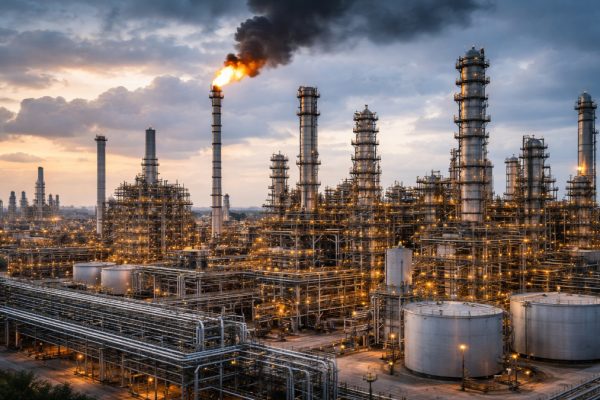
The pipeline, designed to transport natural gas directly from Russia to Germany via the Baltic Sea, was completed but never certified for operation following Russia’s full scale invasion of Ukraine in 2022. Its construction and partial legal authorisation took place within a complex framework of European Union energy law, international maritime law and bilateral investment arrangements.
Under EU law, energy infrastructure projects are regulated primarily through the Third Energy Package and subsequent amendments, which impose unbundling requirements, third party access rules and regulatory oversight to prevent monopolistic control. Nord Stream 2 became legally contentious precisely because it conflicted with these principles by strengthening Gazprom’s dominance and bypassing transit states such as Ukraine.
Yet the legal responsibility for its construction does not lie with Europe in the abstract. It lies with specific corporate entities, regulatory authorities and governments acting within the law as it stood at the time. Prior to 2022, there was no comprehensive international legal prohibition on purchasing Russian hydrocarbons. Energy trade with Russia was lawful under World Trade Organization rules and consistent with bilateral supply contracts governed by private and public international law.
Bessent’s claim that European purchases of Russian oil “handed Putin the war chest” is politically resonant but legally imprecise. International law does not impose strict liability on states for the later military uses of revenue earned through lawful trade. If it did, the entire global commodities market would be legally paralysed.
Sanctions regimes, including those adopted by the European Union after the invasion of Ukraine, are forward looking legal instruments. They prohibit future transactions in order to influence behaviour. They do not retroactively criminalise or render unlawful past trade conducted in compliance with existing law.
This distinction is not academic. It goes to the heart of how international economic law allocates responsibility. If lawful energy trade could later be recharacterised as financing aggression, then legal certainty would collapse. States would be exposed to perpetual retrospective condemnation for transactions that were legal at the time.
Bessent’s criticism therefore rests not on law, but on a moral and strategic reinterpretation of past conduct.
That reinterpretation becomes more problematic when placed alongside current United States policy.
The same administration that condemns Europe for energy dependence on Russia is threatening to impose tariffs on European allies to coerce them into supporting the acquisition of Greenland. It is also accusing the United Kingdom of “letting us down” over the Chagos Islands settlement with Mauritius. These actions are not designed to uphold international law but to override it.
From a legal perspective, this creates an acute inconsistency.
On the one hand, the Treasury Secretary invokes a narrative of European irresponsibility for having engaged in lawful energy trade. On the other, the administration openly proposes to use unlawful economic coercion to extract territorial concessions.
Under the law of the World Trade Organization, tariffs may be imposed only in accordance with agreed schedules or as authorised countermeasures following dispute settlement. They may not be used as instruments of political compulsion unrelated to trade disputes. Conditioning tariffs on territorial outcomes violates both the letter and spirit of the General Agreement on Tariffs and Trade.
The criticism of Europe’s regulatory system is equally fraught with legal contradiction.
The European Union’s regulatory framework is not an accident of bureaucracy. It is the product of treaty obligations, particularly the Treaty on the Functioning of the European Union, which mandates the creation of an internal market based on harmonised standards for goods, services, capital and labour.
These rules exist to prevent regulatory arbitrage, protect consumers, ensure environmental and labour standards, and guarantee fair competition. They are legally binding instruments adopted through democratic processes by member states and the European Parliament.
To describe this system as a morass is to misunderstand its juridical function. Regulation is not a barrier to trade in European law. It is the condition under which trade is permitted.
The United States itself operates under a dense regulatory structure governing securities, banking, energy and environmental protection. The difference is not the existence of regulation but the allocation of regulatory authority between federal and state levels and the political culture surrounding it.
When Bessent urges Europe to dismantle its internal and external trade barriers, he is effectively calling for a rewriting of the EU treaties.
External trade barriers, such as the common external tariff, are mandated by the EU’s customs union, a core legal feature of the bloc. Internal trade barriers have already been eliminated to a greater extent than in any other multi state market on earth. What remains are regulatory differences justified under the precautionary principle, consumer protection law and environmental legislation.
These are not arbitrary obstacles. They are expressions of sovereignty pooled through treaty.
For the United States Treasury Secretary to demand their removal while simultaneously threatening tariffs is legally incoherent. It asks Europe to abandon its treaty based legal order while accepting the imposition of unilateral American economic power.
The energy dimension further complicates this picture.
European energy policy since 2022 has been driven by the legal obligation to comply with sanctions regimes, climate commitments under the Paris Agreement and the EU Green Deal, and the security imperative of diversifying away from Russian supplies.
These objectives are enshrined in binding legislation and international agreements. They cannot be discarded at the request of a foreign treasury secretary without violating domestic and international law.
Moreover, the United States itself has benefited economically from Europe’s shift away from Russian energy, becoming a major supplier of liquefied natural gas. This transformation occurred within the framework of commercial contracts governed by international arbitration clauses and regulatory approvals.
To accuse Europe of having financed Russian aggression while profiting from Europe’s subsequent energy transition is, at minimum, legally and ethically inconsistent.
There is also a deeper strategic implication.
By portraying Europe as economically incompetent and legally obstructive, Bessent undermines the very basis of transatlantic cooperation. The European Union is not a subordinate trading partner. It is a legal entity created by treaties, with exclusive competence over trade policy and binding authority over its member states.
Any attempt to force regulatory change through tariffs would almost certainly trigger proceedings before the World Trade Organization and retaliatory measures under EU law. The result would not be liberalisation but fragmentation.
The law of international trade is designed to replace power politics with adjudication. Bessent’s rhetoric suggests a return to power politics, where the largest economy dictates the rules.
This approach carries significant risk for the United States itself.
If regulatory complexity is grounds for economic punishment, then any state may claim the same justification. China could accuse the United States of excessive financial regulation. Emerging economies could denounce American sanctions law as a barrier to trade. The normative shield that protects the United States from similar pressure would evaporate.
Finally, the moral argument regarding Ukraine deserves careful legal framing.
Russia’s invasion of Ukraine is a grave breach of international law. European sanctions and energy diversification are lawful responses under the doctrine of countermeasures. But responsibility for the war lies with Russia alone.
To suggest that European regulatory choices or energy contracts created the war chest is to blur the distinction between lawful commerce and unlawful aggression. That distinction is essential to maintaining a system in which trade can exist without becoming legally synonymous with complicity in violence.
Scott Bessent’s remarks in Davos therefore expose more than frustration with European policy. They reveal a profound tension between two visions of international order.
One is built on treaties, regulatory sovereignty, and the principle that states may lawfully pursue their economic interests within agreed rules.
The other is built on economic coercion, retrospective blame and the belief that strategic objectives justify the dismantling of legal constraints.
Energy pipelines, trade regulations and sovereign borders are not interchangeable bargaining chips. They are governed by different bodies of law, each designed to prevent the very instability now unfolding.
By conflating them, the United States Treasury Secretary has not clarified the path to security or prosperity.
He has illustrated how quickly the language of partnership can dissolve into the vocabulary of compulsion, and how fragile the legal foundations of the global economy become when power declares regulation an inconvenience rather than a guarantee of order.
For Europe, the lesson is stark. Energy dependency was a strategic mistake. But abandoning the rule of law to placate an ally would be a far greater one.
For the United States, the danger is equally clear. A world in which regulation is dismissed, sovereignty is negotiable and trade is weaponised is not a world in which growth is shared.
It is a world in which law retreats, markets fragment, and alliances become temporary arrangements governed not by treaties, but by the shifting preferences of those who believe that size alone determines relevance.