- 1:26 PM (IST) 21 Jan 2026Latest
Davos live legal updates: United States treasury’s trade doctrine collides with international law
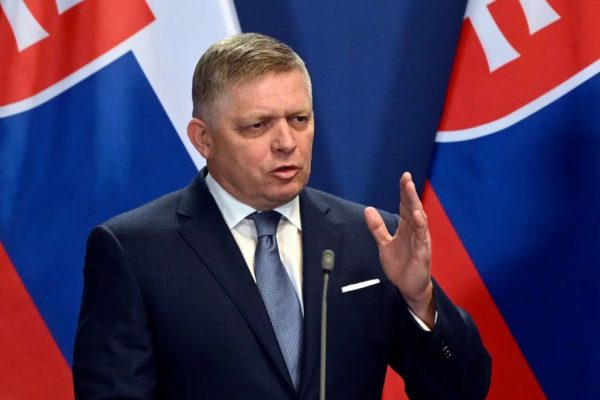
Inside a church repurposed as the United States House just beyond the World Economic Forum congress centre in Davos, the new intellectual architecture of American economic statecraft was unveiled in compressed form. Scott Bessent, the United States Treasury Secretary, opened his press briefing by welcoming journalists to “day one, year two” of the Trump administration and by declaring that Washington is driving through a “long overdue” rebalancing of international trade. He claimed that the United States trade deficit is narrowing at an unprecedented pace, citing October data showing the deficit at its lowest level since 2009. He argued that the world is safer and more prosperous when America is strong, before coining the slogan that will now echo across the forum: “grow, baby, grow”. Growth, he said, is the only path out of the mountain of global debt, and “we can only grow together by expanding trade”.
On its surface, this is orthodox macroeconomic rhetoric. In legal and geopolitical reality, it is a doctrine riddled with contradictions, delivered at the precise moment the same administration is threatening punitive tariffs against European allies to force the transfer of Greenland, an autonomous territory within the Kingdom of Denmark.
The distance between the phrase “we can only grow together by expanding trade” and the threat to impose coercive tariffs unless sovereign territory is surrendered is not rhetorical. It is legal, structural, and fundamental.
Bessent’s assertion that the United States is rebalancing trade rests on the architecture of the World Trade Organization, bilateral investment treaties, and the dense network of customs agreements that regulate market access. The United States cannot lawfully rebalance trade outside those structures without triggering disputes under the WTO Dispute Settlement Understanding, retaliatory measures authorised by panels or arbitrators, and a systemic erosion of the most favoured nation principle that underpins modern commercial law.
The claim that the trade deficit is narrowing at the fastest pace since 2009 may be empirically accurate for October, but legally irrelevant to the method by which such a narrowing is achieved. International economic law does not judge outcomes alone. It judges process.
If deficits narrow through productivity, lawful industrial policy, or negotiated market access, the system absorbs the change. If they narrow through discriminatory tariffs, conditional market access, or threats linked to territorial concessions, the system fractures.
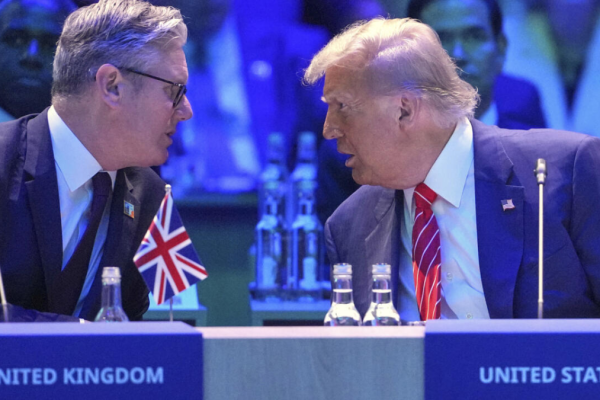
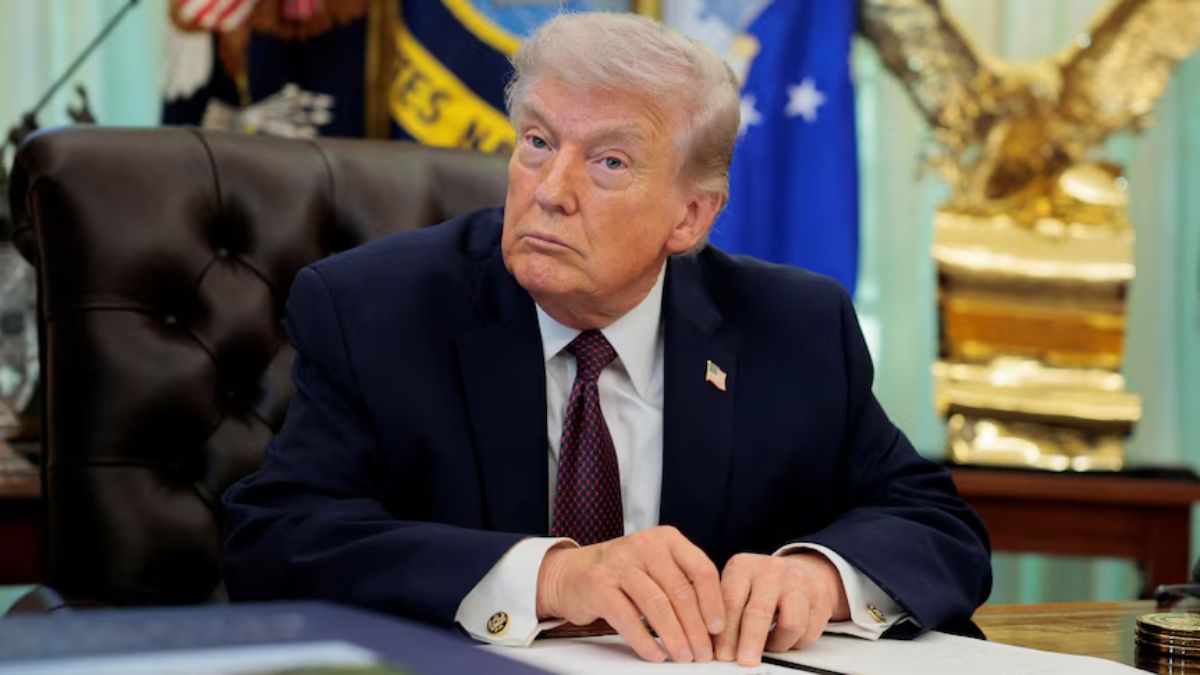
The Treasury Secretary’s speech therefore cannot be detached from the administration’s parallel conduct. Only days earlier, the President threatened to impose tariffs of 10 per cent rising to 25 per cent on Denmark, Norway, Sweden, France, Germany, the United Kingdom, the Netherlands and Finland unless the United States is permitted to buy Greenland. That threat is explicitly transactional. It links trade penalties to territorial acquisition.
Under the General Agreement on Tariffs and Trade, such conduct violates the core obligations of non discrimination and prohibition of quantitative restrictions. Under general international law, it constitutes economic coercion aimed at altering the territorial integrity of another state, conduct incompatible with Article 2 of the United Nations Charter and the principle of non intervention.
No amount of rhetorical commitment to “growing together” can reconcile these positions.
The legal contradiction deepens when Bessent argues that the world is safer when America is strong. In the law of nations, strength is not measured by the ability to impose tariffs, but by the capacity to bind oneself to rules and to accept adverse judgments. The strongest states are those that can afford constraint.
The United States itself insisted on this principle when it designed the post war order. It championed the Bretton Woods institutions, the General Agreement on Tariffs and Trade, and later the WTO, precisely to replace power bargaining with rule based adjudication. To present unilateral trade rebalancing as a form of collective security is to rewrite that history.
Bessent’s slogan “grow, baby, grow” also sits uneasily with the administration’s escalating confrontation over Greenland.
Greenland’s legal status is not ambiguous. It is an autonomous territory within Denmark, with its people holding the right to self determination under international law. No doctrine of economic growth can override the prohibition on acquiring territory by coercion, nor can trade expansion lawfully be conditioned on the surrender of land.
Indeed, the International Court of Justice has repeatedly held that economic pressure designed to force changes in sovereignty constitutes unlawful intervention. The same Court affirmed in the Nicaragua case that even non military coercion may breach international law if it deprives a state of its freedom of choice in matters within its domestic jurisdiction.
Against this jurisprudence, Bessent’s formulation appears less like an economic strategy and more like a narrative shield for an approach that would dismantle the legal separation between commerce and conquest.
There is a further inconsistency embedded in his remarks on global debt.
He is correct that public and private debt levels are historically high. International financial law, however, addresses this problem through collective mechanisms: the International Monetary Fund, sovereign debt restructuring frameworks, and coordinated monetary policy. Growth achieved through stable trade relations is indeed one lawful solution.
Growth pursued through trade weaponisation is not.
Tariffs imposed to coerce allies would raise consumer prices, disrupt supply chains, and trigger retaliatory measures, undermining precisely the growth Bessent claims is indispensable. They would also generate legal disputes likely to paralyse the already strained WTO appellate system, accelerating the descent into fragmented trade blocs.
In this context, the church in which Bessent spoke becomes an unintended symbol.
He proclaimed interdependence and shared growth in a forum dedicated to global cooperation, while his government prepares policies that substitute conditional access for legal reciprocity. The setting underscored the contradiction between the language of partnership and the practice of compulsion.
For European states already bracing for Trump’s address later today, the implications are stark. If the Treasury Secretary’s doctrine prevails, trade becomes an instrument not of mutual advantage but of geopolitical leverage. Market access becomes contingent on political obedience. Sovereignty becomes a variable in balance sheets.
That is not rebalancing. It is regression.
From a legal perspective, such a transformation would mark the end of the multilateral trading system as a rule governed regime and its rebirth as a hierarchy governed by economic force. The European Union, whose legal identity is inseparable from the supremacy of law, cannot accept such a model without abandoning its own constitutional foundations.
Bessent’s final assertion, that “we can only grow together by expanding trade”, is therefore true only in the narrowest economic sense and false in law unless expansion occurs within a framework of equality, consent, and binding rules.
Trade grows when borders are respected.
Prosperity grows when coercion is excluded.
Security grows when sovereignty is not for sale.
As the Trump administration’s senior economic official spoke in Davos of shared growth and narrowing deficits, his President was in the same town preparing to defend a policy that would shatter the legal conditions that make such growth possible.
The world is not facing a technical debate about tariffs.
It is facing a contest between two incompatible visions of economic order.
One is built on law.
The other is built on leverage.
Bessent’s words belong to the first vision.
The administration’s actions increasingly belong to the second.
History, markets, and international courts will determine which prevails, but the legal verdict is already clear: growth secured through coercion is not growth within the law, and trade expanded by threatening sovereignty is not trade at all, but a return to the economics of empire dressed in the language of balance sheets.