The confirmation by a source close to President Emmanuel Macron that the text message shared by Donald Trump on Truth Social was authentic adds a new and legally significant dimension to the rapidly escalating Greenland dispute. What might superficially appear as a moment of political gossip or digital indiscretion in fact engages some of the most sensitive areas of international law, diplomatic practice, executive authority, data protection and the constitutional boundaries of foreign policy conduct in democratic states.

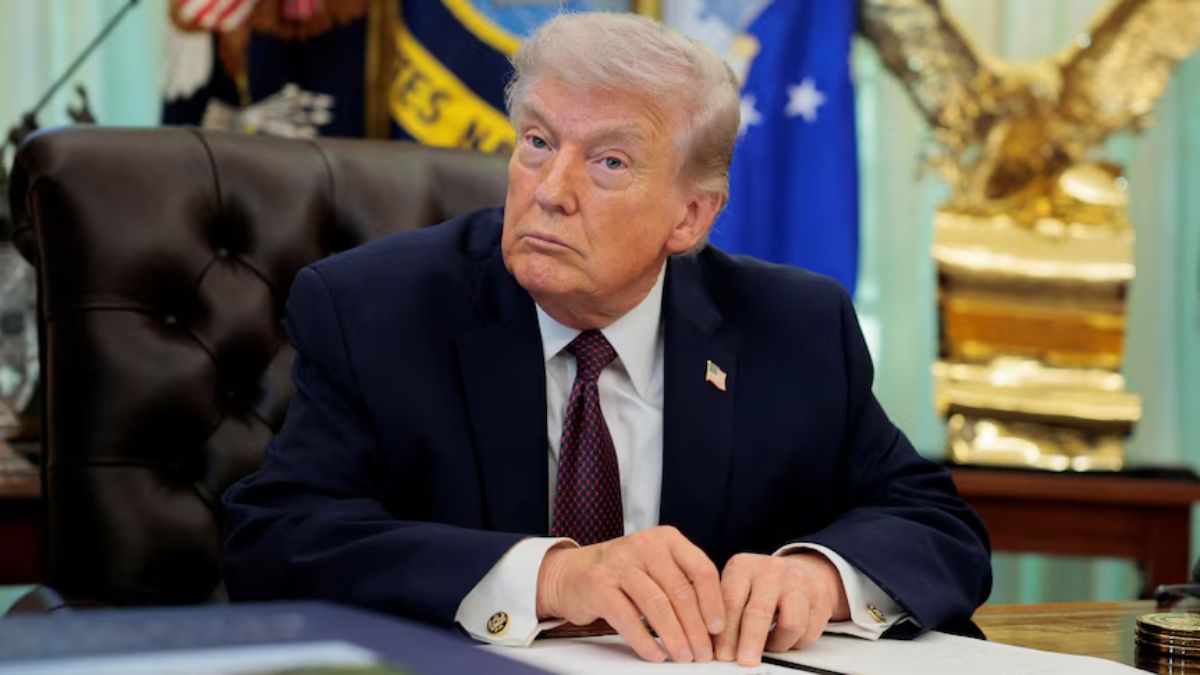
According to Reuters, the message shows Macron telling Trump that he did not understand the US president’s position on Greenland and proposing a meeting in Paris on Thursday afternoon after the conclusion of the World Economic Forum in Davos. The source stressed that the message demonstrated consistency between Macron’s public and private stance. Trump shared the screenshot publicly, while any reply from him was not visible in the image.

This episode is unprecedented in its modern form. While private diplomatic correspondence has historically been leaked, weaponised or published after regime change, the deliberate publication by a sitting United States president of a private message from a serving head of state raises acute legal and institutional concerns that extend far beyond etiquette.

At the centre lies the principle of diplomatic confidentiality, a cornerstone of international relations for centuries and codified in the Vienna Convention on Diplomatic Relations of 1961. Although the Convention primarily governs communications between diplomats rather than heads of state personally, its spirit reflects a broader customary law principle: that confidential diplomatic communications are protected in order to allow states to negotiate freely, prevent escalation and manage disputes without public coercion or humiliation.

Trump’s decision to publish the message, even partially, represents a departure from this norm and risks chilling future diplomatic engagement. When leaders can no longer assume that private communications will remain confidential, the incentive structure of crisis diplomacy collapses. States become more rigid, less candid and more prone to formal posturing rather than genuine problem solving.

From a legal perspective, the disclosure also intersects with domestic constitutional law in both the United States and France. In the US, presidential communications are subject to classification regimes, archival obligations under the Presidential Records Act and internal executive branch protocols designed to safeguard sensitive diplomatic exchanges. While Trump may argue that as president he holds ultimate authority over classification, courts have consistently recognised that such authority is not absolute in functional terms and that reckless disclosure may still engage political accountability mechanisms, including congressional oversight and potential impeachment standards, even if criminal liability remains remote.

In France, the legal implications are even more intricate. Communications of the president relating to foreign affairs are protected under French constitutional practice as part of the domaine réservé, the exclusive executive sphere covering defence and diplomacy. While Macron did not authorise publication, the public exposure of his private diplomatic message touches upon French state secrecy laws, including provisions in the Penal Code concerning the protection of national interests and confidential diplomatic correspondence. Although enforcement against a foreign head of state is legally impossible due to immunity ratione personae, the episode nonetheless constitutes an intrusion into the protected sphere of French executive diplomacy.

The authenticity of the message, now confirmed, is itself significant. It establishes beyond doubt that Macron directly challenged Trump’s Greenland position and sought structured dialogue through a proposed meeting in Paris. This confirms that France is not merely reacting publicly but is actively attempting to channel the crisis into formal diplomatic frameworks grounded in international law and alliance consultation.

Legally, Macron’s stance is aligned with orthodox doctrine. France has consistently upheld the principles of territorial integrity and self determination. By contesting Trump’s position both publicly and privately, Macron reinforces France’s compliance with Article 2(4) of the UN Charter and the prohibition of coercive territorial acquisition. His proposal for a meeting in Paris suggests an attempt to de escalate within lawful diplomatic channels rather than through public confrontation or economic retaliation.

Trump’s selective publication of the message, without including any reply, raises additional legal and ethical issues. Partial disclosure can amount to strategic manipulation of diplomatic records, potentially misleading the public and international partners as to the tone and substance of negotiations. In legal disputes, such conduct would be characterised as bad faith representation. While international law lacks a formal doctrine of evidentiary fairness in diplomatic communication, the principle of good faith underpins treaty law, state responsibility and dispute settlement mechanisms. A pattern of selective disclosure could later be relevant in assessing the credibility of US representations before international bodies.

The episode also implicates data protection law in an indirect but symbolically important way. Macron’s message was private correspondence. In the European Union, such communications fall under the protection of the General Data Protection Regulation when processed electronically, although heads of state are largely exempt in the exercise of sovereign functions. Nonetheless, the public dissemination of private communications without consent contradicts the normative framework Europe has built around informational self determination and privacy as fundamental rights under the EU Charter of Fundamental Rights and the European Convention on Human Rights.

More broadly, this incident illustrates the transformation of diplomacy into performative digital politics. By posting the message on Truth Social, Trump effectively internationalised a bilateral diplomatic exchange, subjecting it to domestic political narratives and global media interpretation. This collapses the traditional separation between negotiation and propaganda, a separation that international law has long relied upon to reduce the risk of miscalculation and armed conflict.

In real time strategic terms, the consequences are severe. Macron’s proposal of a Paris meeting after Davos indicates that European leaders are attempting to contain the Greenland crisis through structured diplomacy. Trump’s publication of the message undermines that effort by introducing public pressure and reputational dynamics into what should be confidential negotiations.

It also places NATO in a precarious position. France and Denmark are both NATO members. The Greenland issue directly affects alliance territory. The public exposure of intra alliance communications risks weakening collective trust at a moment when unity is legally and strategically indispensable under the North Atlantic Treaty.

The authenticity of the message further confirms that Trump is not operating in a diplomatic vacuum. He is fully aware of European opposition to his Greenland position. His choice to publish the message therefore cannot be dismissed as misunderstanding. It is a deliberate political act that transforms private resistance into public spectacle.

From the perspective of international legal order, this episode is not marginal. It strikes at three core pillars simultaneously: the confidentiality of diplomacy, the legality of territorial acquisition and the institutional stability of alliances.

If heads of state routinely publish private messages to gain domestic political advantage or to pressure foreign counterparts, the legal architecture of peaceful dispute settlement will erode. Negotiation, mediation and conciliation, all enshrined in Article 33 of the UN Charter as preferred methods of resolving disputes, depend on trust and discretion. Without them, states revert to coercion, retaliation and unilateralism.

Macron’s message, proposing dialogue in Paris, represents continuity with the legal tradition of negotiated settlement. Trump’s publication of that message represents rupture.

The Greenland crisis is therefore no longer only about territory. It is about whether diplomacy itself remains governed by law, confidentiality and good faith, or whether it is reduced to a series of digital provocations immune from legal restraint.

In confirming the authenticity of the message, France has drawn a clear line. Its president speaks the same language in private as in public. The question now confronting the international community is whether the United States presidency remains anchored to the same legal and diplomatic norms, or whether the exposure of private state communications has become a new instrument of strategic coercion in an already volatile dispute.

The answer will shape not only the fate of Greenland, but the credibility of international diplomacy in the age of permanent digital disclosure.

TOPICS: Donald Trump Emmanuel Macron NATO Truth Social United Nations United Nations Charter World Economic Forum WTO