
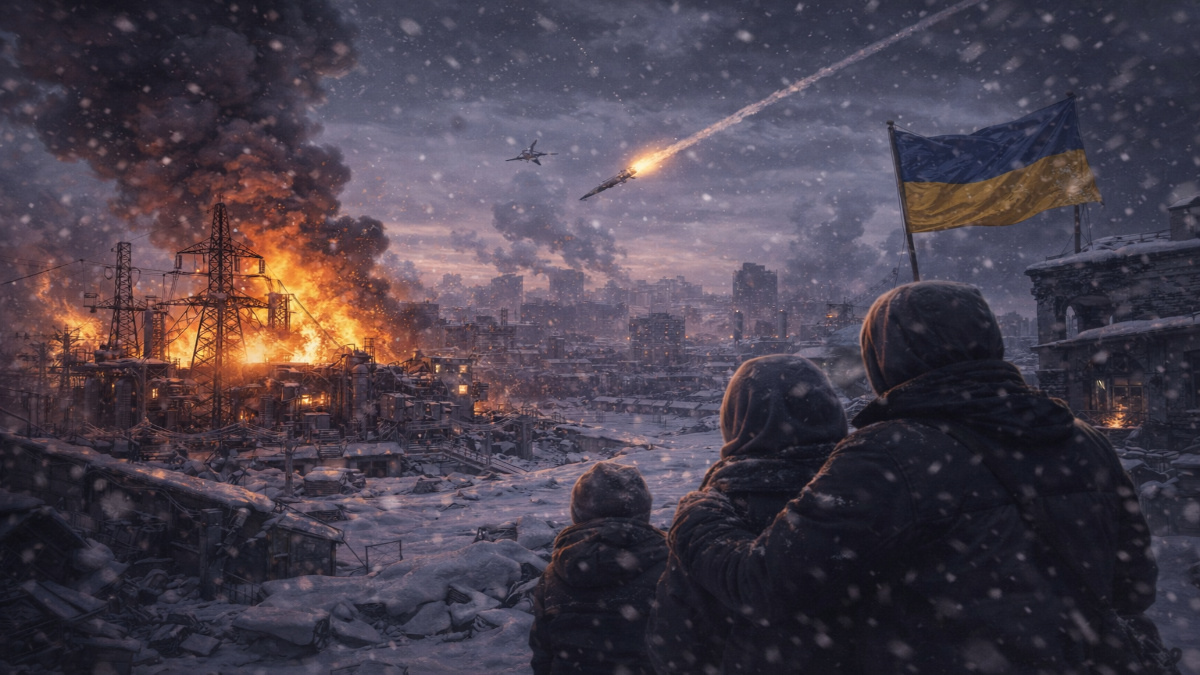
The power grid in Ukraine was still under tension, with Russian missile and drone attacks still hitting power and heating plants, forcing the nation into what President Volodymyr Zelenskyy referred to as a difficult phase due to freezing winter weather. During his evening speech, Zelenskyy mentioned that briefings with Prime Minister Yulia Svyrydenko and Energy Minister Denys Shmyhal focused on the current restoration work, especially in the Kyiv area where some citizens remained without power up to 10 days.
Ukrainian officials state that teams of emergency repair workers have been sent to stabilize damaged infrastructure and recover basic services. The constant assaults have strained an already weak system with the nighttime temperatures dropping to minus 20 degrees Celsius. According to Zelenskyy, Moscow was intentionally employing energy strikes to break the morale and resistance of civilians, and the campaign was not much interested in diplomacy. The Ukrainian leader posted a message publicly indicating that Russia was concentrating on the missile attacks, blackouts and even claims of trying to threaten nuclear power plants instead of concentrating on negotiations. He also said that the Ukrainian intelligence had intelligence on reconnaissance before strikes, further supporting the opinion of Kyiv that military pressure and not negotiations were still of priority to Moscow.
Zelenskyy called upon the international community to keep exerting pressure on what he termed as the root cause of the war in Moscow. The Russian troops also conducted night attacks in various areas. The Ukrainian officials also reported that at least two civilians were shot and six injured in the Dnipropetrovsk region and one was shot in Kharkiv city. The Odesa region also targeted energy infrastructure, which further caused additional outages. In the eyes of Moscow, the strikes represent the components of a larger campaign to undermine the logistical and industrial potential of Ukraine after almost four years of warfare. Russian officials have always contended that energy plants are serving two purposes; both in sustaining military operations and also that the strain on infrastructure is meant to accelerate a political solution as it pressures Kyiv and its supporters into rethinking the price of continuing the war.
Whereas Ukraine views the attacks as evidence of ill will, Russia has insisted that dialogue can still take place after it addresses what it terms security issues. In the meantime, though, the battle is still going on in the battlefield and the power grid, and civilians are in the middle of the diplomatic speech and the realities of a severe winter and an unstopping conflict.