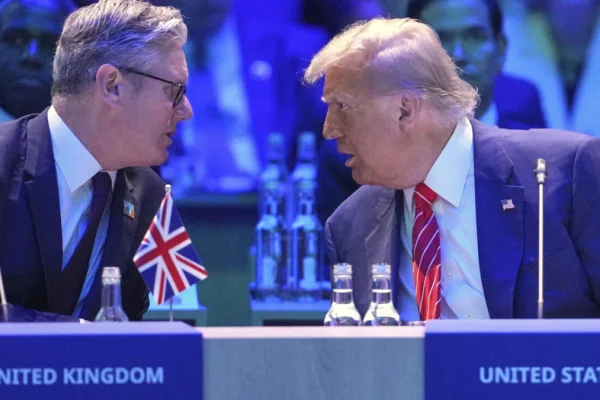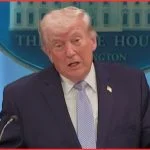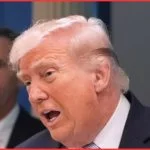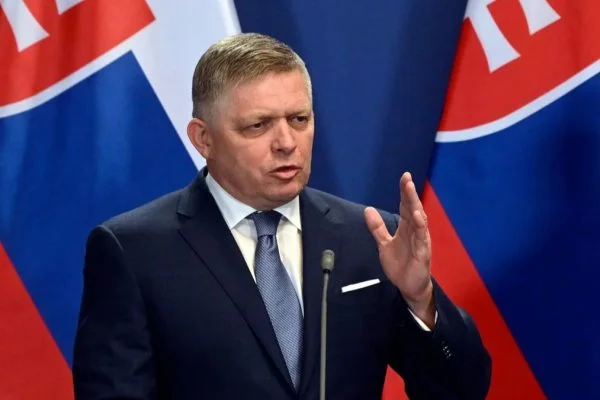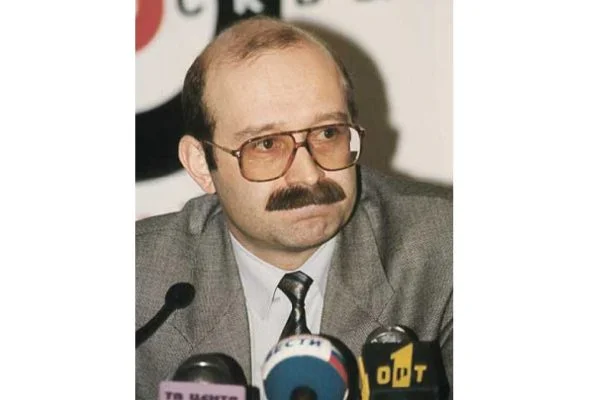
When the Kremlin openly suggests that Donald Trump would enter world history by taking control of Greenland, it is not admiration. It is diagnosis. The remark by Kremlin spokesperson Dmitry Peskov is best read not as endorsement but as a stark acknowledgment of how profoundly destabilising such a move would be for the post war international legal order.
Greenland is not merely an Arctic landmass. It is a test case for whether territorial sovereignty, self determination and international law retain any binding force in an era increasingly shaped by raw power politics. The fact that Russia is willing to publicly comment on the historical magnitude of such an act underscores how deeply this issue cuts into global strategic calculations.
Greenland’s legal status: Clear in law, complicated in politics
From a legal standpoint, the status of Greenland is unambiguous. It is an autonomous territory within the Kingdom of Denmark, with extensive self governance under Danish constitutional arrangements. Crucially, both Denmark and Greenland’s elected leadership have repeatedly stated that the island is not for sale and does not seek incorporation into the United States.
Under international law, particularly the United Nations Charter, the acquisition of territory by threat or force is prohibited. Even acquisition by purchase raises serious legal questions when it bypasses the will of the population concerned. Self determination is not a procedural formality. It is a foundational principle of modern international law.
Any unilateral attempt by the United States to assert ownership over Greenland would therefore sit in direct conflict with established norms of sovereignty and consent. This is why Peskov’s carefully worded comment that one might abstract from whether such a move complies with international law is so telling. It implicitly acknowledges that legality would be deeply contested.
Why the Kremlin is paying close attention
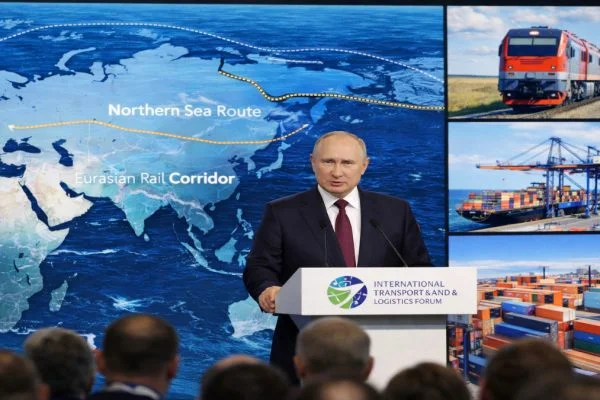
Russia’s interest in Greenland is strategic rather than transactional. The Arctic is rapidly becoming one of the most militarised and contested regions in the world due to climate change, emerging shipping routes and access to critical minerals. Greenland occupies a central position in this geopolitical chessboard.
When Trump frames Greenland as a matter of preventing Russian or Chinese influence, Moscow hears something else entirely. It hears a justification for rewriting territorial norms under the banner of security necessity. Russia’s foreign ministry has already criticised what it describes as Western double standards, accusing Western powers of invoking international law selectively while discarding it when inconvenient.
From Moscow’s perspective, a successful US acquisition of Greenland would weaken the moral and legal arguments the West deploys against territorial revisionism elsewhere. That is why the Kremlin treats the issue as historically consequential rather than merely provocative.
The precedent problem: A dangerous signal to the world
The most profound international impact of any US move on Greenland would not be regional but global. If a major power can openly pursue territorial acquisition against the expressed wishes of the population concerned, the precedent would reverberate far beyond the Arctic.
For smaller states, especially those reliant on international law rather than military strength, this would signal a return to a hierarchy of power where sovereignty is conditional. For contested territories worldwide, it would embolden claims that strength, not consent, determines ownership.
This is why the Greenland question resonates with disputes from Eastern Europe to the South China Sea. International law functions not because it is always enforced, but because violations carry reputational and systemic costs. Normalising territorial ambition erodes that fragile equilibrium.
NATO, allies and the crisis of credibility
An often overlooked dimension is the strain this issue places on alliances. Denmark is a NATO member. Greenland is strategically vital to NATO’s Arctic posture. Any attempt by the United States to override Danish and Greenlandic consent would create an unprecedented intra alliance crisis.
It would raise uncomfortable questions about whether security partnerships protect smaller allies or merely subordinate them. For European capitals already uneasy about strategic autonomy and American unpredictability, the Greenland episode reinforces doubts about the reliability of US leadership.
Ironically, such a move could weaken the very Western unity that Washington claims is necessary to counter Russian and Chinese influence.
Trump’s historical legacy and the cost of immortality
Peskov’s comment that Trump would go down in history is accurate in a narrow sense. Territorial acquisition in the twenty first century would indeed mark a radical departure from post war norms. But history does not merely record actions. It judges their consequences.
From a legal perspective, Trump’s Greenland rhetoric signals a willingness to treat international law as optional. From an international relations standpoint, it reflects a shift towards transactional sovereignty where territory becomes an asset rather than a community.
Whether this would secure American interests or accelerate global instability remains deeply contested. What is clear is that such a move would not strengthen the rules based order. It would expose its fragility.
Greenland as a mirror of the global order
The Kremlin’s statement is less about Trump and more about the world we are becoming. Greenland has emerged as a mirror reflecting the erosion of legal restraint in international politics. The issue is not whether the United States can exert power, but whether it should redefine legitimacy in doing so.
If Greenland becomes a bargaining chip in great power rivalry, the implications will extend far beyond the Arctic ice. They will shape how sovereignty, law and power are understood in the decades to come.
That is why this moment matters. Not because of what Greenland is, but because of what it represents.