The revelation that the United States administration under President Donald Trump has asked countries to pay $1bn to secure long term membership on a new US backed “Board of Peace” for Gaza is not merely controversial. It represents one of the most legally troubling and diplomatically incendiary experiments in post war governance attempted in the modern international system.
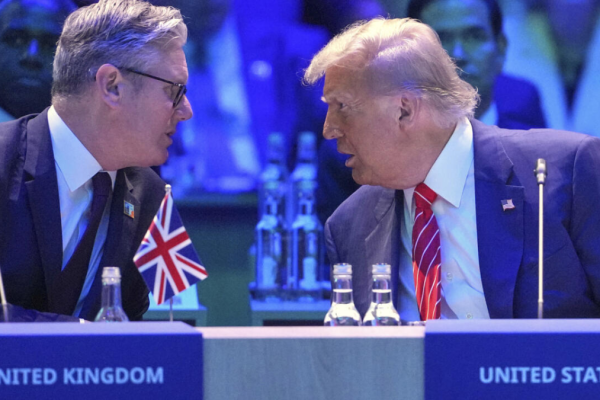
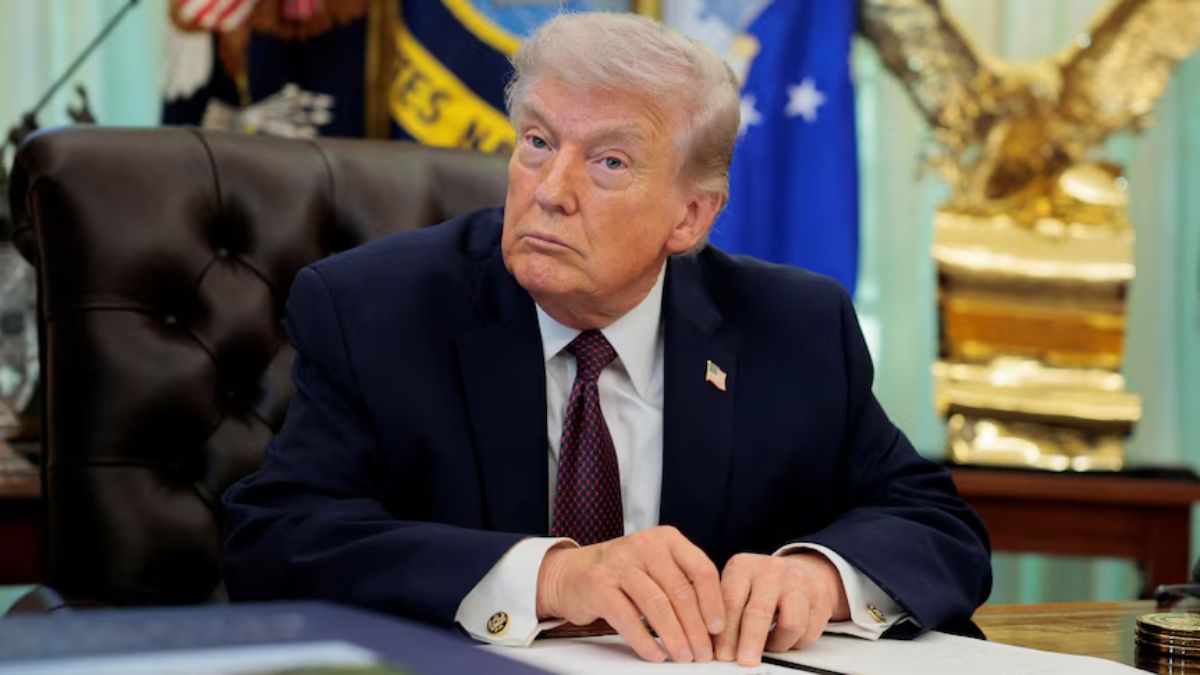
According to draft documents seen by Reuters and first reported by Bloomberg News, the United States has approached approximately sixty countries and informed them that continued membership beyond three years on the new governing body for Gaza would require a financial contribution of one billion dollars. The board, announced by the White House on Friday, will be chaired by Trump himself and will supervise Gaza’s transitional administration following the second phase of his twenty point peace plan.
The proposal is already detonating across diplomatic and legal circles, not simply because of its audacity, but because it fundamentally challenges the architecture of international law, the United Nations system, the law of occupation, and the long settled prohibition on monetising political authority over civilian populations emerging from armed conflict.
Even Israel, the occupying power for most of the war period and a central party to the conflict, was reportedly not consulted. A statement from the office of Prime Minister Benjamin Netanyahu confirmed that Washington did not coordinate the creation of the board with his government. Israeli foreign minister Gideon Saar is expected to raise the matter directly with US Secretary of State Marco Rubio.
The silence from Washington on this extraordinary diplomatic breach is telling.
A board that governs but answers to no one
Under the draft charter, the Board of Peace will consist of eleven executive members with additional rotating participants. The executive board includes Marco Rubio, Trump special envoy Steve Witkoff, Jared Kushner, Turkish foreign minister Hakan Fidan, former British prime minister Tony Blair, United Nations coordinator Sigrid Kaag, former UN envoy Nickolay Mladenov, US deputy national security adviser Robert Gabriel, billionaire Marc Rowan, and World Bank president Ajay Banga.
Major General Jasper Jeffers will command an International Stabilisation Force tasked with security operations, demilitarisation and humanitarian aid delivery.
Jordan, Egypt and Turkey have confirmed they were invited. France, Germany, Australia, Canada and European Commission president Ursula von der Leyen were also reportedly approached.
The structure itself raises immediate legal red flags.
The board would exercise authority over a civilian population of more than two million people in Gaza, territory that remains under belligerent occupation in the eyes of international law. Yet the body is not constituted under any United Nations resolution, has no mandate from the General Assembly or Security Council, and is chaired by the president of a state that is neither the occupying power nor a neutral administrator recognised under international humanitarian law.
Instead, the board is a private creation of the US executive branch.
That alone places it in direct tension with the Fourth Geneva Convention, the Hague Regulations, and the law governing post conflict administration, which require that any transitional authority operate within strict legal constraints to protect civilian political rights, property, sovereignty and self determination.
The proposal to charge one billion dollars for continued membership is unprecedented.
International law does not recognise the concept of purchasing political authority over a territory emerging from war. Trusteeship systems, peacekeeping administrations and transitional authorities have historically operated under UN supervision, funded collectively through assessed contributions or voluntary humanitarian funding mechanisms.
They have never been auctioned.
By attaching a price tag to decision making power over Gaza, the United States risks crossing into conduct that legal scholars would classify as coercive political commodification. This raises serious questions under the UN Charter principle of sovereign equality, the prohibition on intervention in domestic affairs, and the right of peoples to self determination.
Article 1 of the International Covenant on Civil and Political Rights affirms that all peoples have the right to freely determine their political status. The people of Gaza are not mentioned in the architecture of this board. There is no indication of Palestinian electoral participation, representation, or consent.
Instead, their future is to be administered by a pay to enter executive committee dominated by foreign officials, financiers and political appointees.
This is not peace building. It is outsourced governance.
Israel has already expressed strong opposition to any Turkish role in Gaza. Yet Turkish foreign minister Hakan Fidan is named as a founding executive member.
This single appointment guarantees geopolitical friction. Ankara supports Palestinian political factions that Israel views as hostile. Allowing Turkey formal authority inside Gaza without Israeli consent risks destabilising an already fragile ceasefire.
The ceasefire itself remains tenuous. Although it came into effect in October 2025, Gaza continues to witness deadly incidents with Israel and Hamas accusing each other of repeated violations.
The war began in October 2023 when Hamas led militants killed approximately 1,200 people in Israel and took 251 hostages. Israel responded with a two year military campaign in Gaza that, according to the Hamas run health ministry, killed around 70,000 people.
These facts matter legally. They establish Gaza as a territory shaped by armed conflict, occupation and humanitarian catastrophe. Any governing body operating there is subject to the strictest scrutiny under international humanitarian law.
Yet the proposed board operates as if international law is optional.
The Trump doctrine: peace as a personal franchise
Trump has called the board “the greatest and most prestigious board ever assembled at any time, any place”. He has stated that after Gaza it will expand to handle other global conflicts.
This language is not merely theatrical. It reveals a philosophy of international governance rooted in corporate management rather than law.
Peace processes are not private ventures. They are regulated political and legal undertakings grounded in multilateral legitimacy.
By placing himself as chair, appointing his son in law as a negotiator, inserting political allies and billionaires, and charging governments for participation, Trump is effectively transforming conflict resolution into a franchised enterprise.
The implications are severe.
If peace administration becomes a purchasable service controlled by a single executive office, then the multilateral system built after 1945 is not merely weakened. It is replaced by transactional geopolitics.
Several areas of law are now directly engaged.
First, the law of occupation. Under the Hague Regulations and Fourth Geneva Convention, only the occupying power or an internationally mandated authority may administer occupied territory. A US led board with no UN mandate occupies a legally ambiguous position that risks violating these obligations.
Second, the prohibition on collective punishment and political disenfranchisement. Excluding the population of Gaza from meaningful participation while monetising governance could breach fundamental human rights protections.
Third, international anti corruption norms. The OECD Anti Bribery Convention and the UN Convention against Corruption prohibit financial inducements for political influence. While states can make voluntary contributions, conditioning governance authority on payment dangerously resembles institutionalised pay to play diplomacy.
Fourth, state responsibility. If the board commits acts that violate international law, which state bears responsibility. The United States as organiser. Israel as territorial power. Or individual member states who paid for seats.
None of these questions have been answered.
European leaders are privately alarmed. The invitation extended to Ursula von der Leyen places the European Union in a dilemma. Participation risks legitimising a structure that bypasses the UN. Refusal risks marginalising Europe from post war reconstruction.
Jordan and Egypt face domestic backlash for engaging with a board perceived as foreign imposed control over Palestinian territory.
France and Germany are under pressure from legal scholars and parliamentarians who view the proposal as incompatible with international law and European treaty commitments to multilateralism.
Meanwhile, the appointment of the World Bank president Ajay Banga, an Indian born American citizen described as Israeli aligned, further blurs the line between humanitarian reconstruction and political engineering.
If the Gaza board proceeds as designed, it establishes a precedent with global consequences.
Any powerful state could create a similar body for Yemen, Sudan, Ukraine, Haiti or Myanmar, charge governments for participation, deploy its own stabilisation forces, and claim legitimacy without international authorisation.
That is not the rule based order. It is geopolitical privatisation.
Small and medium states understand what this means. Their sovereignty becomes negotiable. Their crises become commercial opportunities.
This is not about peace.
It is about control.
It is about reshaping international governance into a marketplace where access, authority and influence are purchased, not earned through law or consent.
It is about reducing one of the most tragic humanitarian catastrophes of the century to an administrative project chaired by a single foreign leader, funded by compulsory contributions, enforced by foreign troops, and insulated from democratic accountability.
History will judge this experiment harshly.
If it proceeds, it will be remembered not as a breakthrough in diplomacy but as the moment when the language of peace was finally subordinated to the logic of power and payment.
And the people of Gaza, once again, will have had no seat at the table that decides their fate.