

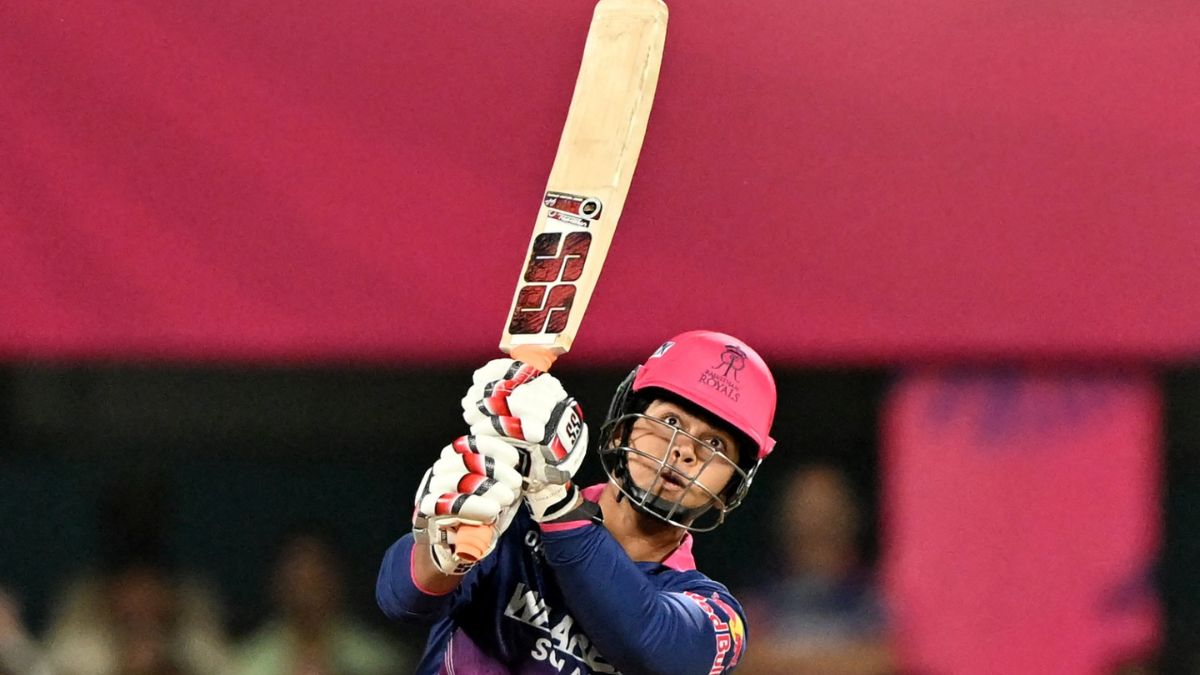
Sooryavanshi’s pace, SRH’s problem
A new day, same expectation – what is Vaibhav Suryavanshi going to pull off today? Vaibhav Sooryavanshi has added another line to his short IPL career: the third-fastest hundred in the tournament’s history. He reached it in 36 balls, his second IPL century, and briefly threatened to make it his own record before being dismissed for 103 off 37. The only player ahead of him in this rare list is Chris Gayle, with a 30-ball hundred in 2013. Sooryavanshi’s other entry remains 35 balls from last season, which still sits above everything except Gayle.
Sunrisers Hyderabad chose to bowl first and paid for it almost immediately. Praful Hinge was taken for four straight sixes in the opening over, the same bowler who had once dismissed Sooryavanshi for a duck in a previous meeting. The response was blunt.
Even Pat Cummins, coming into the attack, was met with a first-ball six. By the time SRH found rhythm, the damage was structural. He becomes the first uncapped batter in IPL history to score two centuries.
Jurel and Sooryavanshi set the base
At 175 for 3 in 14 overs, Rajasthan Royals had already turned the game into a scoring contest rather than a chase of wickets.
Dhruv Jurel made 51 off 35 balls, absorbing the early pressure before accelerating cleanly through the middle overs. Together with Sooryavanshi, he added a 112-run partnership in 62 balls that shifted the innings from steady to unmanageable.
Jurel’s timing through the off side and Sooryavanshi’s range over midwicket meant SRH’s plan collapsed across phases. Sakib Hussain broke the stand, but not before the momentum had fully shifted. Nitish Kumar Reddy and Eshan Malinga picked up wickets, but by then the surface had already been read and re-written by RR’s top order.
SRH errors, Orange Cap pressure and the tone of the chase
SRH’s fielding added to the gap. Aniket Verma dropped Sooryavanshi at deep midwicket, a moment that cost more than just runs. From there, boundaries arrived in clusters, including a reverse sweep, a straight six off Cummins, and repeated misuse of length from the SRH seamers.
Sooryavanshi’s innings ended just after his hundred, a knock that placed him again in the Orange Cap conversation alongside established names. The broader picture was simpler: SRH had chances, missed them, and watched another innings slip past control. RR’s white-ball batting now looks less like form and more like a system that keeps repeating itself.