

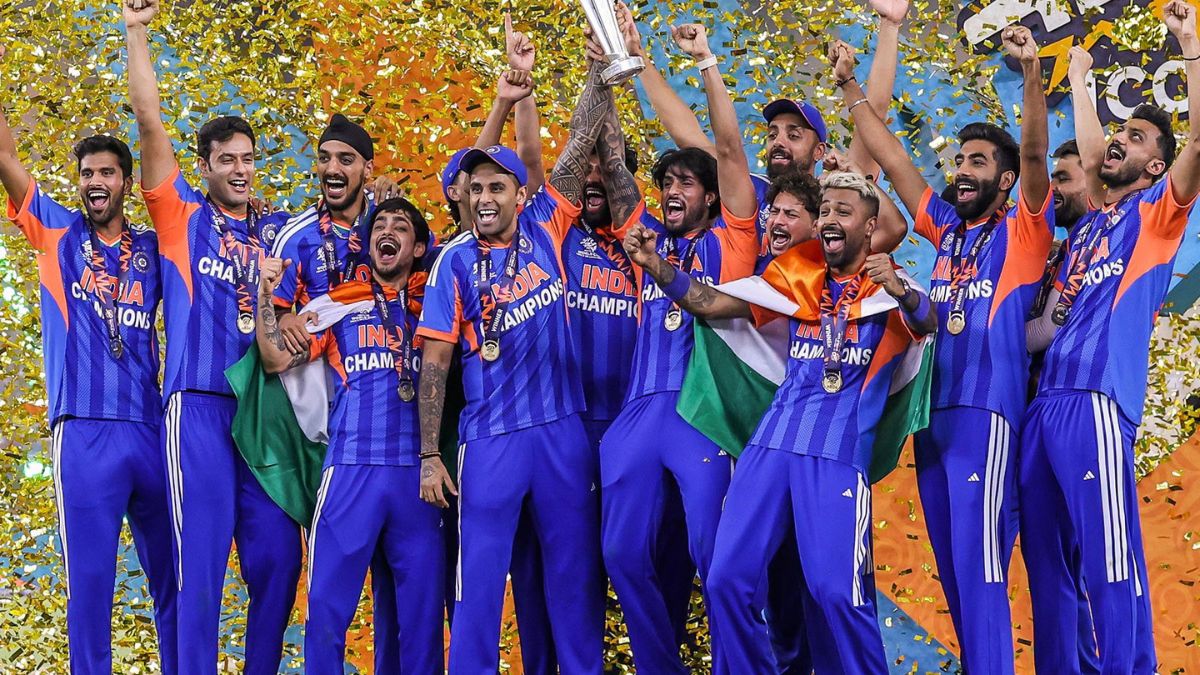
Cricket isn’t just a game in India it is the economy. Contributing nearly 89% to the country’s sports market, its dominance is huge and clearly shows why the sport is often called a festival, even a religion, across the nation. India’s sports economy has surpassed the $2 billion mark (₹18,864 crore) in 2025, with cricket leading the way, accounting for a massive 89% share (₹16,704 crore) of the total revenue.
The massive growth of the cricket economy reflects its deep-rooted cultural and emotional connection with Indian players. From packed stadiums to deserted streets during crucial matches, it is not just entertainment, it is an economic powerhouse driving revenues, sponsorships, and mass engagement.
Indian cricket teams have also provided plenty of reasons to celebrate, winning back-to-back ICC trophies in recent years. India’s success on the global stage further justifies this dominance. In the past few years, India has secured multiple major ICC titles, including the T20 World Cup triumph in the West Indies, followed by a Champions Trophy victory in Dubai, and most recently the T20 World Cup at home in 2026 under skipper Suryakumar Yadav. The women’s team has also made history by winning a World Cup at home for the first time, while India’s U-19 teams have delivered success at the junior level in both men’s and women’s cricket. IPL has also played a huge role, whether in terms of viewership, sponsorships, or other factors, which clearly shows the immense popularity it has gained over the years. As the tournament begins on March 28, the craze for cricket is set to peak once again.
The Indian team’s performances in recent years have only strengthened public sentiment. Led by icons like Sachin Tendulkar, Kapil Dev, Sunil Gavaskar, Virat Kohli, Rohit Sharma, MS Dhoni and many more the sport continues to inspire millions who idolize these figures and aspire to follow in their footsteps.
However, this dominance also raises questions about balanced investment in other sports. In India, “sports” is often synonymous with cricket, leaving limited space for others to grow at a comparable pace.