
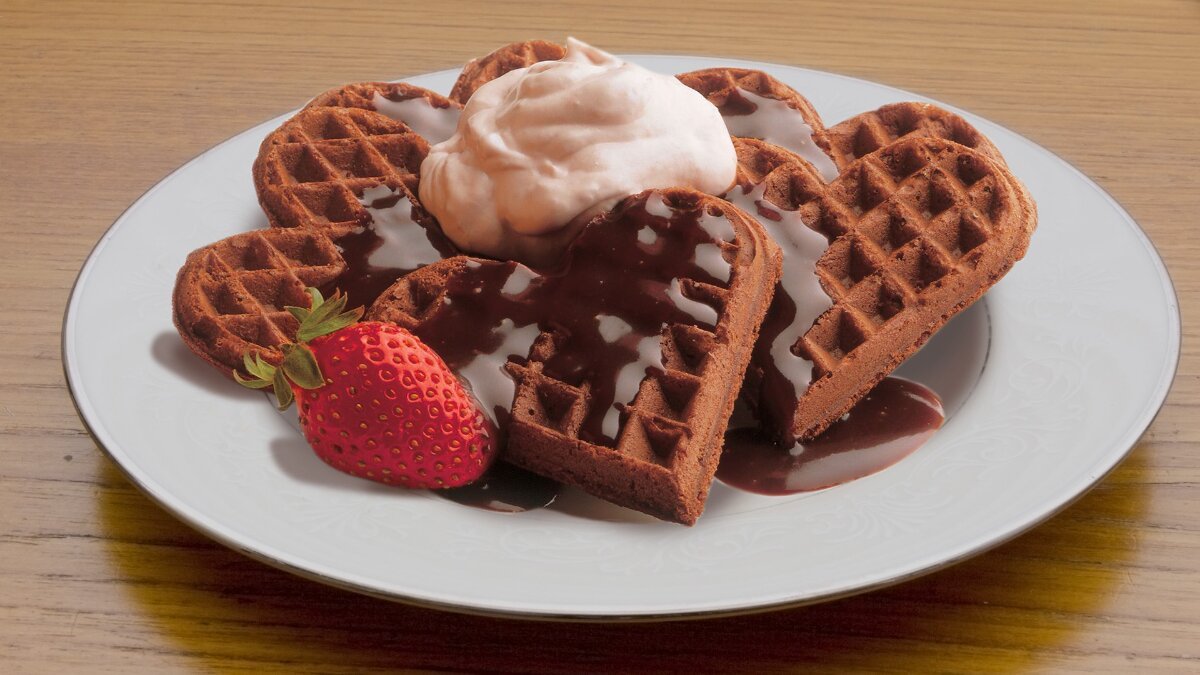
Waffles, those beloved breakfast delights adored for their crispy texture and fluffy insides, are renowned not only for their delicious taste but also for their unique appearance – the iconic grid or square pattern. Ever wondered why waffles have squares? Let’s journey into the intriguing history and science behind this distinctive feature.
Historical Origins:
The history of waffles dates back centuries, with origins traced to ancient Greece where flat cakes cooked between two metal plates over an open fire were enjoyed. However, it was in the Middle Ages when waffles as we recognize them today began to take shape.
Evolution of the Waffle Iron:
The evolution of waffle irons played a pivotal role in shaping the characteristic grid pattern. Initially, waffle irons were made of two metal plates with wooden handles joined by a hinge. These plates, when pressed together over an open flame, would imprint a pattern – often the family crest or symbols representing the iron’s maker.
Emergence of the Grid Pattern:
By the 16th century, waffle irons with engraved patterns became popular, creating distinctive designs on the waffles. The grid pattern we associate with waffles today is believed to have originated from these intricate designs, which not only provided visual appeal but also facilitated even cooking and a crispy texture.
Scientific Functionality:
The square or grid pattern on waffles serves more than just an aesthetic purpose. It plays a crucial role in the waffle-making process:
- Enhanced Surface Area: The grid pattern increases the surface area, allowing for more edges and crevices. This enables better caramelization and crispy texture as heat is distributed evenly across the waffle’s surface.
- Improved Heat Distribution: The divots or squares in the waffle iron allow for better heat distribution, ensuring that the batter cooks evenly, achieving both a crispy exterior and a fluffy interior.
Cultural Significance:
The grid pattern on waffles has become a cultural symbol, with variations in shapes and sizes across different regions and cultures. Belgian waffles, for instance, are known for their deeper squares, while Scandinavian waffles often have heart-shaped patterns.
The squares on waffles are more than just a visual element; they’re a product of culinary evolution and practical design. Originating from the historical development of waffle irons and their functionality, the grid pattern not only enhances the visual appeal but also contributes significantly to the waffle’s texture and taste.
As we indulge in these delicious breakfast treats, it’s worth appreciating the story behind the squares on waffles – a testament to the ingenuity and craftsmanship that has made these beloved treats a culinary icon enjoyed by people around the world.
