
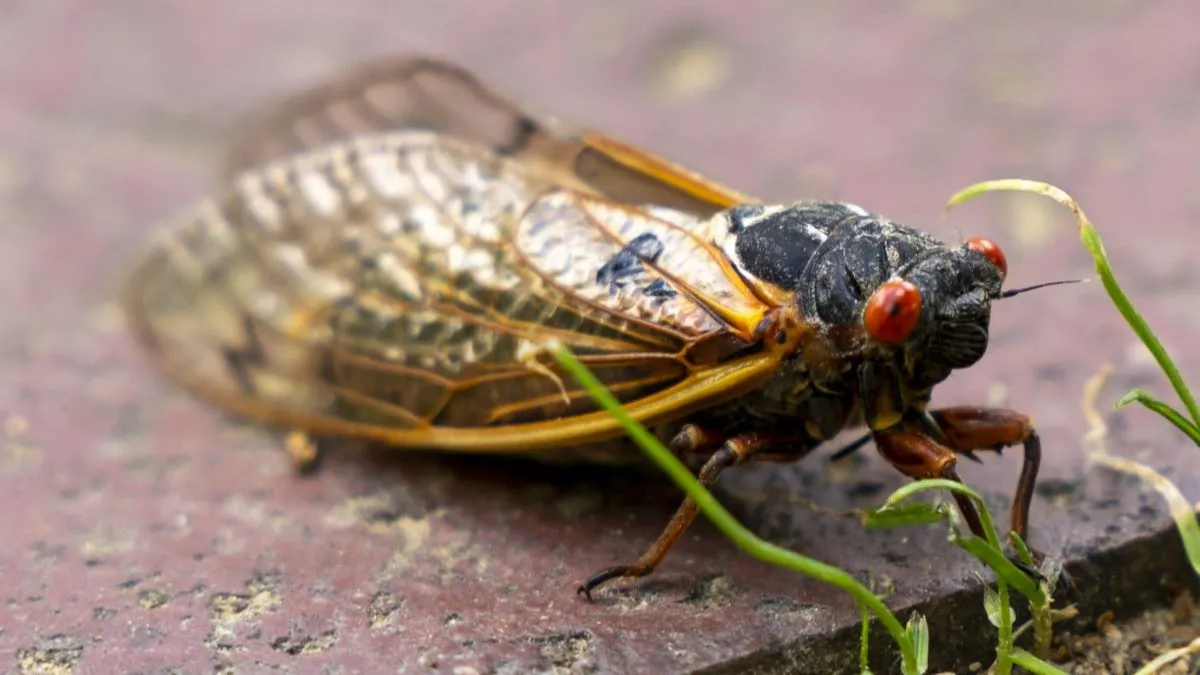
The state of Illinois is gearing up for a rare natural event: the emergence of two different broods of periodical cicadas, a phenomenon that occurs only once every 221 years. These winged insects, which spend most of their lives underground, are set to emerge in record numbers all over the state, and experts predict it will happen very soon.
Periodical cicadas are some of the longest-living insects on Earth, with a lifespan of 13 to 17 years. They typically emerge around late May or early June, leaving behind exoskeleton shells after molting, often seen on trees. The Illinois periodical cicadas are usually dark brown and black with reddish-brown colors near the wings.
Known for their distinctive “singing,” which males use to attract females, periodical cicadas are not harmful to humans or pets, although their sheer numbers will certainly be noticeable. Interestingly, they are also edible and reportedly taste like almonds.
The 2024 cicada emergence involves two broods: Broods XIII and XIX. Brood XIII emerges every 17 years, while Brood XIX emerges every 13 years. This dual emergence last occurred in 1803 and won’t happen again until 2245. While both broods will emerge simultaneously, they will appear in different parts of the state, with Brood XIII in the northern part and Brood XIX in the central and southern regions.
Dr. Ken Johnson of the University of Illinois anticipates the emergence to occur late May or early June in northern Illinois, with the possibility of an earlier emergence in Chicago due to urban heat. Warmer temperatures tend to accelerate the cicadas’ emergence, as they are “cued” by soil heat.
Following their emergence, which typically lasts four to five days for mating, females will lay around 500 to 600 eggs each. After about a month, the cicadas will perish, but their eggs will hatch in six to ten weeks. The nymphs will then drop to the ground to feed on grass roots, beginning the cycle anew.
