
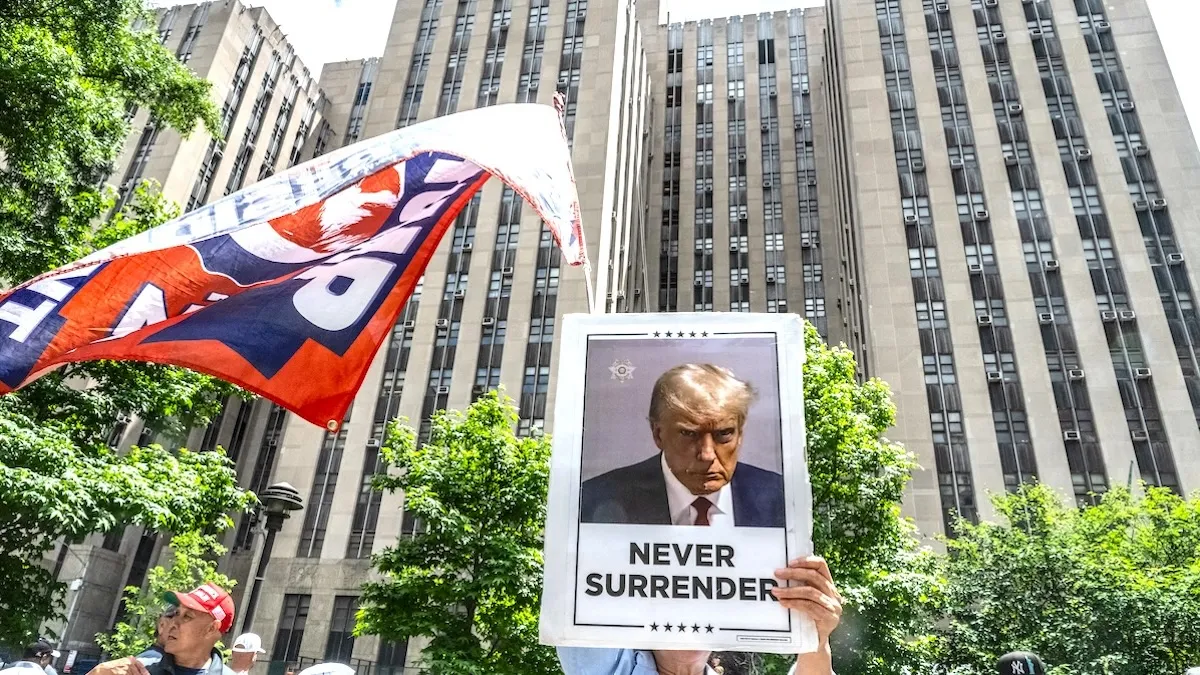
In the midst of the highly political Donald Trump New York hush-money case, the possibility of a hung jury and subsequent mistrial looms large. Understanding the implications of these legal outcomes prompts questions about what exactly constitutes a hung jury, what defines a mistrial, and how they differ in their implications.
A mistrial, by definition, is a trial that is legally invalidated. It can occur at any point during the trial process and for various reasons. In the ongoing case involving Donald Trump, if the jury is currently deliberating, a mistrial could only be declared after the jury emerges from their deliberation room having failed to reach a unanimous decision on one or more counts.
Prejudicial Error, defined as a mistake made during the trial process that harms one of the involved parties, could lead to a mistrial. This might occur if there were difficulties in selecting an unbiased jury, as seen in Trump’s case. However, it is unlikely at this stage unless a juror admits to being exposed to evidence or information they shouldn’t have been.
Similarly, a Procedural Error, where the court fails to follow proper legal procedures, or Juror Misconduct, such as jurors discussing the case outside the courtroom, could also prompt a mistrial.
On the other hand, a hung jury, also known as a deadlocked jury, occurs when the jury cannot reach a unanimous decision. In Trump’s case, the jury must reach a consensus on each of the 34 counts. If even one juror refuses to agree with the rest, the jury is considered hung.
In the event of a hung jury, a mistrial is declared. The judge may instruct the jurors to continue deliberating, but there is a limit to how much influence the judge can exert, particularly given the scrutiny faced by the presiding judge in this high-profile case.
Should a mistrial occur, the prosecution may opt to retry the case with a new jury, as the Double Jeopardy standard does not apply in cases of mistrials. While not as favorable as an acquittal, a mistrial would provide Trump with temporary relief from conviction, with the possibility of a new trial date in the future.
