
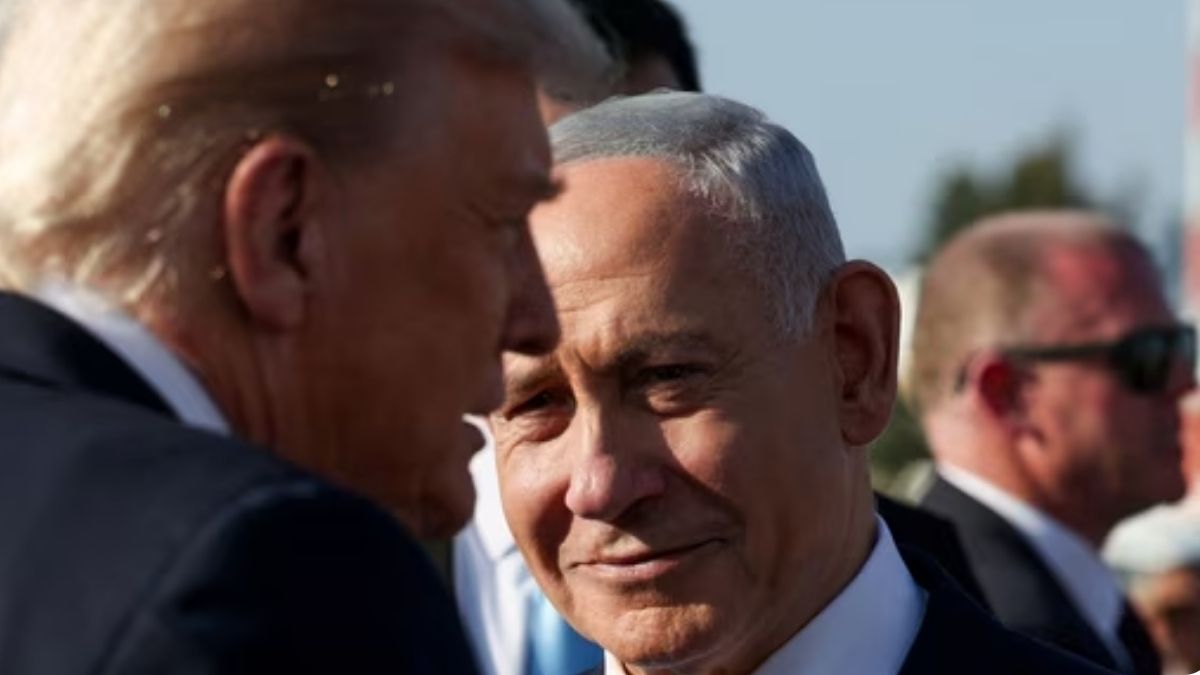
US President Donald Trump is expected to push for progress on the stalled Gaza ceasefire when he meets Israeli Prime Minister Benjamin Netanyahu later today. He is also likely to discuss Israel’s concerns about Hezbollah in Lebanon and Iran.
The meeting will take place at Trump’s Mar-a-Lago residence at 1 PM local time. Netanyahu said earlier this month that Trump had invited him to talk about establishing temporary governance in Gaza and an international security force. Israel has been reluctant to move forward with these plans.
The agenda for the meeting will focus on the second phase of the Gaza ceasefire, as well as Iran and Lebanon. Washington helped broker the ceasefire, but Israel remains cautious that its enemies could rebuild their strength after being weakened during the war.
In Gaza, Israel and Hamas agreed in October to a plan proposed by Trump. The plan calls for Israel to withdraw from the strip and for Hamas to give up its weapons and end its rule. The first phase included a partial Israeli pullback, more humanitarian aid, and exchanges of hostages for Palestinian detainees and prisoners.
An Israeli official said Netanyahu will insist that Hamas return the remains of the last Israeli hostage, Ran Gvili, before moving to the next stage. Gvili’s family has joined the Israeli delegation and is expected to meet US officials. Israel has said it will not open the Rafah crossing to Egypt until Gvili’s remains are returned.
US Secretary of State Marco Rubio said Washington wants a transitional administration for Gaza to be set up soon. This includes a Board of Peace and a group of Palestinian technocrats to govern the territory. This would happen before an international security force, as called for in a UN resolution from November 17, is deployed.
However, both Israel and Hamas accuse each other of breaking the agreement. Hamas has refused to disarm and is reasserting control even as Israeli troops remain in about half of Gaza. Israel has warned it will resume military action if Hamas does not negotiate disarmament.
Violence has decreased but has not stopped. Since the ceasefire began in October, Israeli strikes have killed over 400 Palestinians, mostly civilians. Palestinian militants have killed three Israeli soldiers during the same period.
