
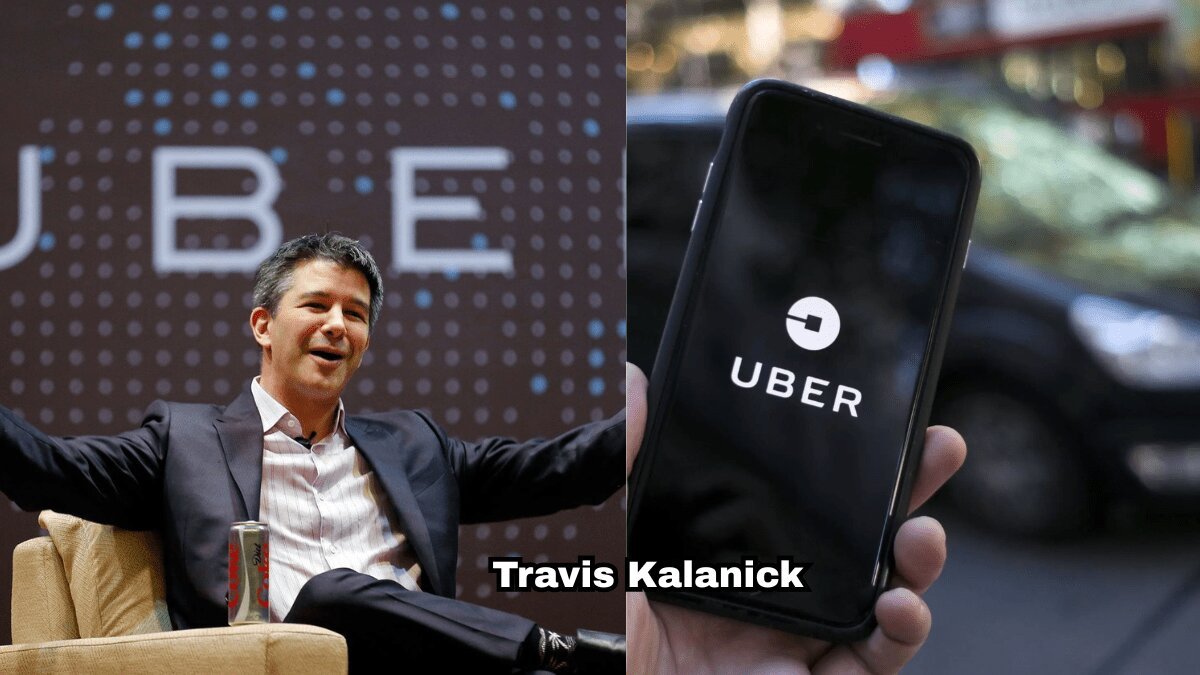
Travis Kalanick, a name synonymous with disruption and innovation, is one of the most polarizing figures in Silicon Valley. As the co-founder of Uber, Kalanick played a pivotal role in revolutionizing the global transportation industry. But his journey to success wasn’t linear or devoid of challenges. A serial entrepreneur, Kalanick’s rise and fall within the tech world illustrates the complexities of modern entrepreneurship—visionary leadership intertwined with controversial decisions. “The way I approach things is just different. I want to have impact,” Kalanick once remarked, reflecting his audacious attitude that would later define his career.
Born in Los Angeles, California, in 1976, Travis Kalanick was exposed to technology and entrepreneurship at a young age. His father, a civil engineer, and his mother, a community organizer, provided him with a blend of intellectual curiosity and a desire to solve problems. Kalanick’s early experiences, including a short stint at UCLA, helped shape his determination to become an entrepreneur. He dropped out of college to pursue his startup dreams, a decision that would eventually pay off in ways he never imagined.
“You have to be a little bit crazy to build a big company,” Kalanick has said, and his career is a testament to that mindset.
Kalanick’s first venture, Scour, a peer-to-peer file-sharing company, was short-lived but gave him invaluable lessons in business and technology. It was, however, the founding of Uber that would catapult him into the global spotlight. Uber’s story, often painted as a tale of visionary entrepreneurship, is equally a story of controversies, rivalries, and dramatic exits. But at its core, it is about one man’s relentless ambition to change the world.
Uber was founded with a simple yet ambitious goal: to make transportation more accessible, convenient, and affordable.
“Uber’s mission is to ignite opportunity by setting the world in motion,” Kalanick once said.
However, it wasn’t just the mission that made Kalanick famous; it was his unyielding approach to innovation and his constant pursuit of growth, which often led to friction with competitors, regulators, and even within his own company.
This biography will trace Kalanick’s journey, from his early entrepreneurial ventures to his dramatic exit from Uber and his subsequent ventures. His life is a testament to both the rewards and the risks of being a disruptive leader in today’s world. Whether seen as a genius or a villain, Kalanick’s impact on the tech world is undeniable, and his story offers valuable lessons for entrepreneurs everywhere.
Early Life and Education of Travis Kalanick: From Los Angeles Roots to Entrepreneurial Dreams
Travis Kalanick’s roots trace back to Los Angeles, California, where he was born in 1976. Growing up in a suburban environment, Kalanick was exposed to both technical problem-solving and community engagement. His father, a civil engineer, imparted a strong work ethic, while his mother, a community organizer, nurtured his curiosity and drive. These early influences shaped Kalanick into the driven entrepreneur he would later become.
Despite his seemingly unremarkable beginnings, Kalanick’s intelligence and ambition were evident early on. He attended Granada Hills High School, where his interests in computer science and entrepreneurship began to take shape. Kalanick was already thinking about how to make life easier and more efficient—a mindset that would drive his later ventures.
“I was one of those kids who was always trying to make things work better,” he reflected, hinting at his early inclination toward problem-solving.
After high school, Kalanick enrolled at UCLA, where he studied computer engineering. However, his time at the university would be short-lived. He dropped out after his sophomore year to pursue his first venture, Scour. While at UCLA, Kalanick connected with future collaborators, including his long-time friend Garrett Camp, who would later join him in the creation of Uber. It was at UCLA that Kalanick’s entrepreneurial spirit was fully unleashed, and he realized that the traditional path to success wasn’t for him.
“The goal was always to make something that changes the world, not just to have a regular job,” Kalanick explained, cementing his desire to make an impact.
Scour, his first entrepreneurial endeavor, was a peer-to-peer file-sharing company. Although the company faced numerous legal challenges and ultimately shut down, the experience provided Kalanick with crucial lessons about the risks and rewards of entrepreneurship.
“You learn far more from your failures than you do from your successes,” Kalanick said, reflecting on Scour’s brief existence.
Though Scour didn’t last, Kalanick’s tenacity and determination didn’t waver. He continued to hone his skills, working on other projects, and building his reputation in Silicon Valley. By the time he co-founded Uber in 2009, Kalanick was well-prepared to tackle the complexities of scaling a global business. His early life and education—marked by both triumphs and failures—played a significant role in shaping the leader who would revolutionize transportation.

credit- qz.com
The Rise of Uber: How Travis Kalanick Disrupted the Global Transportation Industry
The birth of Uber in 2009 marked a pivotal moment in the tech and transportation industries, largely due to the vision and ambition of Travis Kalanick. At its core, Uber’s mission was simple: to make transportation more accessible, convenient, and affordable.
But its execution was revolutionary. “I wanted to create a product that would make people’s lives better and more convenient,” Kalanick once explained, and Uber was born from that vision.
The idea for Uber came to Kalanick during a trip to Paris with his friend Garrett Camp. The duo found it frustrating to get a cab on a cold night, and that frustration sparked the idea of a ride-hailing service that could be summoned through an app. Initially, Uber was conceived as “UberCab,” a premium black car service designed to challenge the traditional taxi industry. Within months of its launch, however, it became clear that Uber had the potential to disrupt not just the taxi industry but the entire transportation ecosystem.
Kalanick’s leadership style was aggressive and results-oriented, and his determination to grow Uber at breakneck speed was clear. Under his leadership, Uber expanded rapidly, launching in cities across the globe.
“When you’re building something from nothing, you have to push the envelope and take risks,” Kalanick remarked, explaining his approach to growth. His philosophy of ‘fail fast, fail often’ contributed to Uber’s rapid scaling, but also to its many challenges.
The company’s success wasn’t just in the product itself—it was in the way it reshaped consumer behavior. Uber was able to bypass the traditional taxi industry’s constraints by leveraging technology to create a more seamless and efficient experience for riders. Consumers loved the ease of use, and the flexibility it offered.
“Uber made the experience of getting a ride easier, faster, and better,” Kalanick said, emphasizing the company’s consumer-centric approach.
However, Uber’s rise wasn’t without its challenges. Regulatory hurdles, competition from traditional taxi services, and growing internal tensions created obstacles for Kalanick and the company. Despite these challenges, Uber’s growth trajectory remained strong, and it quickly became a global powerhouse. The Uber model—one that utilized technology to connect consumers with drivers—redefined how people thought about transportation and established Kalanick as one of the most influential entrepreneurs of his generation.
credit – wallpaper cave
Controversies and Comeback: Travis Kalanick’s Exit from Uber and New Ventures
Despite Uber’s tremendous success, Kalanick’s tenure as CEO was not without controversy. His aggressive approach to growth, while effective, often rubbed people the wrong way, both within Uber and outside it. Accusations of fostering a toxic work culture, as well as his combative attitude toward regulators, painted Kalanick as a polarising figure.
“I’m not trying to make friends. I’m trying to build a company,” Kalanick once said, a sentiment that encapsulated his no-holds-barred approach to leadership.
In 2017, amidst mounting pressure, Kalanick was forced to step down as CEO of Uber following a series of scandals, including allegations of sexual harassment within the company, issues with Uber’s workplace culture, and conflicts with investors. His departure was a highly publicized event, but Kalanick remained undeterred. “It was a tough time, but it’s all part of the journey,” he said, reflecting on the circumstances surrounding his exit.
Though Kalanick’s exit marked the end of an era at Uber, it didn’t signify the end of his entrepreneurial journey. After leaving Uber, he shifted his focus to new ventures, including his investment firm, 10100 Fund, which focuses on early-stage startups.
“The biggest thing I’ve learned is that failure is an opportunity to grow and rebuild,” Kalanick stated.
His new ventures aim to disrupt other industries, much like Uber did. With a keen eye for innovation and a drive to make an impact, Kalanick’s post-Uber career has shown that while the road to success may be bumpy, a true entrepreneur never stops trying to change the world.
Travis Kalanick’s journey from a young entrepreneur in Los Angeles to the founder of a global tech giant like Uber is a testament to the volatile nature of Silicon Valley’s startup culture. His story embodies the paradox of modern entrepreneurship—where success is often built on risk, controversy, and a relentless pursuit of change. Kalanick’s rise and fall at Uber have made him one of the most talked-about figures in the tech world, with opinions of him ranging from admiration for his vision to criticism of his leadership style. Yet, his impact on the transportation industry and the world at large is undeniable.
Reflecting on his time at Uber, Kalanick once said, “When you start something from scratch, you have no idea what will happen. All you know is that you’re in the thick of it, trying to make it work.”
This quote encapsulates the essence of his journey—a whirlwind of challenges, victories, and setbacks that ultimately led to the creation of one of the most disruptive companies of the 21st century. Under his leadership, Uber wasn’t just a ride-hailing service; it became a global phenomenon, shaping how people think about transportation and urban mobility.
However, the same qualities that fueled Uber’s rise also contributed to its controversies. Kalanick’s aggressive growth tactics, coupled with his sometimes combative attitude toward competitors and regulators, sparked criticism that eventually led to his ouster as CEO. “You have to fight to build something great, but you also have to know when to take a step back,” Kalanick reflected after leaving Uber. This realization marked a turning point in his life and career, as it prompted him to reassess his approach to leadership and innovation.
Though his departure from Uber was difficult, Kalanick’s resilience was evident in his post-Uber ventures. He didn’t retreat from the spotlight but instead pivoted to new projects, like his investment firm, 10100 Fund, which aims to foster innovation in emerging markets. Kalanick’s willingness to embrace failure and use it as a springboard for new opportunities is perhaps best captured by his words: “The biggest lessons come from the hardest times. You have to keep going, no matter how tough things get.” His ability to turn setbacks into comebacks is a characteristic that has defined his career and will likely continue to shape his future endeavors.
In conclusion, Travis Kalanick’s legacy will forever be intertwined with Uber’s extraordinary rise and tumultuous journey. He was a visionary who sought to transform an entire industry, and although his time at Uber ended in controversy, his entrepreneurial spirit remains intact.
“You learn more from your failures than from your successes,” Kalanick has said,
and his journey is a living testament to the truth of that statement. Whether seen as a hero, a villain, or something in between, Kalanick’s contributions to the tech world and his indomitable drive to innovate will continue to inspire future generations of entrepreneurs. The world of tech, with all its rapid changes, remains shaped by the relentless ambition of figures like Travis Kalanick—individuals who dare to challenge the status quo and redefine the way we live, work, and interact with technology.