
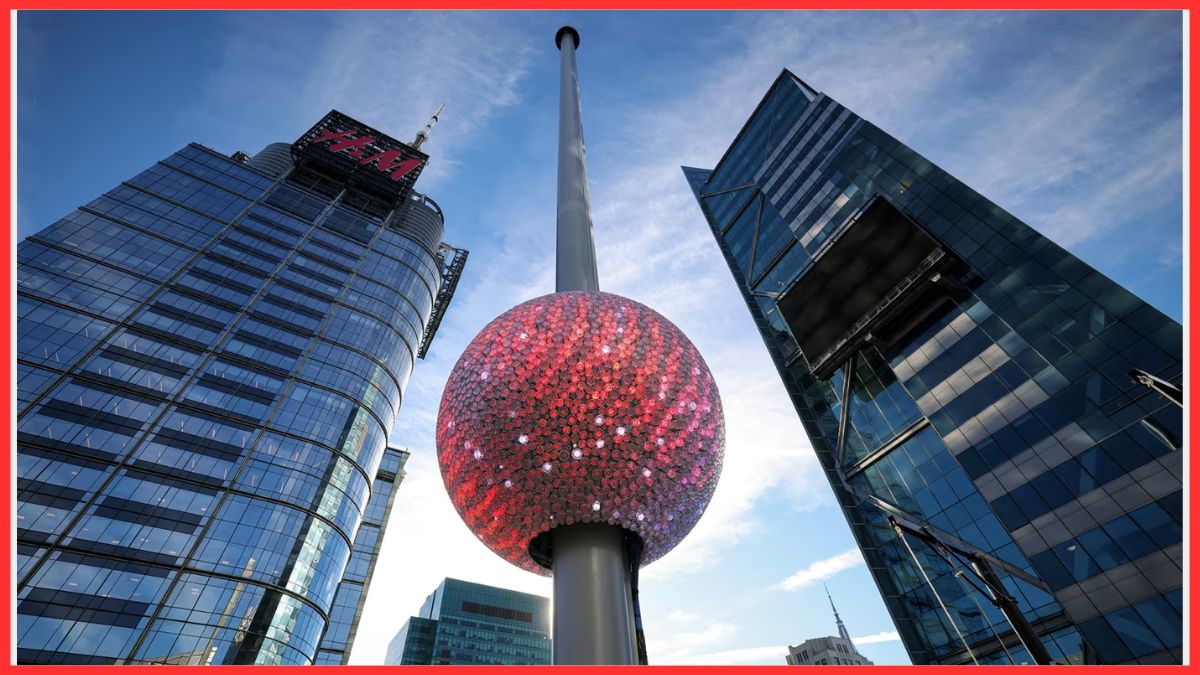
Times Square is preparing to welcome 2026 with a striking new centerpiece as the iconic New Year’s Eve ball drop unveils its largest ball to date. Named the Constellation Ball, the latest addition continues a tradition that began in 1907 while reflecting modern design and technology. According to official details shared by One Times Square, the ball measures 12.5 feet in diameter, weighs just over 12,000 pounds, and becomes the ninth ball used in the long-running celebration at the famed Midtown Manhattan crossroads.
Designed to be both visually bold and symbolically meaningful, the Constellation Ball features 5,280 circular Waterford crystals in three sizes, paired with advanced LED light pucks. The use of circular crystals marks a clear shift from the triangular designs that had been used since 1999. Event organizers at One Times Square explained in an official statement that each crystal size carries a distinct design meant to express enduring positivity and continuity.
Inside the Design and Meaning of the Times Square Constellation Ball
Michael Phillips, president of Jamestown, the company that owns and operates One Times Square, explained that the new ball was created to symbolize interconnectedness and wholeness. He noted that its design reflects the cyclical nature of tradition, emphasizing the relationship between past, present, and future that defines the annual celebration.
The ball drop itself remains a carefully timed ritual. At 11:59 p.m., the illuminated sphere begins its descent down the pole as the countdown unfolds. Millions of viewers watch on television while attendees in Times Square mark the final moments of the year together. When midnight arrives, the moment is marked by light, sound, and shared celebration, continuing a format that has remained central to New Year’s Eve for generations.
How the Times Square New Year’s Eve Ball Drop Became a Global Tradition
The original Times Square ball first descended in 1907 after city officials banned fireworks from earlier New Year celebrations. Former New York Times publisher Adolph Ochs commissioned metalworker Jacob Starr of Strauss Signs to create a new visual spectacle. The concept drew inspiration from 19th-century nautical time balls used by ship navigators to set chronometers accurately.
In a phone interview, Starr’s granddaughter Tama Starr, who later owned the Artkraft Strauss company, shared that she believes her grandfather conceived the illuminated, descending ball concept. She explained that the early ball was lowered by hand and lit using newly available electricity, creating a transformation effect as the year’s numbers appeared at midnight. According to historical context provided by the National Park Service, many American homes still relied on gas or candlelight at the time, making the glowing ball an extraordinary sight. Over more than a century, that simple illuminated cage has evolved into today’s crystal sphere, remaining a powerful symbol of renewal as each new year begins.
