
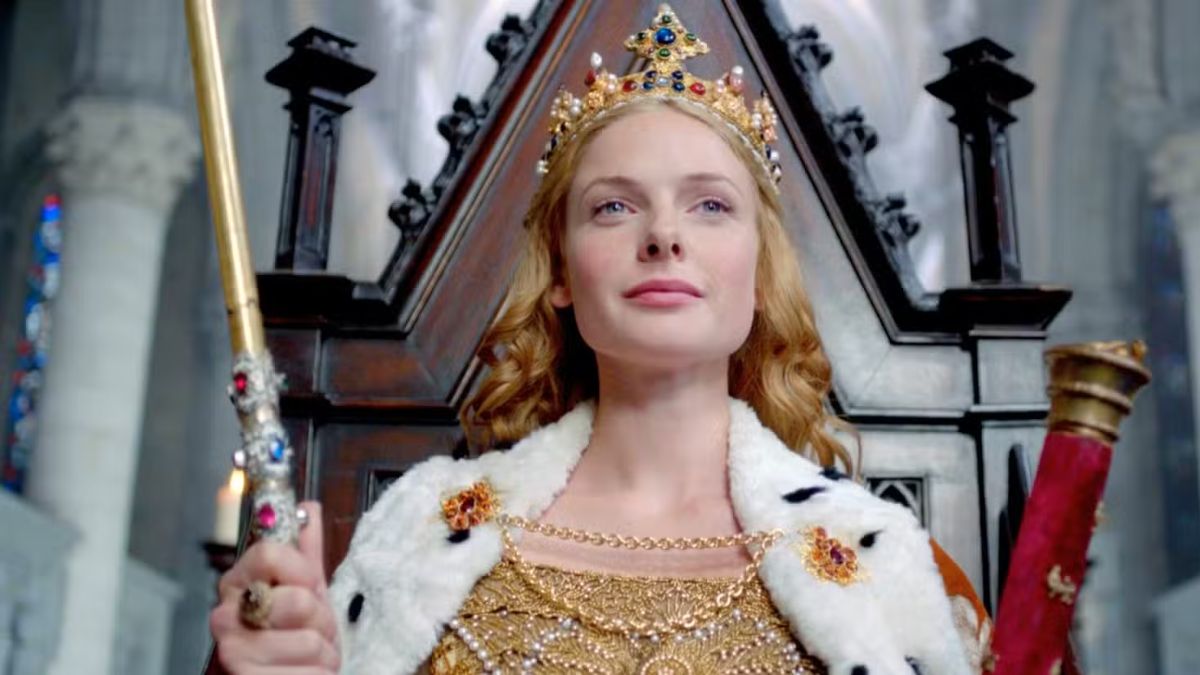
Looking back, it’s wild how quickly The White Queen raced through Rebecca Ferguson’s story in just ten episodes. The 2013 Starz series covered decades of political intrigue, secret marriages, brutal executions, and dynastic power struggles during the War of the Roses, but it barely slowed down to let Ferguson’s Elizabeth Woodville shine. For anyone watching today, it’s clear she was already a major talent in the making, even if the show didn’t give her enough room to dominate the screen.
Ferguson’s Elizabeth isn’t flashy at first. She’s a recently widowed young woman appealing to King Edward IV for her late husband’s property, but underneath that timid exterior lies a sharp, calculating mind. Ferguson makes her quietly magnetic, showing a survivor who’s willing to navigate a dangerous, male-dominated world without losing herself. Even as the series skims decades of battles, betrayals, and court intrigue, Ferguson gives the character a sense of long-term strategy that hints at the star she would become.
She’s not alone. The White Queen is filled with formidable women: Margaret Beaufort works to secure her son Henry Tudor’s destiny, Anne Neville evolves from pawn to ruler, Isabel Warwick navigates loyalty and survival, and Lady Woodville, Elizabeth’s mother, pulls strings with a touch of mysticism. Together, they form a network of female power in a patriarchal world, but it’s Ferguson’s Elizabeth at the center, carrying the show’s biggest ambitions.
The show’s biggest drawback is its pace. Condensing thirty years into ten episodes makes the story feel rushed. Key moments pass in montages, and moral compromises often happen too fast for viewers to fully absorb. Critics noted the series’ vignette-like structure and glossy production, leaving audiences craving more space to watch Ferguson’s Elizabeth grow into her full power.
Even with the fast pace, Ferguson fills every scene with intelligence, subtle menace, and a sense of presence that elevates the material. The whispers of witchcraft, prophetic visions, and symbolic rituals surrounding Elizabeth feel alive in her hands, even if the show never fully explores them. By the finale, it’s clear Ferguson does far more than the series can contain, making her a compelling force that outshines the story itself.
Watching The White Queen today, you can see Ferguson’s star potential long before her roles in Mission: Impossible and Denis Villeneuve’s Dune trilogy. The show may have flown by, but it’s a perfect early showcase for a performer quietly building a career around complex, powerful female characters. It’s worth revisiting—not just for history, but to witness Rebecca Ferguson in full, unstoppable form.
