
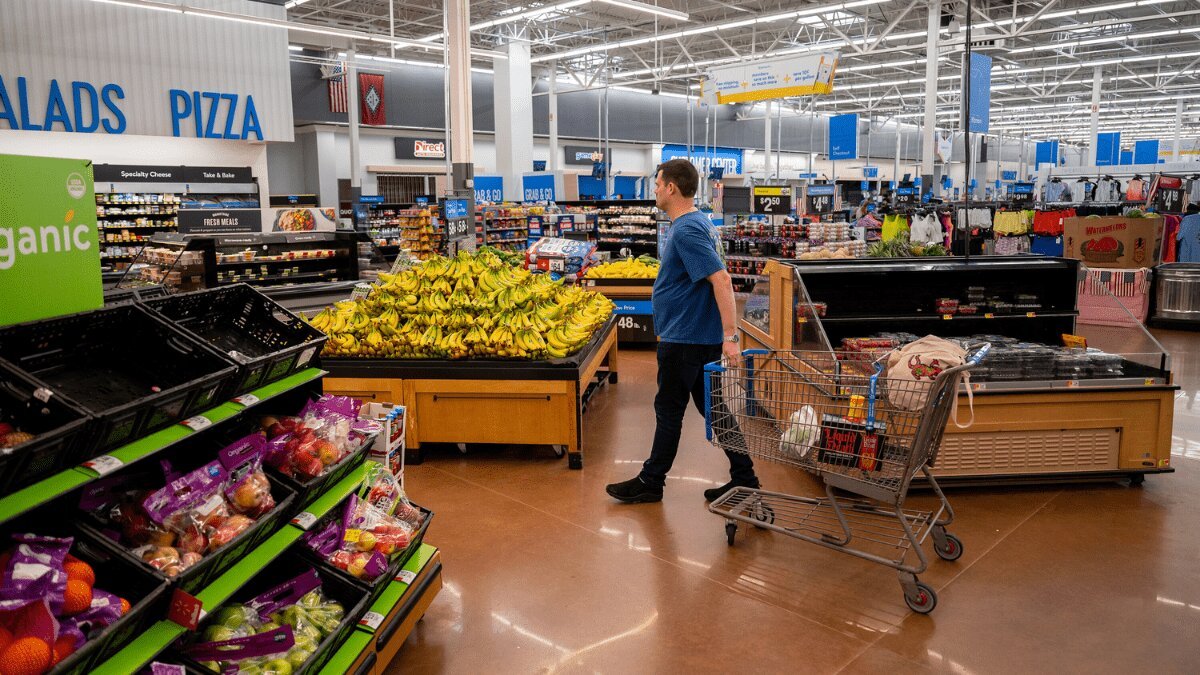
More Than Just Milk
The average gallon of milk now costs more than $5 in some parts of the country—and it’s not just a budget concern. It’s a political pressure point.
As America barrels toward the 2024 presidential election, traditional campaign issues like immigration, foreign policy, and even abortion rights are being overshadowed by something much more visceral: the cost of everyday life. The grocery store, it turns out, has become the new battleground for hearts, minds—and votes.
In 2020, the pandemic upended global supply chains. In 2022, inflation soared. By 2023, Americans were recalibrating their budgets, opting for off-brand cereal, skipping red meat, or driving further for cheaper milk. These aren’t abstract economic trends. They’re deeply personal, emotional decisions. And voters are paying attention.
Forget the stock market or GDP numbers. Most Americans gauge the economy not by CNBC punditry but by what they can afford at checkout. Milk, eggs, butter, diapers—these are the new indicators of trust, stability, and leadership.
Candidates who fail to address this—really address it, not just with buzzwords but with policy clarity—risk losing one of the most engaged and economically anxious electorates in modern history.
This isn’t just about price tags. It’s about dignity, survival, and the unraveling of the American middle-class promise. Milk, once a symbol of prosperity and nourishment, is now a litmus test for economic leadership—and a surprisingly powerful one.
So what do rising grocery prices say about the future of politics? What does inflation at aisle four tell us about trust in government, corporate power, and systemic inequality?
It might seem like a stretch. But the grocery cart has never been more politically charged.
Milk as a Metric: The Power of Psychological Economics
The cost of milk is more than a data point on a chart—it’s a psychological benchmark.
Milk is:
-
A staple for families
-
A budget item bought weekly, not monthly
-
A universal product across red and blue states
When milk prices rise, people feel it fast. And unlike housing or gas, it’s not easy to delay buying milk. That immediacy means it hits home harder—and gets internalized as a sign the system isn’t working.
Historically, rising grocery prices have triggered anxiety that spills over into the voting booth. In 1978, milk prices and food inflation helped erode confidence in Jimmy Carter. In 2024, the same dynamics are at play.
But now, voters are also being trained by social media to track and share these trends. TikToks documenting grocery hauls with jaw-dropping totals are common. Screenshots of price comparisons from 2019 vs. 2024 are going viral. The narrative is clear: “I’m spending more, and no one in charge seems to care.”
From Checkout Lane to Campaign Trail: The Milk Test
A politician’s ability to talk about food prices is becoming a credibility test.
In early 2024, both major parties have scrambled to acknowledge grocery inflation. President Joe Biden has repeatedly cited cooling inflation trends. But many voters don’t care what the Bureau of Labor Statistics says—they care about what they just paid for cheese.
Meanwhile, Republican contenders like Donald Trump and Ron DeSantis are seizing on the disconnect between official economic optimism and lived reality. In rallies and interviews, they’re invoking milk and egg prices as evidence that “Bidenomics” is failing.
The result? Milk is being weaponized.
Not since the gas lines of the 1970s has such a basic consumer product become so symbolically potent. But while gas hits the commute, milk hits the kitchen table—the place where families budget, argue, and decide who they trust.
The Grocery Gap: Class Anxiety in Aisle Five
The price of milk also exposes a deeper class divide. While some Americans switch to store brands or skip dairy altogether, others scroll past $9 oat milk options without blinking.
Grocery bills have become a new way to measure privilege. Those who live paycheck-to-paycheck feel every uptick. Meanwhile, upper-middle-class consumers on Instacart may not even notice.
This discrepancy breeds resentment and political tension. For many working-class voters, the elite’s disconnection from everyday costs is proof of a larger failure: a government and media class out of touch with real life.
Candidates who speak vaguely about “macroeconomic indicators” while ignoring the $150 grocery hauls of single parents are increasingly seen as tone-deaf—or worse, indifferent.
TikTok Economics: How Gen Z Is Documenting the Decline
Gen Z voters—many of whom are experiencing economic adulthood for the first time—are hyper-aware of food costs. And they’re broadcasting it.
A TikTok trend in mid-2024 shows creators comparing how much food $20 could buy in 2019 vs. now. The visuals are stark—and politically powerful.
What’s emerging is a generation that sees inflation not as temporary inconvenience, but as structural injustice. They’re calling out corporate profits, supply chain greed, and what they see as the government’s failure to regulate pricing.
This isn’t just economic anxiety. It’s a new form of activism—what some are calling “aisle populism.” And it’s reshaping what candidates need to address if they want to win young voters.
SNAP, Subsidies, and the Safety Net Under Fire
Another key layer in the grocery price debate is America’s patchwork food assistance system.
In 2024, over 42 million Americans rely on SNAP benefits to afford groceries. And as prices rise, those benefits don’t stretch as far. Food banks have reported increased demand. Moms are watering down milk. Diapers are being rationed. Politicians who ignore this do so at their peril.
The election-year debate over social safety nets is no longer theoretical. It’s being played out in checkout lines every day.
Corporate Power, Price Gouging, and the Hidden Culprits
Beyond inflation, another narrative is gaining traction: corporate price gouging. Many major grocery brands posted record profits in 2023 and 2024, even as their products became more expensive.
Progressives are pushing the idea that inflation isn’t just economic—it’s ethical. Why are Americans paying more while corporations and shareholders get richer?
Politicians like Elizabeth Warren and Bernie Sanders are spotlighting “greedflation” as a central campaign theme. Meanwhile, conservative populists are framing it as a symptom of globalization and corporate overreach.
In both cases, milk becomes symbolic of a larger question: Who profits while families suffer?
Milk Is a Metaphor for the Middle Class
Ultimately, milk stands in for more than food. It represents:
-
Family stability
-
Access to nutrition
-
Trust in the system
-
Economic predictability
When something as basic as milk becomes unaffordable, it tells voters that the social contract is breaking.
It’s no coincidence that “kitchen table economics” is back in campaign language. What’s discussed at that table is now guiding how people vote. And this time, it’s not ideology—it’s survival.
Conclusion: Why the 2026 Election Might Be Won in Aisle 4
If 2020 was the pandemic election, and 2022 was about democracy and abortion rights, 2026 might just be the grocery store election.
Not because voters don’t care about other issues—they do. But because food prices are the daily drumbeat of discontent. They’re reminders that the American dream feels less attainable, less stable, and less fair.
When you can’t afford milk, it doesn’t matter how many jobs the economy added or how strong Wall Street looks. It matters that your kids are drinking less of it.
Politicians who recognize this—and respond with clear, specific, compassionate policies—will connect. Those who ignore it, or treat inflation as a solved problem, will lose credibility.
The next president might not be decided on a debate stage. They might be decided in Target, in Walmart, in a Costco freezer aisle, where voters are doing the math and asking:
“Is this the best it gets?”
In that moment, milk becomes more than milk. It becomes a referendum.
On leadership, On empathy, On whether anyone in Washington still gets it.
And that’s why the price of milk could win—or lose—the 2026 election.
