
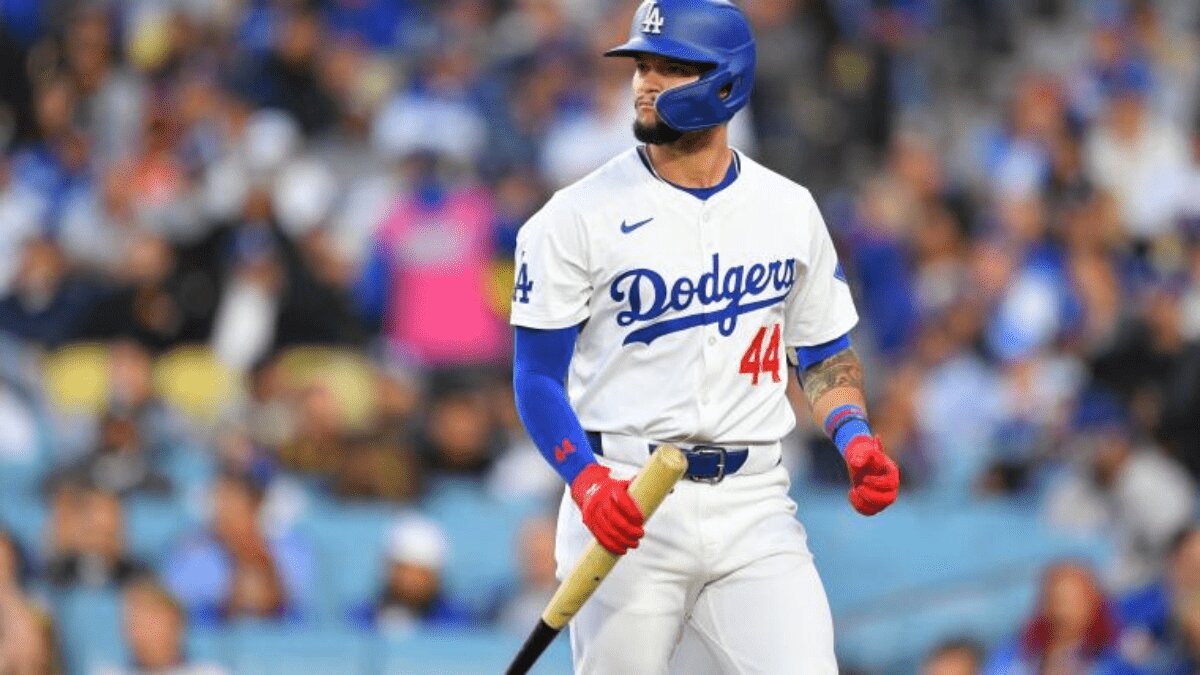
When the Los Angeles Dodgers promoted Andy Pages to the major league roster for his debut, they had two main motivations. Firstly, they needed him to energize a lineup that required reinforcement beyond its top performers. Secondly, they faced a shortage of reliable options for the outfield corners. In essence, these reasons are intertwined, as the lack of outfield depth underscored the need for Pages’ offensive potential.
The absence of Jason Heyward and the struggles of Chris Taylor, among others, prompted the recall of Pages on April 16th. Pages quickly made an impact. During his first 15 games, he stepped up to the plate 65 times, delivering a batting average of .333 and an on-base percentage of .354. His power was evident, with an impressive .233 isolated power (ISO). His HardHit% was around 45 percent, surpassing regulars like Freddie Freeman, Max Muncy, and Will Smith during the same period.
However, there were some concerning signs. Pages was highly aggressive, swinging at more than 55 percent of pitches and failing to draw a single walk in that span. While he kept his strikeout rate to a notable 20 percent, it seemed inevitable that pitchers would adjust to his approach.
This adjustment has seemingly arrived. In his next 20 games (79 plate appearances), Pages’ performance declined sharply, with a batting average of just .149 and an on-base percentage of .190. His ISO dropped to a meager .095. Although his quality of contact remained solid, his contact rate fell below 70 percent. His swing rate on pitches outside the strike zone (O-Swing%) jumped to 39.0 percent, and his overall swing rate increased. After recording five multi-hit games in his first 15, he managed only one in his subsequent 20 games, and none in the last 19.
Pitchers have started throwing fewer strikes, decreasing their zone pitches from about 56 percent to 52 percent. While this is a minor drop, it becomes significant given Pages’ recent tendency to chase pitches. Furthermore, pitchers have increasingly relied on breaking balls, exploiting Pages’ high chase rate for this pitch type. This trend is likely to continue.
It’s important to note that these observations are not criticisms of Andy Pages. Such a challenging stretch was anticipated. His initial aggressiveness was bound to prompt pitchers to adapt. Now, it’s up to Pages to adjust in return.
A good starting point would be refining his approach at the plate.
