
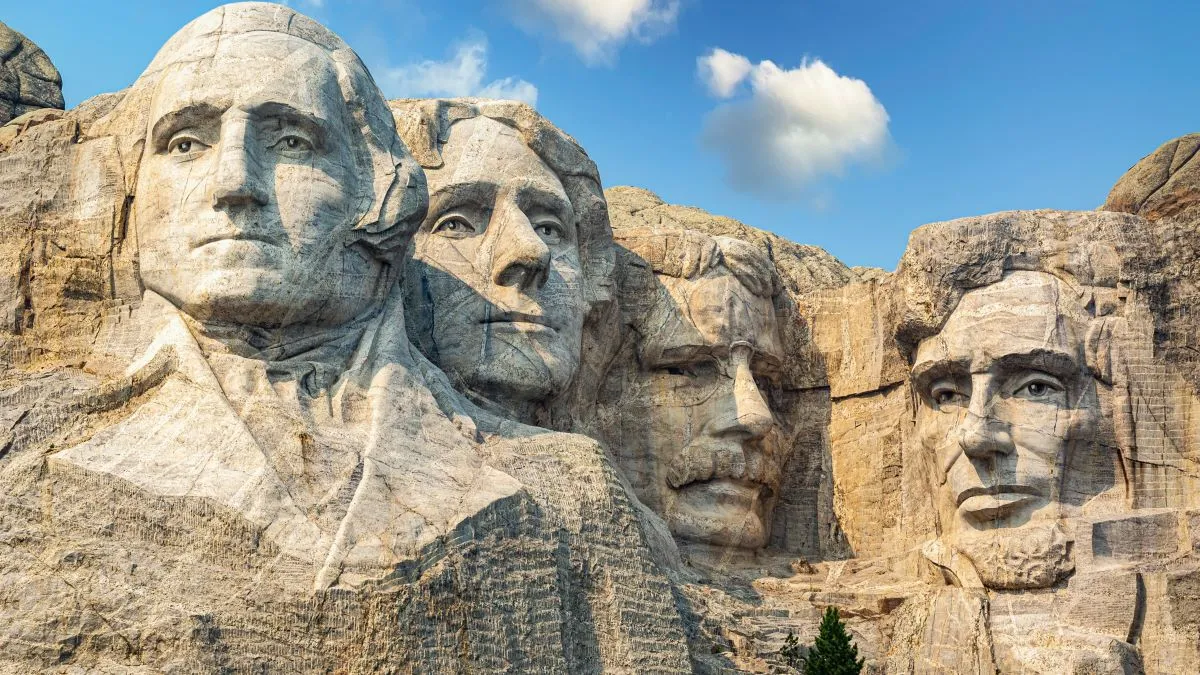
The granite mountain known as Mount Rushmore has stood for tens of millions of years. For centuries, it was a sacred place where the Plains Indian tribes of North America gathered to heal, pray, and hold spiritual ceremonies.
Why Was Mount Rushmore Sacred to the Plains Indians?
The Black Hills, where Mount Rushmore resides, are known to the Lakota as “The heart of everything that is.” This area, called “Six Grandfathers” by the Plains Indians (including the Lakota Sioux, Cheyenne, and Arapaho), held profound spiritual significance. The name originated from a vision by a Lakota medicine man who saw four grandfathers in the cardinal directions, representing kindness, love, long life, and wisdom, with earth and sky completing the sacred vision.
The land was also one of the few desirable areas allocated to Native Americans after the Fort Laramie Treaty of 1868. It’s crucial to note that the U.S. had no legitimate claim to the territory when it was allocated, and the treaty was supposed to protect Native American land rights.
How Did the U.S. Steal Mount Rushmore from Native Americans?
The American Indian Wars, which began in 1609, saw Native Americans constantly displaced as settlers expanded westward. The Trail of Tears from 1830 to 1850 epitomized this brutal era, where tribes were forcibly removed from their lands, resulting in immense suffering and death.
The mid-1800s saw an escalation in conflicts, and by 1868, the U.S. government established the Great Sioux Reservation, which included the Black Hills, through treaties intended to provide a sanctuary for Native Americans. However, these agreements were soon violated.
The Role of General Custer and the Gold Rush
In 1874, General Custer led an expedition into the Black Hills, ostensibly to find a location for a fort, but the presence of gold sparked a rush that attracted settlers. This invasion of sacred land led to conflicts between the Native tribes and settlers, culminating in the Battle of Little Big Horn in 1876. Despite initial Native American victories under leaders like Sitting Bull and Crazy Horse, the tribes ultimately faced overwhelming U.S. military force.
In 1877, the U.S. government forcibly seized the Black Hills, violating the treaty and relegating the Native Americans to less desirable lands.
The Construction of Mount Rushmore
Less than 50 years later, in the 1920s, sculptor Gutzon Borglum began carving Mount Rushmore to commemorate four U.S. presidents: George Washington, Thomas Jefferson, Abraham Lincoln, and Theodore Roosevelt. Borglum, who had intended to celebrate westward expansion, initially planned to include figures like Sacagawea, Lewis and Clark, Sitting Bull, and Crazy Horse. However, he ultimately chose the presidents, symbolizing a history of American expansion that often came at the expense of Native American lives and lands.
The defacement of the sacred mountain by carving these faces felt like a final act of conquest to the Lakota, representing the erasure of their culture and history.
The Legacy of Mount Rushmore
To many Americans, Mount Rushmore stands as a “Shrine of Democracy.” However, to the descendants of the tribes who once held the Black Hills as sacred, it remains a symbol of broken promises and cultural devastation—a “Shrine to Hypocrisy.” The monument embodies the painful legacy of westward expansion and the systemic displacement of Native American peoples. Until natural forces erode the granite faces, Mount Rushmore will continue to be a powerful reminder of this complex and often tragic history.
