
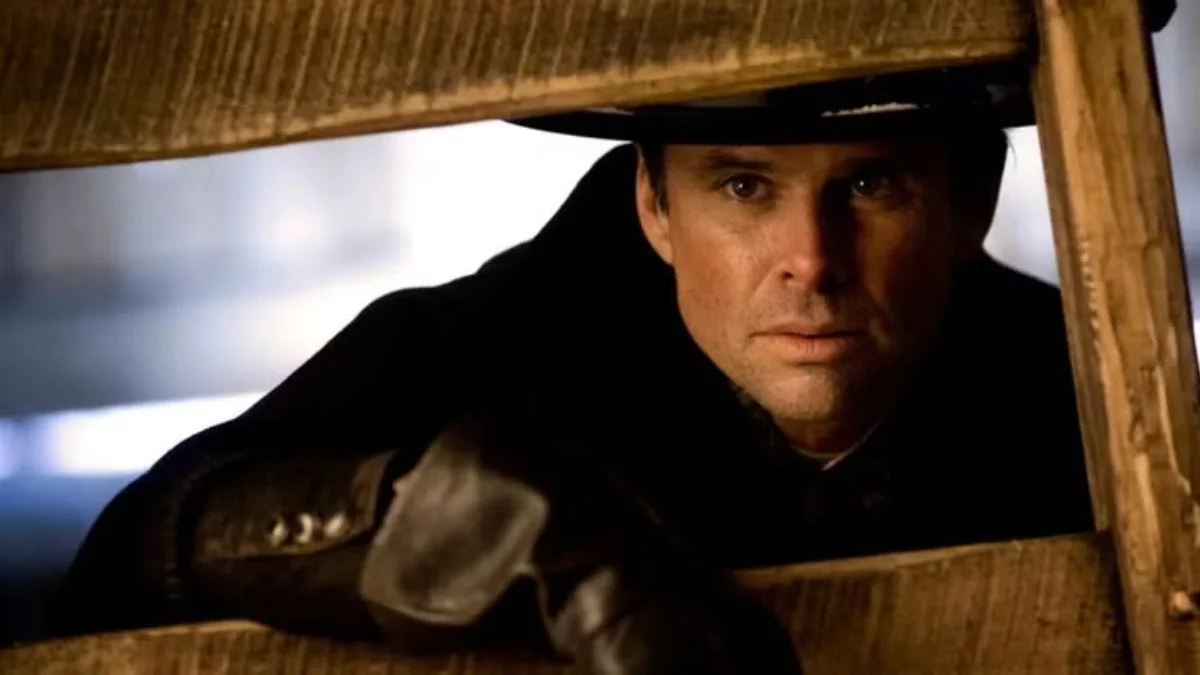
Netflix subscribers are running out of time to revisit one of Quentin Tarantino’s most distinctive projects. The Hateful Eight: Extended Cut, the filmmaker’s restructured version of his 2015 Western epic, will be removed from Netflix on Monday, January 26, alongside the original feature-length film. With only days remaining, this weekend marks the last chance to experience the director’s slow-burn chamber Western in its most expansive form.
Originally released in theaters as a single 2-hour and 47-minute feature, The Hateful Eight was reintroduced in 2019 as a 4-episode limited series exclusive to Netflix. The episodic cut adds roughly 26 minutes of additional footage and reshapes the story into chapters, each running between 50 and 56 minutes. While the plot remains unchanged, the pacing and structure offer a noticeably different viewing experience, leaning further into tension, character psychology, and paranoia.
Set in the aftermath of the American Civil War, the story follows a group of strangers forced to take shelter from a brutal Wyoming blizzard inside a remote cabin. What begins as a survival situation quickly morphs into a tightly wound whodunnit, layered with shifting alliances, buried motives, and escalating violence. The confined setting becomes the film’s greatest weapon, allowing Tarantino to blend Western iconography with crime thriller mechanics and stage-bound drama.
The ensemble cast ranks among the strongest of Tarantino’s career. Samuel L. Jackson, Kurt Russell, Jennifer Jason Leigh, Walton Goggins, Tim Roth, and Michael Madsen anchor the film with performances that thrive on dialogue-heavy confrontations and moral ambiguity. Leigh’s turn earned particular acclaim, while Jackson’s commanding presence drives much of the film’s tension.
Critically, The Hateful Eight earned 3 Academy Award nominations and secured a win for Best Original Score. Ennio Morricone’s haunting composition, his first competitive Oscar win, stands as one of the film’s defining elements. Drawing on the legacy of classic spaghetti Westerns such as The Good, the Bad, and the Ugly and Once Upon a Time in the West, the score adds operatic weight to a story that largely unfolds within a single room.
While The Hateful Eight is rarely ranked among Tarantino’s very best, it remains a fascinating outlier in his filmography. The extended cut, in particular, benefits from the episodic format. Breaking the narrative into chapters allows scenes to breathe, sharpens the mystery elements, and makes the film’s deliberate pacing feel more intentional. For many viewers, the series version plays more effectively than the theatrical cut.
The title’s impending departure also comes amid a broader wave of removals from Netflix, including long-running favorites like Prison Break. With its limited availability and unique format, The Hateful Eight: Extended Cut stands out as one of the most worthwhile last-minute binges on the platform.
For fans of Tarantino, prestige cinema, or slow-burning genre hybrids, this weekend is the final window to stream a rare reinterpretation of a modern Western. Once it leaves Netflix, the extended series may not be easily accessible again, making now the moment to press play before it disappears.
