
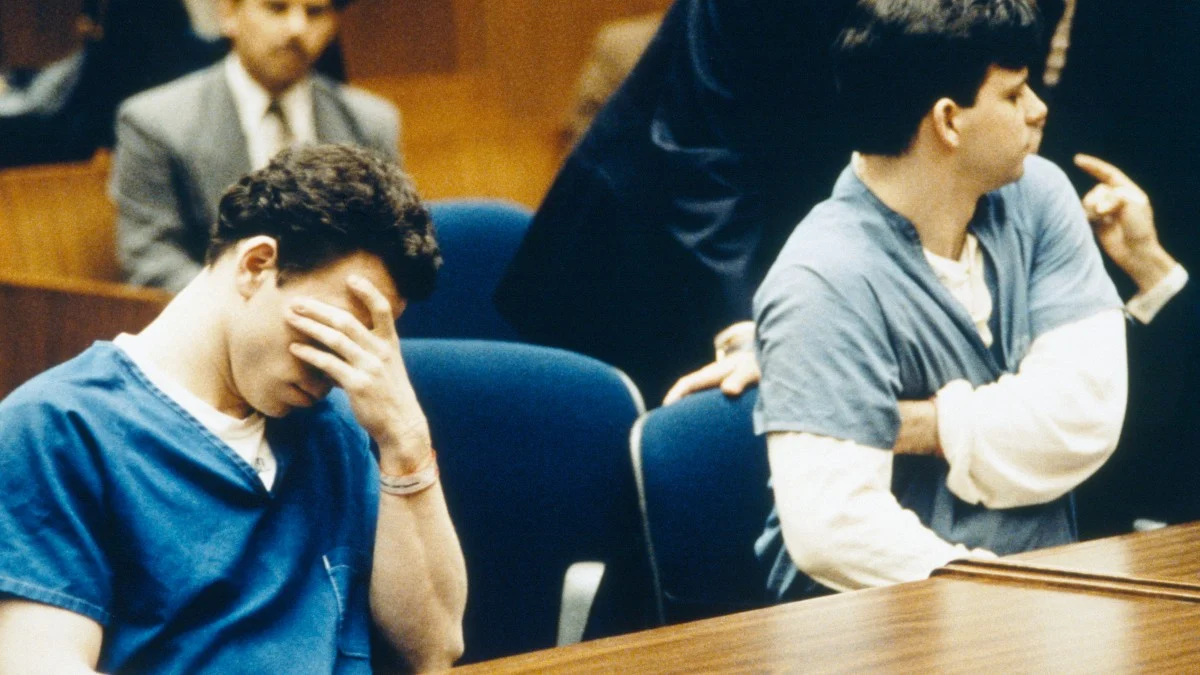
It’s been over 30 years since Lyle and Erik Menendez, infamous for murdering their parents, walked into their luxurious Beverly Hills home with shotguns and brutally killed their mother, Mary Louise, and father, Jose Menendez. At the time of the crime, their parents were 45 and 47 years old, while Lyle was just 21 and Erik was 18. The shocking nature of the case raises questions about how they were caught and whether they confessed to the murders.
The Menendez brothers’ trial was one of the most talked-about murder cases of the 1990s, right up there with O.J. Simpson’s trial. Recently, the case has been back in the spotlight due to a new Netflix series titled Monsters: The Lyle and Erik Menendez Story. This show is the second installment in the Monster series, following the hugely popular DAHMER — Monster: The Jeffrey Dahmer Story, which attracted over a billion viewing hours within two months of its release.
According to the Netflix series, the brothers shot their father, a well-known entertainment executive, six times and delivered a final shot to the back of his head. Their mother was shot at least ten times. Given the brutal nature of the killings, investigators initially suspected a possible mafia connection.
After the murders, the brothers acted convincingly as grief-stricken sons. Lyle even called 911 in a panic, uttering the now-famous phrase: “Someone killed my parents.” They claimed they had been out watching Batman at the movies, and they had tickets to back up their story, which the police initially believed. However, things took a turn when the brothers began making lavish purchases, raising eyebrows and suspicion.
Lyle and Erik splurged nearly $1 million on luxury items, including cars, designer watches, and clothes. Lyle even bought a chain restaurant. To uncover the truth, police attempted to get their friends to wear wiretaps to record any confessions, but that effort failed. However, a breakthrough came when they received a tip from a woman who was involved with Dr. Jerome Oziel, the psychologist treating the brothers.
In 1990, they were arrested after it was revealed that Dr. Oziel had recorded conversations where the brothers confessed to the murders. These recordings were allowed as evidence because Erik had threatened Dr. Oziel, which voided the doctor-patient confidentiality that would usually protect such discussions in court.
In the recorded tapes played during the trial, Dr. Oziel discussed their father’s controlling nature, prompting Erik to respond. He said, “My father and my mother were… were two people that I loved and… I had no choice. I would have taken any other choice… uh, I much regret it. I may not have had a choice at the time, but I regret it now and I simply don’t like hearing my father put in this sort of way.”
Despite these confessions, the first trial ended in a hung jury, meaning the jury couldn’t reach a unanimous decision. The prosecutors decided to try again, but this time, they restricted the brothers from discussing their claims of parental abuse, which prevented the jury from considering a lesser manslaughter charge. Ultimately, they were both found guilty of first-degree murder and sentenced to life in prison without the possibility of parole.
The Menendez brothers’ case continues to intrigue and horrify, showcasing the complex issues surrounding family dynamics, mental health, and the legal system. Their tragic story remains a significant part of American crime history, especially as new interpretations of their narrative emerge in popular media.
