

A high-intensity US military operation in Venezuela’s capital has plunged the country into its most volatile moment in years. Venezuelan authorities say at least 100 people were killed and dozens wounded after US forces captured President Nicolás Maduro during an assault in Caracas, an operation Washington has since linked to sweeping plans to control Venezuela’s oil exports indefinitely.
Speaking on state television on Wednesday, Interior Minister Diosdado Cabello described the events as catastrophic, accusing the United States of carrying out a direct attack on Venezuelan sovereignty. He said the death toll could rise as emergency services continue to assess the damage across affected neighbourhoods.
Nicolás Maduro and First Lady injured during raid
Cabello confirmed that Maduro and his wife, Cilia Flores, were injured during the operation but are recovering. Both later appeared walking without assistance during a court appearance in New York after being transferred to US custody, a development that has intensified anger among government loyalists back home.
The raid, carried out in the heart of Caracas, has been framed by Venezuelan officials as an act of foreign aggression rather than a targeted arrest. State media repeatedly aired images of damaged buildings and injured civilians, fueling public outrage and calls for resistance.
Protests erupt across Caracas
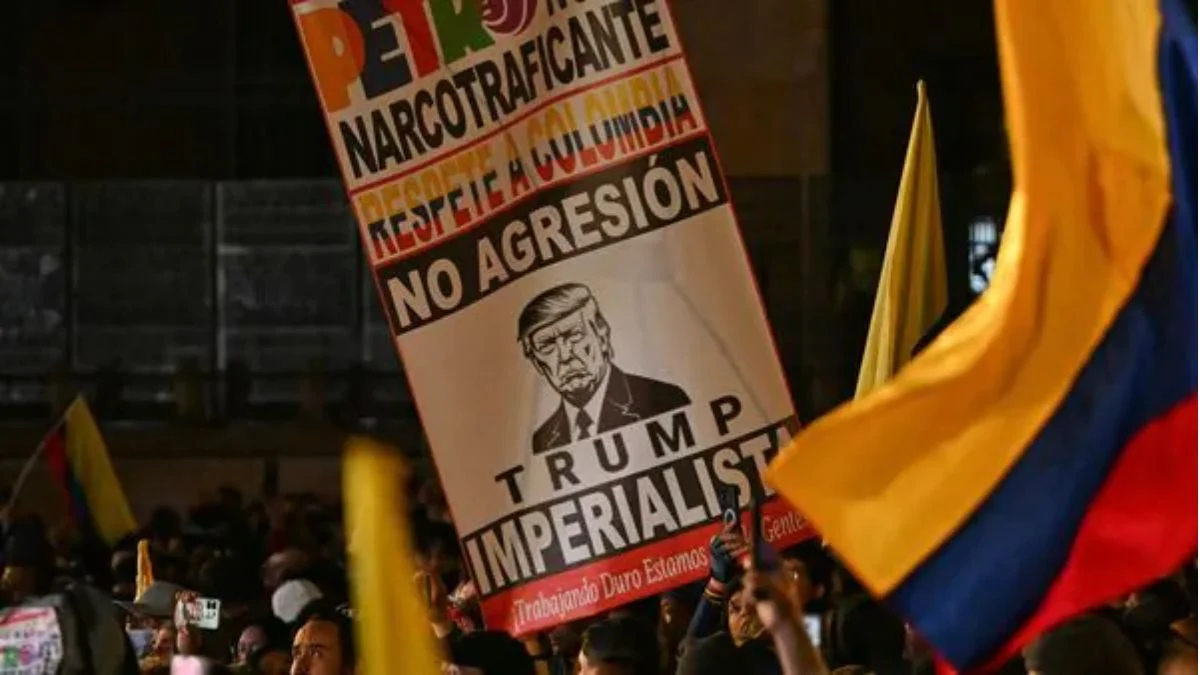
By Wednesday afternoon, thousands of pro-government supporters took to the streets of the capital, demanding the release of Maduro and condemning US intervention. Protesters marched from Ali Primera Park in western Caracas to Plaza O’Leary in the historic city center, waving flags and chanting slogans in support of the Bolivarian movement.
Nahum Fernández, head of the Caracas city government, urged supporters to remain united. He called for mass mobilization, describing the situation as a decisive moment for the country’s political future. Similar messages were echoed by senior officials, who insisted that political authority still rested with Maduro’s movement despite his detention.
Angel Prado, Venezuela’s minister of communes and social movements, declared that “the power of the people” remained intact. He publicly backed acting president Delcy Rodríguez, saying she was following Maduro’s instructions to prevent the collapse of the government.
Washington confirms control over Venezuelan oil
As tensions escalated on the streets of Caracas, the White House confirmed a move with far-reaching global implications: the United States will assume control over Venezuela’s oil sales “indefinitely.” The decision follows the US military’s seizure of an estimated 50 million barrels of Venezuelan crude held in tankers and storage facilities, along with vessels linked to Russia and Iran.
US Energy Secretary Chris Wright said Washington plans to sell the seized oil into global markets, with initial sales potentially worth up to $3 billion. According to US officials, future Venezuelan oil production will also be marketed under US oversight, with proceeds reportedly intended for the Venezuelan population.
Tanker seizures raise global stakes
The operation has extended well beyond Venezuela’s borders. US authorities seized a Russian-flagged tanker, the Marinera, previously known as Bella 1, which had been traveling from Iran toward Venezuela before diverting into the Atlantic. A second vessel, the Sophia, was later seized in the Caribbean, escalating fears of a broader confrontation.
The tankers are believed to be part of a shadow fleet used to transport oil for Russia, Iran, and Venezuela. Reports that Russia dispatched a submarine to protect one of the vessels have further heightened geopolitical tensions and raised concerns about potential escalation involving major powers.
US Secretary of State Marco Rubio said Venezuela’s interim leadership has requested that seized oil cargoes be included in negotiations with Washington. He suggested cooperation with the US is now seen as essential for Venezuela to avoid economic collapse and restore access to global markets.
What does this mean for Venezuela?
The capture of Maduro and Washington’s move to control Venezuelan oil exports mark a dramatic turning point for the country and the region. While US officials frame the actions as a pathway toward economic stabilization, Venezuelan authorities and supporters see them as an unprecedented breach of sovereignty.
With protests growing, international tensions rising, and global energy markets watching closely, Venezuela now stands at the center of a fast-evolving geopolitical storm whose consequences could reshape South American politics and global oil flows for years to come.