
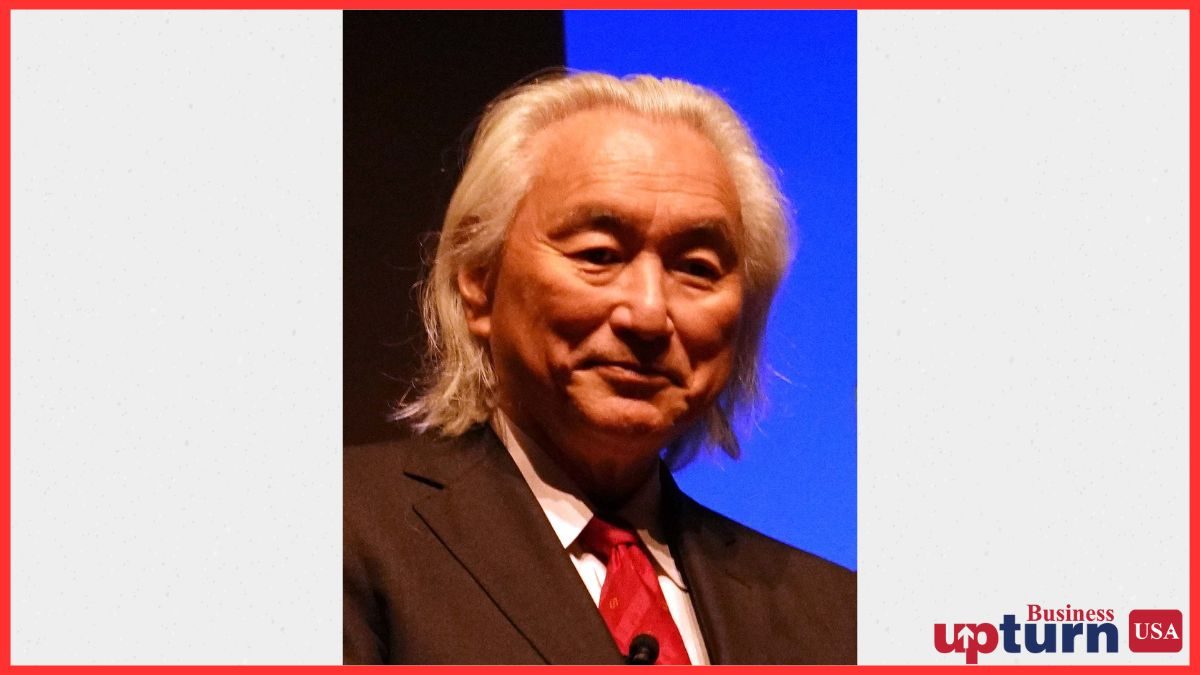
Michio Kaku began his professional life within the traditional academic circuit. Trained as a theoretical physicist, Kaku earned his Ph.D. from the University of California, Berkeley, and later became a professor at the City College of New York. While his academic credentials established scientific credibility, they also limited his audience to niche academic circles during the 1970s and 1980s.
The shift toward the mainstream began in the early 1990s, when Kaku saw potential in popular science communication. He started leveraging his expertise through radio, public lectures, and commentary. By strategically stepping outside academic publications and engaging in general-interest science writing, he tapped into a growing U.S. market hungry for accessible explanations of advanced science. This pivot was not spontaneous—it was calculated and structured as the foundation of what would become a multi-stream science business model.
From physicist to public icon: monetizing scientific authority
Kaku’s transition from scientist to public intellectual involved calculated media exposure. His first major book for mass audiences, Hyperspace (1994), presented complex theories like string theory and higher dimensions in digestible language. It laid the groundwork for a business pivot—using popular science as a revenue engine. As the book gained traction in the U.S. market, Kaku began accepting invitations to television interviews, expanding his audience beyond academia.
The monetisation came from multiple fronts: book royalties, licensing speaking engagements, and syndicated appearances. Each publication was marketed not just as a book, but as an entry point into a broader intellectual brand. By packaging scientific authority into understandable media, he created a scalable enterprise based on public trust and content diversification.
Publishing as a primary revenue stream: Michio Kaku’s bestselling formula
The publishing world remains central to the Michio Kaku business model. Titles like Physics of the Future, The Future of the Mind, and The God Equation are all crafted for wide readership in the U.S., covering timely themes like AI, brain science, and space exploration. These topics are not chosen at random—they align with ongoing cultural dialogues in America, from Silicon Valley innovation to public education debates.
Kaku’s books consistently perform well in U.S. best-seller rankings. The content is not just informational—it is commercially engineered. Each release is accompanied by carefully timed marketing efforts, often synced with media appearances, speaking tours, and social media campaigns. Publishing is not just intellectual work; for Kaku, it is an economic pillar.
Strategic partnerships with major publishers
Strategic alliances with publishers like Doubleday and Penguin Random House ensure robust marketing pipelines. These companies provide editorial support, mass distribution, and built-in media coverage in the U.S. market. In return, Kaku delivers content that is both authoritative and digestible—a rare combination that meets publishing demands for both depth and profitability.
These partnerships also facilitate international rights sales, increasing long-term royalties. For every print or digital release, Kaku maximizes market reach without direct involvement in the logistics. This symbiosis of content and commerce allows the Michio Kaku publishing income stream to remain stable across economic cycles.
Television and documentary appearances as branding assets
Television is a cornerstone of Kaku’s branding strategy. He frequently appears on American networks such as CNN, the History Channel, Discovery, and the Science Channel. These appearances aren’t incidental—they serve as brand amplification tools that reinforce public recognition and provide non-academic audiences a point of entry into his work.
Rather than using TV for short-term exposure, Kaku builds repeat value. Appearances on shows like Through the Wormhole and The Universe cement his position in the science communication ecosystem. These shows are replayed frequently, creating brand recall across multiple demographic segments in the U.S.
Licensing intellectual property across U.S. media platforms
Kaku’s ideas are licensed as intellectual content across multiple platforms. From voiceovers and interviews to hosted segments, each unit of media becomes a monetizable asset. Networks pay for licensing rights, and Kaku’s agency ensures compliance and royalties.
His persona—calm, futuristic, optimistic—becomes part of the product. Whether used in a mini-series or a podcast clip, his voice and image are intellectual properties that align with monetising science in America. This intellectual licensing model mirrors strategies used by entertainers and athletes, but within the realm of science communication.
Public speaking and event circuit: the lucrative keynote business
Public speaking forms another high-revenue tier in the Michio Kaku business model. He is frequently booked for keynote addresses at technology conferences, academic institutions, government events, and private corporate gatherings across the United States. Topics typically align with emerging technologies, future cities, or quantum computing—subjects that appeal to both academic audiences and C-suite executives.
Industry data shows that top-tier science communicators like Kaku can command $30,000–$50,000 per appearance, depending on the event type and exclusivity. These events not only generate income but also serve as product-placement opportunities for his books and thought leadership material.
The economics of thought leadership in U.S. education and tech
Kaku’s speeches are more than presentations—they’re strategic showcases of thought capital. In Silicon Valley, his forecasts on AI and quantum computing serve to stimulate innovation discussions. In Ivy League circles, his commentary enhances science literacy among future leaders.
These appearances strengthen his brand equity while embedding his intellectual property into America’s innovation infrastructure. Thought leadership is no longer an abstract ideal but a concrete, revenue-generating product tailored to U.S. cultural and corporate demands.
Building a future-facing brand through futurism and speculative science
Kaku’s alignment with futurism is intentional. By consistently engaging with emerging topics—space colonization, consciousness upload, AI ethics—he positions himself as a forward-thinking voice in American science discourse. This future-facing orientation increases marketability among U.S. audiences that value innovation and long-term planning.
The branding is crafted to meet the expectations of venture capitalists, startup founders, and policymakers. The futurist angle keeps his material evergreen—content that can be used repeatedly across tech summits and education platforms.
Creating sellable optimism for the American public
A key differentiator in Kaku’s brand is the packaging of complex scientific challenges into digestible, optimistic narratives. Instead of dystopia, he offers potential. Americans looking for reassurance about automation, job loss, or global warming find in Kaku a voice that is both knowledgeable and reassuring.
This optimism is not naive; it is marketable. It provides a competitive edge in a crowded space of science communicators by selling vision rather than fear.
Multi-platform digital strategy: leveraging YouTube, podcasts, and social media
Kaku’s digital presence is carefully structured. His lectures, interviews, and soundbites are available across YouTube, Spotify, Apple Podcasts, and other American digital platforms. These channels serve three key purposes: promotion, engagement, and monetization.
On YouTube, his most-viewed videos have millions of hits, generating ad revenue and redirecting traffic to book sales. Podcasts extend his content into the portable, commuter-friendly format preferred by American professionals and students alike.
Syndicating content for long-term U.S. monetization
Content is chopped into clips, categorized by theme, and republished across affiliate channels. This syndicated model maximizes reach with minimal new production. Past lectures from universities or TV specials are repackaged as fresh content for new audiences.
This passive income model ensures that content continues to work economically long after its initial release. In terms of monetising science in America, it’s a masterclass in digital asset management.

Merchandising and brand licensing: converting science into products
Though not as expansive as tech entrepreneurs or athletes, Michio Kaku has entered the merchandising space. His books are often bundled with learning modules or special-edition science kits targeting American science fairs and homeschool communities.
Limited-run courses and exclusive webinars act as premium products. While not traditional merchandise like T-shirts or toys, these are branded assets that represent the commodification of intellect.
Education as a service: monetizing science literacy in America
Kaku participates in various education initiatives, particularly digital learning platforms. His lectures are sometimes used in American MOOCs (massive open online courses), where institutions license his content. These arrangements provide indirect revenue while expanding his educational footprint.
His brand leverages the growing U.S. appetite for lifelong learning. From teenagers studying STEM to adults revisiting science literacy, the Michio Kaku business model turns curiosity into cash flow.
How Michio Kaku influences American culture and civic thought
The influence of Kaku’s media and speaking empire extends beyond commerce. He shapes how Americans perceive AI, quantum theory, and the ethics of scientific discovery. His accessible explanations affect not just students, but voters, educators, and policymakers.
He occupies a unique position—bridging academic science and civic understanding. This level of impact transforms him from an educator into a shaper of national dialogue.
The role of commercial science in shaping U.S. policy narratives
Kaku’s ideas circulate within government panels, school boards, and tech policy forums. While he may not directly lobby, the widespread reach of his books and media content influences how science is perceived at the legislative and institutional level.
His communication model becomes part of the civic machinery—helping define how Americans discuss the future, regulation, and ethical science in national discourse.
A futuristic angle: Could Michio Kaku’s business model become a blueprint for AI influencers in America?
The mechanics of Kaku’s business model—intellectual licensing, multi-channel content delivery, and optimistic futurism—are primed for replication. As AI-generated influencers become more sophisticated, digital avatars modeled on real intellectuals could become the next evolution of science communication in the U.S.
Such personas could simulate the tone, ideas, and delivery style of public thinkers like Kaku. These models could engage millions without the limitations of time, location, or physical presence.
Building science-based influence economies in the age of artificial intelligence
In an age where synthetic voices and AI educators are gaining traction, Kaku’s monetisation strategies offer a prototype. Licensing expert personas, delivering multi-format content, and sustaining attention through futuristic optimism—all are transferable to digital avatars and algorithmic educators.
If scaled responsibly, these AI-based influence models could democratize access to high-quality science communication, while also opening new revenue streams for publishers, platforms, and legacy intellectual brands.
Michio Kaku’s business empire represents a rare fusion of science, commerce, and mass influence in American society. By blending intellectual capital with market strategy, he has built an enterprise that educates, profits, and shapes national conversations—without compromising the core message of scientific discovery. His model stands as a case study in how knowledge, when skillfully packaged, becomes a sustainable business in the 21st-century American economy.
This article is intended for informational and editorial purposes only. It does not constitute endorsement or promotion of any individual, company, or entity mentioned. Business Upturn makes no representations or warranties regarding the accuracy, completeness, or reliability of the information provided.