
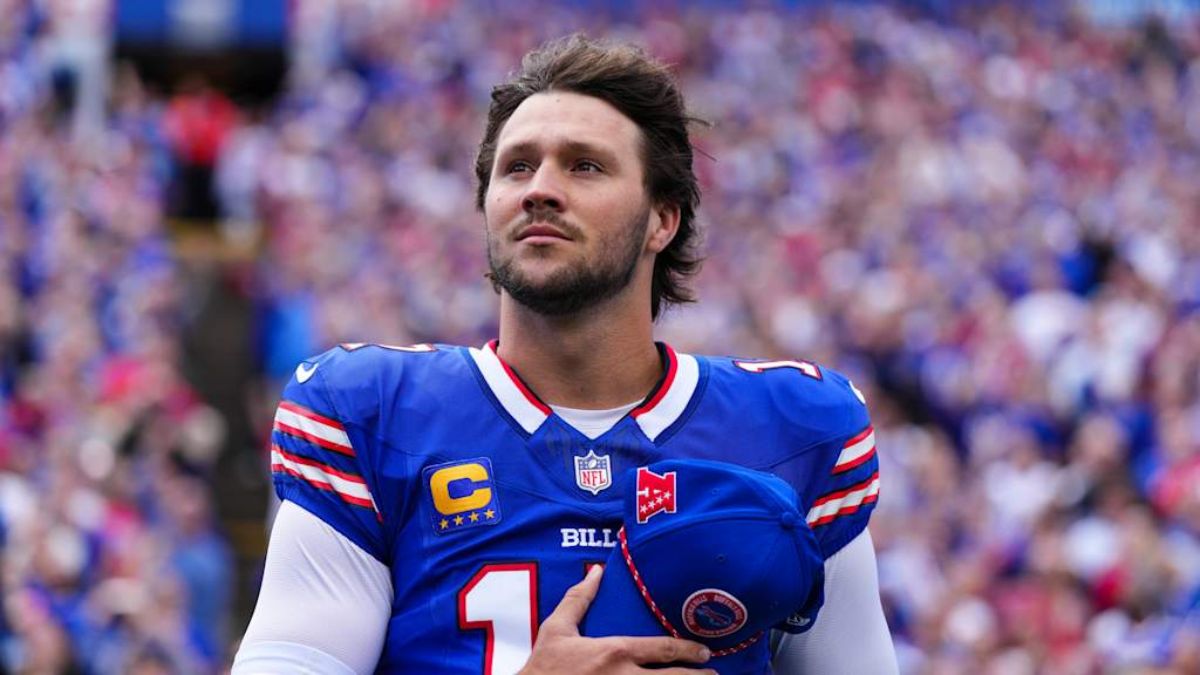
Before Josh Allen became an NFL MVP and the long term franchise quarterback of the Buffalo Bills, he was one of the most debated prospects in the 2018 NFL Draft. Eight years later, that draft class still stands out, especially Allen and Lamar Jackson, both of whom went on to redefine their franchises after being passed over by several teams.
Allen was selected No. 7 overall by Buffalo, the fourth quarterback taken that year. He went behind Baker Mayfield, Sam Darnold, and ahead of Josh Rosen and Jackson. At the time, many teams viewed Allen as a high risk, high reward prospect because of his elite physical traits and inconsistent college accuracy.
The Bills traded up five spots from No. 12 to secure Allen, a move that proved decisive. Arizona selected Rosen at No. 10, only to abandon him a year later in favor of Kyler Murray. Other teams ahead of Buffalo also passed on Allen, including the Colts, who selected guard Quenton Nelson, and most notably the Denver Broncos at No. 5.
Denver’s decision remains one of the most discussed what if moments of the post Peyton Manning era.
The Broncos had been searching for stability at quarterback since Manning retired after Super Bowl 50. Their 2016 first round pick, Paxton Lynch, failed to develop into a reliable starter. Trevor Siemian ended up starting most games in both 2016 and 2017, underscoring the lack of a long term solution.
By the 2018 offseason, Denver’s need at quarterback was obvious. The team traded Siemian, signed Case Keenum as a short term starter, and demoted Lynch, who would soon be released. Internally, Allen was viewed as a strong candidate. General manager John Elway was reportedly drawn to Allen’s size, arm strength, and athleticism, traits that reminded him of his own playing style.
Gary Kubiak, who was working in a senior personnel role at the time, also evaluated Allen closely, including at his pro day at Wyoming. Around the league, it was widely believed Denver was seriously considering Allen at No. 5.
However, the final decision did not rest with Elway alone.
In a January 2026 interview, Elway said he strongly favored Allen but did not have full support from the coaching staff. Head coach Vance Joseph, whose background was on defense, pushed for a defensive selection. Denver ultimately chose edge rusher Bradley Chubb instead.
Chubb went on to become a productive player and a 2 time Pro Bowler during his time in Denver. Still, passing on Allen extended the Broncos’ quarterback instability for several more seasons, including the failed Russell Wilson experiment, before the team finally drafted Bo Nix in 2024.
While Allen developed into one of the league’s elite quarterbacks, Denver’s path took a different turn. Chubb was traded to Miami in 2022, a move that indirectly helped reshape the franchise. The draft capital acquired in that deal played a role in the Broncos trading for head coach Sean Payton and later reuniting Nix with college teammate Troy Franklin.
Those moves proved pivotal. Under Payton, Denver stabilized quickly, returning to the playoffs in consecutive seasons and finishing 14-3 to secure the AFC’s top seed in 2025.
Allen and the Bills, meanwhile, became consistent contenders in the AFC, powered by Allen’s rapid development after his second season. Buffalo eliminated Denver in the 2024 wild card round, adding another layer of intrigue to the rivalry.
Now, as the Broncos prepare to face Allen again, the focus is no longer on what could have been. Denver believes it has found its answer in Nix and its leader in Payton. While history shows the Broncos came close to drafting Allen, their current success has shifted the narrative from regret to resolution.
