
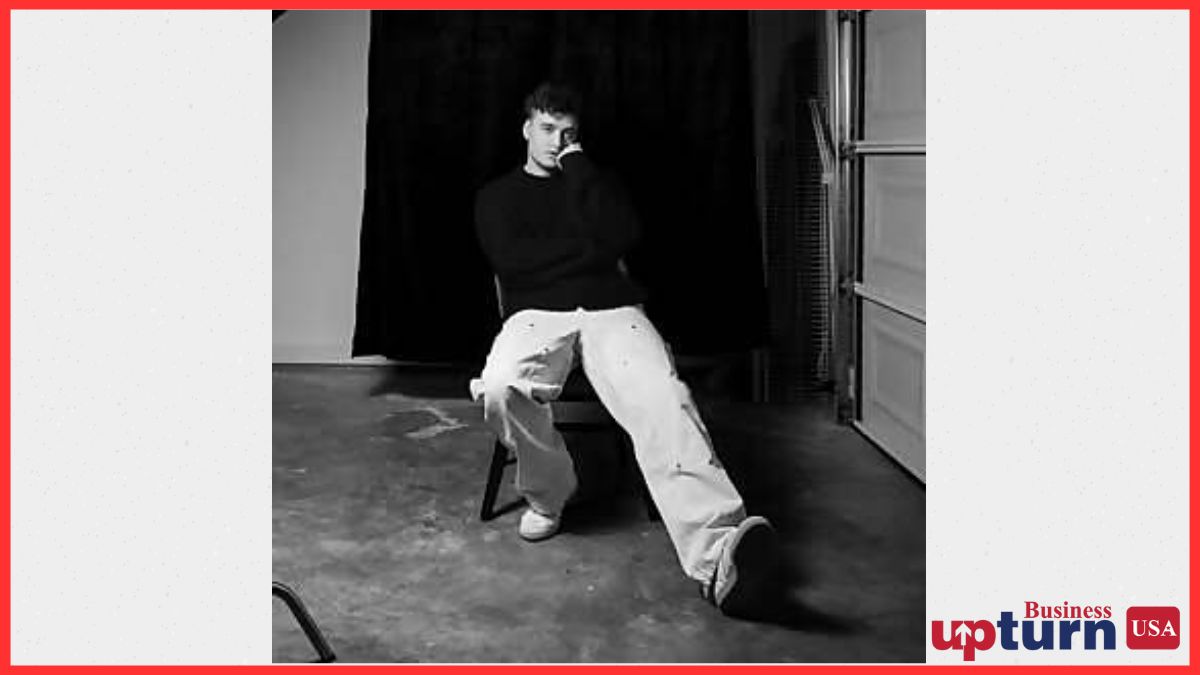
As of now, Dylan Brady — better known as one half of 100 gecs — runs a public Instagram account under @dylanbrady that carries approximately 148,000 followers.
That number alone marks him as a substantial presence — not in the realm of mainstream pop superstars with millions, but strongly enough to leave a digital footprint that’s serious, reachable, and resonant among niche subcultures and devoted fans.
Behind that follower count lies a multilayered digital ecosystem: from his music work with 100 gecs, to solo productions, to broader connections with the global hyperpop and experimental-music community. The Instagram not only signals popularity, but it serves as a hub, a studio window, and a cultural compass — all at once.
Early Steps: From Suburbia to Sonic Experimentation
Dylan Brady was born November 27, 1993, and raised in the suburbs of St. Louis, Missouri. In high school, he took piano lessons and joined choir — clear early markers of musical curiosity that later blossomed into something much more boundary-pushing.
After high school he studied audio engineering in college, and around 2013–2014, began uploading tracks on platforms like SoundCloud as an electronic / hip-hop / experimental producer. His early years were defined by a do-it-yourself ethos, releasing his own demos, building gradually rather than overnight — a distinctly modern path that side-stepped traditional A&R-driven gatekeeping. In May 2015, he self-released his debut album All I Ever Wanted.
Parallel to his solo ambitions, his longtime connection with collaborator Laura Les — whom he had known since their teenage years — was evolving. By late 2015 they formally joined forces to birth 100 gecs.
Thus began a rise that never followed the conventional trajectory: small-town beginnings → bedroom-studio uploads → experimentation online → gradual cult-level buzz.
The Rise of 100 Gecs and Hyperpop Stardom
As 100 gecs, Brady and Les self-released their early EPs, honing what would become their signature chaotic, genre-blending sound. In 2019 came their breakout moment: the release of 1000 gecs. The album — messy, maximalist, defiant — struck a chord. Its debut single money machine became a viral anthem for a generation disinterested in clean genre lines.
What’s remarkable: most of the album was produced remotely. Brady in Los Angeles, Les in Chicago — they shared project files over email and the internet. Roughly 80% of the album’s final product was assembled this way. The success of 1000 gecs was not a fluke; it was a proof-of-concept of a new, internet-native way of making music — born online, distributed online, celebrated online.
In 2023, the duo followed up with 10,000 gecs, pushing their sound further while navigating — and expanding — their cult status. Meanwhile, Brady’s personal career and creative network continued growing: production credits, collaborations, and solo works outside of the gecs umbrella.
Instagram as Creative Extension: More Than Selfies
For Dylan Brady, Instagram is not merely a personal social feed — it is part of the creative architecture. The 148 K-follower strong account functions as a broadcast channel for new music, tour announcements, behind-the-scenes glimpses, and cultural signals.
He tags his main affiliations — @100gecs and @dogshowrecords — signaling that his Instagram identity is tightly bound to both his duo and label work. Posts often coincide with release announcements, snippets, live show promos, or glimpses of studio life (mixing boards, wires, late-night sessions). This cultivates a sense of intimacy: followers don’t just see the polished final product — they see the messy, human-making-of behind the music.
For many fans, that’s the appeal: the social media becomes a window into the creative process. Every like, every comment, every share becomes part of a larger communal experience — fans feel like stakeholders in something unfolding, rather than passive consumers. In this way, Dylan’s Instagram helps collapse the distance between artist and audience.
At a time when music can seem distant and corporatized, that informal window — a post, a story, a tagged collaborator — offers immediacy. It reinforces the sense that this is someone making real music out of a bedroom studio, out of passion, out of the raw material of internet culture.
The Many Roads to Revenue: How Dylan’s Income Streams Interconnect
Dylan Brady’s financial and creative success is built on a diversified, layered foundation. His income streams include:
-
Music production & songwriting — both as part of 100 gecs and independently. As a producer whose credits stretch beyond the duo, working with other artists.
-
Streaming royalties — from 100 gecs albums like 1000 gecs and 10,000 gecs, along with solo releases, remixes, and features. The consistent monthly listeners and Spotify analytics of 100 gecs suggest a healthy base for recurring streaming-derived revenue.
-
Live shows and tours — with 100 gecs touring globally, performing festival sets, club shows, and headline gigs. Live performance remains a tangible revenue pillar despite the duo’s internet origins.
-
Merch and physical media sales — via their own label (Dog Show Records) and direct-to-fan sales. The fact that they have a label implies control over releases, merchandising, and perhaps vinyl/picture-disc sales, which tend to carry higher per-unit margins.
-
Production & collaboration fees — for producing songs and tracks for other artists, which in the current music industry can earn upfront payments, royalties, or both. This long-term income is more stable than depending solely on one band’s output.
Through this blend — streaming, live music, production, merchandise, and label control — Dylan’s revenue model reflects the modern independent-artist economy: decentralized, multi-channelled, and resilient.
Global Positioning: From St. Louis to the World
Though Dylan’s roots lie in suburban Missouri, his creative footprint now spans continents. As part of 100 gecs, he reaches a global audience: in Europe, North America, Asia, wherever streaming and internet culture thrive. Their tours hit international cities; their music plays on global platforms.
His label, Dog Show Records, adds another layer — enabling him to distribute, produce, and promote not only his own music but perhaps others’ too. That level of agency anchors him not just as an artist but as a small music entrepreneur operating within a global digital supply chain.
Moreover, by working with artists across genres — hyperpop, electronic, hip hop — and collaborating with a wide net of creatives, Dylan bridges sub-scenes. This cross-pollination helps establish his position as a central node in the network of internet-era music, rather than a niche peripheral producer.
For international fans — perhaps teens in India, teens in Brazil, fans everywhere — the Instagram account and digital presence make Dylan feel accessible. There are no geographical gates, only streams, clicks, and the global language of internet music.
Audience Perception: The Digital Persona Through Fans’ Eyes
From a viewer’s or fan’s perspective, Dylan Brady represents a particular kind of artist: one rooted in authenticity, internet-native creativity, and relatability. For many, he’s not an unreachable star — he’s an artist who could be messing with Logic in his bedroom, uploading demos, iterating, evolving.
Fans often treat posts not just as announcements, but as signals — glimpses into mood, into studio life, into the rhythm behind the creative grind. Every picture of wires, every subtle story clip of a mixing board, every tagged collaborator feels like a shared moment in the creation of something new.
This builds a sense of intimacy and belonging. Younger fans, especially, may find in him a reflection of their own DIY dreams: you don’t have to start in a big studio or with a big label — you can start with your laptop, your DAW, and a willingness to experiment.
That relatability, combined with the chaotic, embracing, genre-less world of hyperpop, helps build a community. For many, following Dylan’s Instagram is as much about being part of that community as it is about the music — discovering new tracks, spotting collaborators, seeing behind-the-scenes updates.
What Makes His Social Presence Feel Wholesome & Real
In an online world often saturated with polished, curated celebrity images, Dylan Brady’s social presence stands out as candid, unpretentious, and grounded. There is a sense of “realness” — not trying too hard, not overly glossy, but human.
The fact that his account includes both professional and casual posts — studio shots, tour announcements, perhaps even mundane daily-life snapshots — gives followers a sense that Dylan is more than a brand: he is a person, making art, living a life, sharing parts of it. That down-to-earth vibe can be especially comforting for younger fans, or those navigating their own creative paths.
This doesn’t mean everything is raw or unfiltered — but there’s enough balance between craft and candidness to make his presence feel genuine. The result is a kind of digital friendliness, a warmth that invites fans to follow not just the music, but the artist behind it.
The Economics of World-building: Why Dylan’s Approach Matters in 2025
Dylan Brady’s career illustrates a broader shift in how artists operate in the 2020s. Rather than relying on a record label to “make it big,” he builds horizontally: music production, collaborations, label ownership, global distribution — all intertwined.
This model is more resilient. If streaming revenue fluctuates, live shows or merch sales may compensate. If touring slows, production credits or collaborations can still generate income. By owning his label (Dog Show Records), Dylan retains more control over distribution, rights, and revenue streams — avoiding some of the pitfalls older-label artists face.
Moreover, the use of social media (Instagram, streaming profiles, etc.) as direct touchpoints enables a lean, low-overhead relationship between artist and audience. No need for heavy marketing or PR machinery — the audience sees what they want, stays engaged, and becomes part of the cycle.
In this sense, Dylan doesn’t just produce music — he constructs a micro-economy, a digital creative ecosystem where art, commerce, and community intersect.
The Art + Internet Synthesis: Blending Sonic Experimentation with Digital Culture
At the heart of Dylan’s work — and this is especially visible through 100 gecs — is a synthesis of musical experimentation and internet-era sensibility. Their songs weave together dubstep, ska, chiptune, trap, pop-punk, happy hardcore — a maximalist, messy, and joyful tapestry.
This genre-defying sonic collage is mirrored in their digital presence. Instagram, streaming platforms, social fandoms, collaborations across sub-cultures: the music doesn’t just exist on vinyl or Spotify playlists — it lives in memes, stories, clips, fan edits, global reposts.
For younger generations raised on the internet, this blend feels natural. The border between “song” and “internet content” blurs — each reinforces the other. Dylan, by leaning into that fusion, positions himself not just as a musician, but as a cultural node: someone who channels the chaos, the fluidity, and the creative daring of internet-native music.
Through the Fans’ Lens: What It Feels Like to Follow Dylan
For a fan checking Dylan’s Instagram, there’s a sense of being part of something alive — not just a fan of an established star, but an early believer in an evolving project. Every post can hint at a new collab, a remix, a behind-the-scenes peek, or a tour update.
This dynamic creates a feeling of inclusion. It’s not “here’s what’s already finished,” but “here’s what’s happening now.” For younger listeners especially — teens or adults who grew up streaming, sharing, discovering — following Dylan feels participatory: like being part of the unfolding of a creative story rather than witnessing its final presentation.
That sense of closeness, of shared journey, fosters loyalty. It creates an emotional bond not just to the music, but to the artist, the process, the entire ecosystem. In a world where music can often feel commodified, that realness — that sense of community — stands out.
A Fresh Angle: Dylan Brady as a Model of “Distributed Creative Citizenship”
Here’s a perspective I haven’t seen much discussion of — which I think captures something essential about Dylan’s career, especially in the context of 2025.
Dylan Brady represents a new kind of artist-citizen: a “Distributed Creative Citizen.”
What do I mean by that? Traditional musicians often depended on local scenes, record labels, physical studios, and centralized industry gatekeepers. Today, the internet allows creation, distribution, collaboration, and community to be — and often are — distributed across cities, countries, even continents.
Dylan’s journey mirrors this shift. From suburban St. Louis to LA, from bedroom-studio uploads to global tours, from SoundCloud demos to international hyperpop success — his career is less a linear “rise” and more a network expansion.
By maintaining his own label, producing for diverse artists, staying active on social media, touring globally, and releasing music directly to fans, he spreads the ownership of creative work across many vectors. He doesn’t rely on a single “center” (Major Label X, record contracts, radio airplay). Instead, he participates in — and helps shape — a decentralized creative ecosystem.
In this model, fans are not just consumers but participants; other artists are collaborators rather than competitors; global audiences are not markets but community members. His Instagram is not merch-push or hype machine — it’s a crossroads, a communal space, a digital living room.
By this logic, Dylan Brady isn’t just an artist. He is a node in a distributed network of creativity and culture — a living example of what modern music business can be.
That transformation — from centralized star system to distributed creative citizenship — may be the defining shift of this generation’s music industry. And Dylan Brady, by the way he creates, shares, and connects, is quietly helping build it.
Why This Matters for Anyone Watching 2020s Music
As streaming platforms democratize access, as internet audiences fragment and globalize, and as younger generations seek authenticity over polish — artists like Dylan Brady matter more than ever. They show that you don’t need a million-dollar studio or massive label backing to make meaningful music, build a global fanbase, and earn a living.
For teens learning music on laptops, for bedroom-producers sketching beats, for fans in remote corners of the world — Dylan’s path feels tangible, reachable, real. His Instagram, his releases, his collaborations, his tours — they all weave a story of possibility.
In a music landscape that sometimes seems saturated, formulaic, or corporatized, this “distributed creative citizenship” offers a refreshingly human alternative. It’s messy. It’s experimental. It’s alive.
And for many, that’s the point.
