
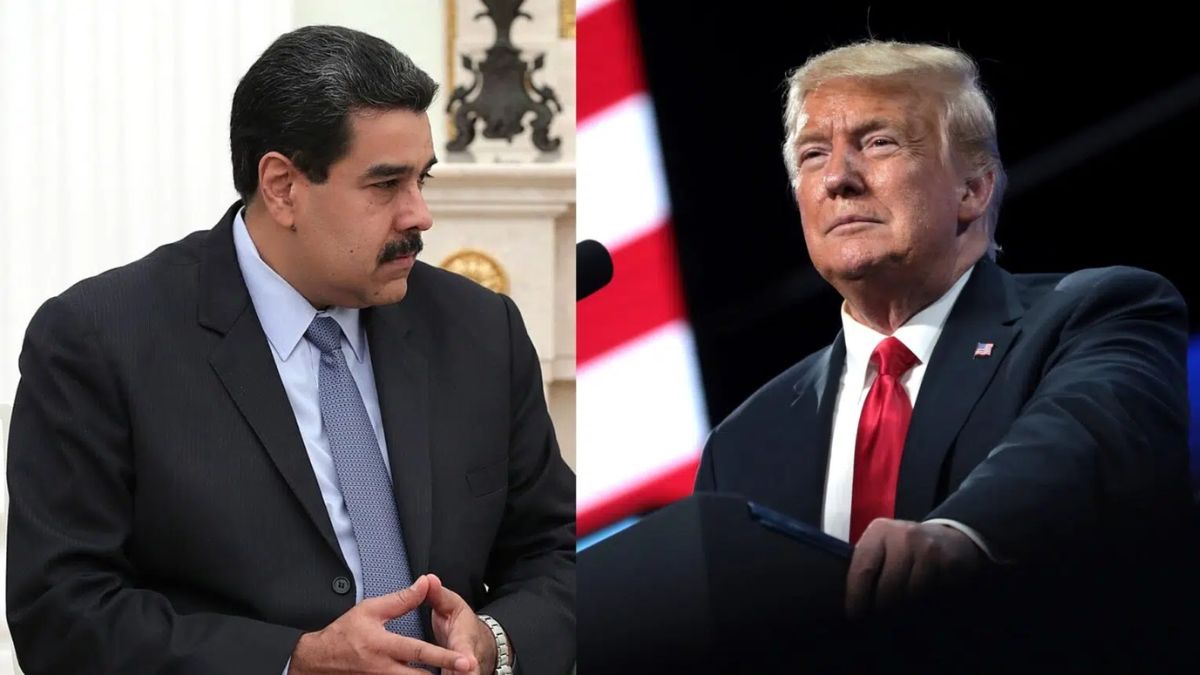
In a series of dramatic social media posts that have stunned the global community, President Donald Trump confirmed that the United States military has executed a “large-scale strike” within Venezuela. The President further claimed that the operation successfully resulted in the capture of Venezuelan leader Nicolás Maduro and his wife, Cilia Flores. According to the statements, both have already been flown out of the country.
Coordination with U.S. law enforcement and upcoming Mar-a-Lago briefing
The President noted that the operation was a joint effort between the U.S. military and various domestic law enforcement agencies. While the specific departments involved and Maduro’s current location remain undisclosed, the administration has promised full transparency in the coming hours. A formal news conference is scheduled for 11:00 a.m. today at Trump’s Mar-a-Lago residence in Florida, where he is expected to provide further details and evidence of the operation.
What happened, and why did the U.S. strike in Venezuela?
The geopolitical landscape of South America changed overnight as the White House confirmed direct military intervention in Venezuela. Early Saturday morning, U.S. President Donald Trump took to Truth Social to announce that American forces had successfully neutralised the leadership of the Maduro administration. The President declared that Nicolás Maduro and his wife were apprehended during the mission and have been removed from Venezuelan soil, marking an unprecedented turn in U.S. foreign policy.
This military action follows a night of intense kinetic activity in the Venezuelan capital. Residents of Caracas reported hearing at least seven massive explosions beginning around 2:00 a.m. local time, accompanied by the sounds of low-flying aircraft. Initial reports suggest that the strikes targeted critical military infrastructure, including the Fuerte Tiuna military complex and the La Carlota airbase. Large plumes of smoke were visible over the city as power outages plunged several districts into darkness.
The operation appears to be the culmination of a months-long “maximum pressure” campaign by the Trump administration. In the weeks leading up to this strike, the U.S. had already ramped up its naval presence in the Caribbean, seizing oil tankers and conducting strikes on vessels allegedly linked to narcotics trafficking. President Trump had previously characterised the Maduro government as a “narco-state,” framing this intervention as a necessary step to dismantle criminal networks and restore regional security.
International reactions have been swift and divided. While the Venezuelan government initially declared a state of emergency and called for a national mobilization against “imperialist aggression,” the capture of its top leadership has left the country in a state of political uncertainty. Neighboring leaders, including Colombian President Gustavo Petro, have called for emergency sessions of the United Nations and the Organization of American States to address the sudden shift in power and the potential for wider regional instability.
ALSO READ – War in the Caribbean? U.S. hits Venezuelan military targets in major nighttime escalation
