
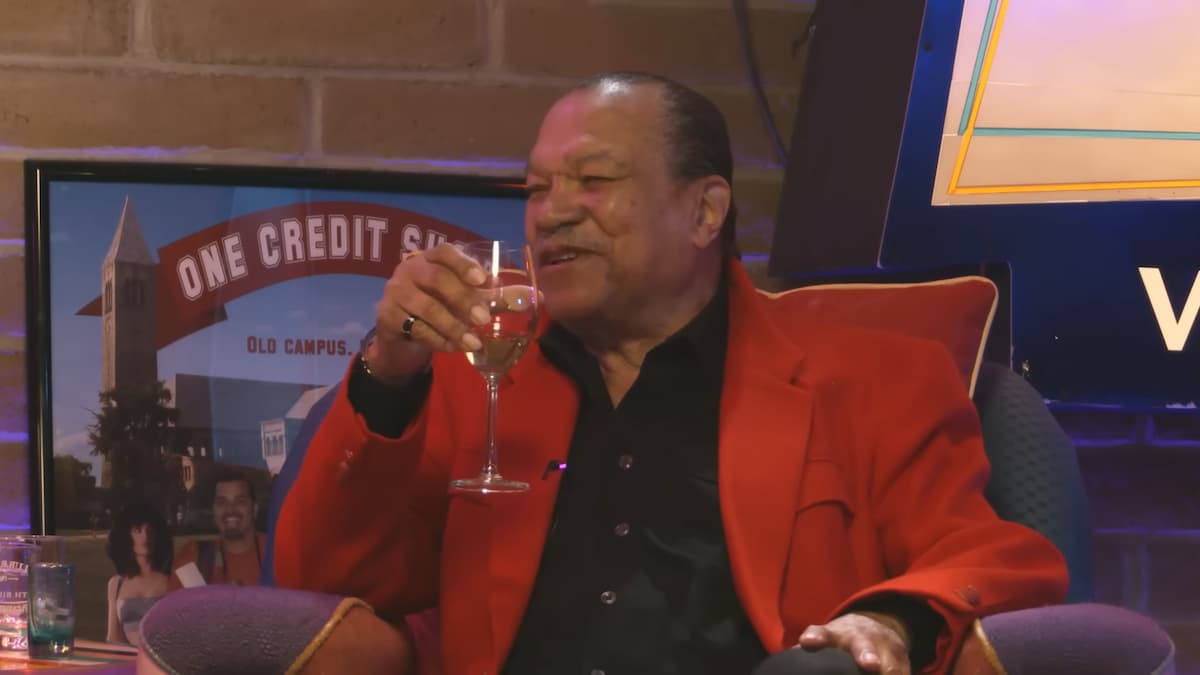
Billy Dee Williams, renowned for his role in Star Wars and other notable performances, recently shared some surprising views during an appearance on Bill Maher’s “Club Random” podcast. The discussion turned to Laurence Olivier’s portrayal of Othello in the 1965 adaptation, during which Olivier famously wore blackface. While Maher expressed reservations about Olivier’s depiction, labeling it “problematic” and noting that such a portrayal would not be accepted today, Williams had a different perspective.
In contrast to Maher’s stance, Williams found Olivier’s portrayal amusing, even stating, “When he did ‘Othello’, I fell out laughing… I thought it was hysterical.” This divergent view seemed to catch Maher off guard and likely surprised viewers as well. Williams went further, advocating for artistic freedom without limitations based on race, asserting that actors should be able to explore any role they desire, even if it involves blackface—an opinion that undoubtedly raised eyebrows.
Williams’ viewpoint appears to stem from a belief in unrestricted artistic expression, where race should not restrict an actor’s choices. He seems to prioritize creative freedom above all else, suggesting that the actor’s intentions and artistic vision are paramount, regardless of the controversial nature of the portrayal. This stance on race in acting appears consistent with Williams’ perspective dating back to at least 1980, as evidenced by previous interviews.
In response to Maher’s acknowledgment of the challenges Williams faced as a Black actor during his career, Williams emphasized the importance of open discussion rather than adopting a victim mentality. This exchange reflects Williams’ broader philosophy of approaching racial issues in acting with a sense of agency and empowerment rather than victimhood.
While Williams’ views on blackface may be unconventional and contentious, they offer a unique perspective on the intersection of race and artistry. However, it’s unlikely that many actors would be willing to follow his advice and engage in such controversial portrayals, given the sensitivities and cultural implications surrounding blackface in today’s society.
