
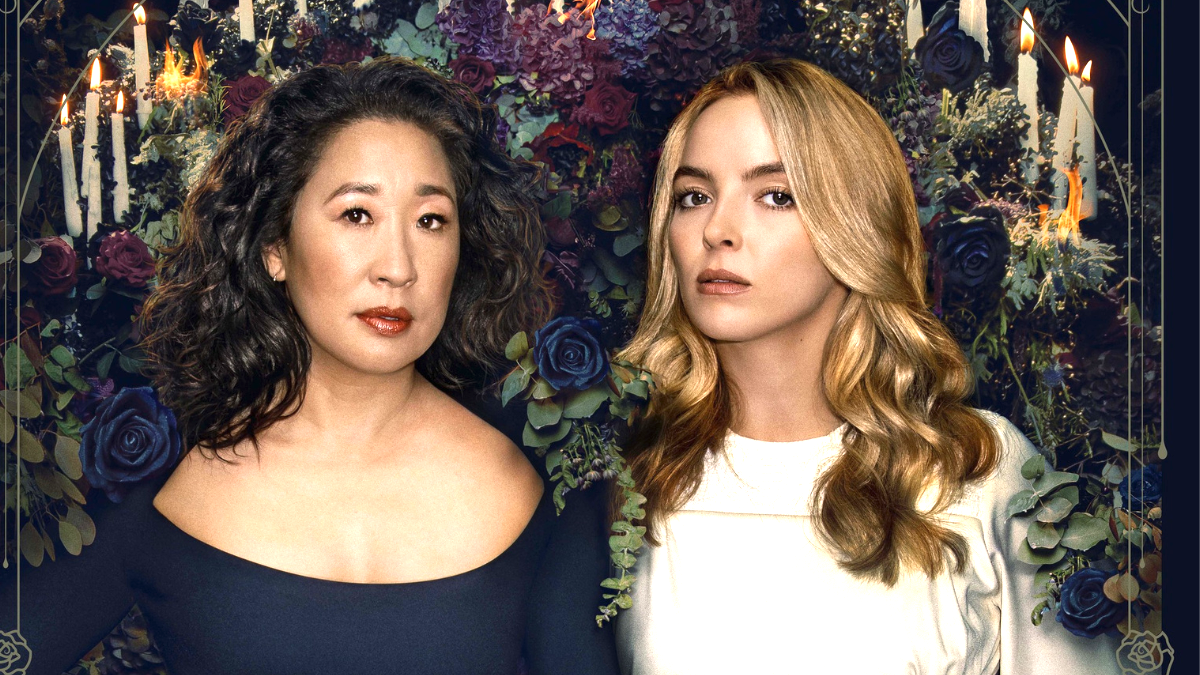
At the core of BBC America’s Killing Eve lies a central question that has kept viewers engrossed throughout its four-season run: will Villanelle (Jodie Comer) and Eve (Sandra Oh) ever succumb to their obsession with each other?
From the outset, the series weaves a tantalizing narrative as Eve, an MI6 employee, becomes fixated on Villanelle, a charismatic and enigmatic assassin. Their cat-and-mouse game evolves into a complex dance of attraction and repulsion, with both characters becoming consumed by their mutual obsession. Despite the risks and consequences, their magnetic pull towards each other only intensifies, leading to a destructive cycle that leaves devastation in its wake.
As the series progresses, viewers are drawn deeper into the intricate dynamics between Eve and Villanelle, witnessing the darker aspects of their personalities emerge. Eve’s infatuation with Villanelle proves to be both exhilarating and perilous, unraveling her personal life and professional aspirations. Similarly, Villanelle’s twisted affection for Eve exposes her vulnerabilities and challenges her perception of herself.
Throughout the series, the possibility of a genuine relationship between Eve and Villanelle tantalizes fans, fueling speculation and anticipation. As the narrative reaches its climactic conclusion, viewers eagerly await the resolution of their complex dynamic.
In the final episode, Killing Eve delivers the long-awaited moment as Eve and Villanelle join forces to confront their common enemy, the crime syndicate known as The Twelve. Their collaboration culminates in a poignant and long-awaited kiss, symbolizing the culmination of their tumultuous journey. However, their moment of happiness is tragically short-lived as Villanelle is fatally wounded, succumbing to her injuries in Eve’s arms.
The series’ conclusion sparked controversy and debate among fans, particularly regarding the trope of “Bury Your Gays” and the portrayal of queer relationships in media. While some praised the finale for its emotional resonance and thematic depth, others criticized it for perpetuating harmful stereotypes and undermining the characters’ development.
Showrunner Laura Neal defended the ending, emphasizing Eve’s symbolic rebirth and the opportunity for her to forge a new path forward. However, many viewers felt disillusioned by the dismissive treatment of Villanelle’s character and the abruptness of her demise.
Despite the divisive reception to the finale, Killing Eve’s legacy endures, inviting audiences to ponder the complexities of love, obsession, and identity. Whether viewed as a cautionary tale or a celebration of the human condition, the series leaves an indelible mark on the landscape of contemporary television.
As fans reflect on the conclusion of Killing Eve, they are reminded of the enduring power of storytelling to provoke thought, evoke emotion, and challenge societal norms. And while the series may have reached its end, its impact continues to resonate with viewers long after the credits roll.
All four seasons of Killing Eve are available for streaming on Netflix, inviting audiences to embark on a thrilling and unforgettable journey into the heart of obsession and desire.
