
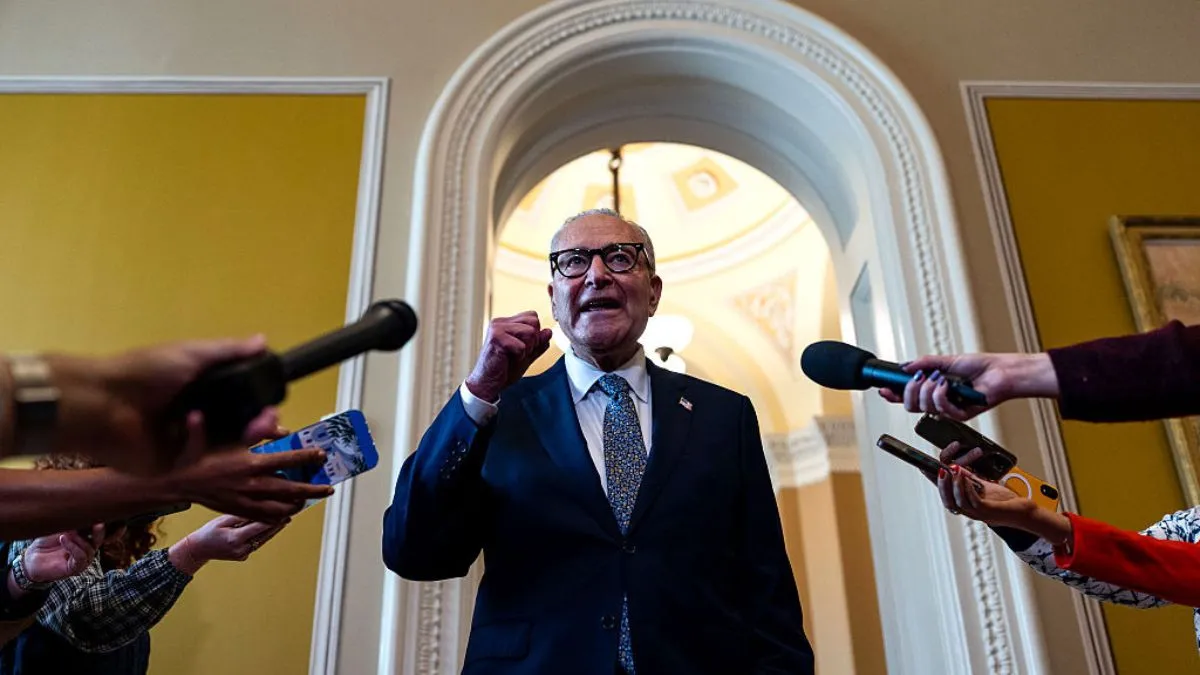
Congressional Democrats are divided over whether to risk a government shutdown if Republicans refuse to address expiring health care benefits. Senate Democratic Leader Chuck Schumer and House Democratic Leader Hakeem Jeffries are taking a hard line in funding talks, insisting on major health care deals before agreeing to keep the government open past September 30.
The debate revolves around the end of enhanced Affordable Care Act subsidies and deep Medicaid cuts passed through the One Big Beautiful Bill Act. Most Democrats agree these changes will hurt millions of Americans by raising health care costs, but they disagree on how to respond. Centrists worry that a shutdown could backfire politically, while progressives want a more confrontational approach to force Republicans to negotiate.
Senator Raphael Warnock tried to keep things light, joking during a bipartisan barbecue lunch, “Maybe we can figure it out over the barbecue,” while expressing hope a compromise could be reached.
The current standoff is influenced by Schumer’s experience in March, when he sided with Republicans to avoid a shutdown. That decision drew heavy criticism from the Democratic base, who felt he gave away leverage without gaining anything. House Democrats had urged the Senate to hold firm, but Schumer argued a shutdown would allow President Trump to slash federal programs.
Progressive senators, including some considering presidential runs, are pushing hardest for confrontation. One anonymous Democratic senator said, “Most people want to avoid brinkmanship except some of those people who may be running for president.” Senator John Fetterman warned it would be “wrong” for Democrats to force a shutdown, saying, “It was wrong for the Republicans to do it. It’s wrong for us to do it, too.”
Centrists from swing states face different political realities. Senator Catherine Cortez Masto said she is not ready to vote for a shutdown if Republicans refuse health care deals. Senator Mark Kelly also stopped short of drawing firm lines on funding.
The stakes are high. Enhanced ACA subsidies that reduce insurance premiums will expire at the end of the year without congressional action. Meanwhile, the One Big Beautiful Bill Act cuts nearly $1 trillion from Medicaid over the next decade, potentially leaving 12 million people without coverage by 2034, according to the Congressional Budget Office.
Democrats hold leverage because Republicans need at least seven Democratic votes in the Senate to pass any funding measure. Still, some fear Trump and congressional Republicans may prefer a shutdown to pressure Democrats into accepting their terms. With the September 30 deadline approaching, both sides appear dug in, setting the stage for a possible standoff over health care funding and government operations.
